Farm update: October 1

Hello there! It’s officially autumn, although you wouldn’t know it from our weather; it’s still hot and dry. Everything feels crispy and parched and we’re hoping desperately for some moisture from a Pacific hurricane system this week.

We’ve got lots of projects underway at the farm. Here are a few things we’ve been up to:

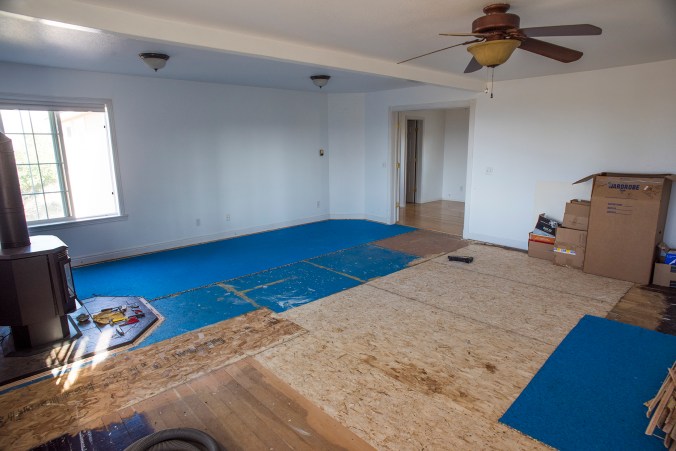
QF Living Room 03 sml

Our living room in a state of disrepair.

Although our farmhouse is livable, it needs a lot of work. N tore up all of the carpet but kept it intact so we could donate it. We had hoped to find hardwood floors underneath and although we did find some in the older portion of the house, we’ll have to install new floors on most of the main floor. Our renovation list grows by the minute.

Canning 03 sml

It’s canning season!

Canning 04 sml

An experiment: fermented green hot sauce.

Obviously we didn’t have our own garden this summer, so I was excited to unpack my canning supplies. Our grocery shopping options are extremely limited here, so preserving local produce now will make our winters much more pleasant. I put up a hundred pounds of tomatoes and forty pounds of apples in various formats, plus roasted and froze plenty of green chiles. The onions will keep in a cool, dry place; eventually we’ll have a root cellar of sorts for all of our long-keeping vegetables. I feel calm and confident when I have a full pantry.

QF Seedlings 01 sml

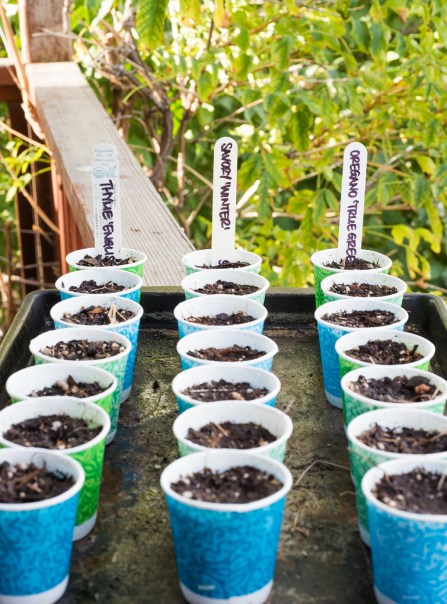
Perennial seedlings for next spring.

In addition to growing vegetables on our farm, we also need to rebuild perennial beds around the property. I’ve started perennial herbs from seed to see if I can keep them alive over the winter and plant them when the ground thaws in spring. This would be better done in a true greenhouse, but it’s worth a shot. Here you can see English thyme, winter savory and Greek oregano, all useful both in the kitchen and (hopefully) as deer repellent.

This week we’re tackling our irrigation system because we’re hoping to call for water next Monday! We’ll also get our old hardwood floors refinished and it’s Applefest this weekend, so there’s a lot going on in our tiny world. Have a great week!


A crash course in irrigation

Before we moved to the Western Slope, we were told again and again to make sure we buy water, not just a farm. Over here, water and land are sold separately, like toys and batteries. Just because water runs through, on or over your property doesn’t necessarily mean you have any right to use it.

The good news is that Quiet Farm does have adequate water, in most years. The bad news, however, is twofold: first, the Western Slope is in an unprecedented drought and at the moment no one has enough water. And second, we know precisely nothing about irrigation management. When you live in modern suburbia you just turn on the tap and the water flows magically, right? That is so much not the case here.

Water Droplets
Irrigation management on Quiet Farm doesn’t look like this.

QF Irrigation 01 sml

It looks like this: our Parshall flume (or weir) with attached flow gauge. No, we don’t know what any of those words mean, either.
QF Irrigation 02 sml

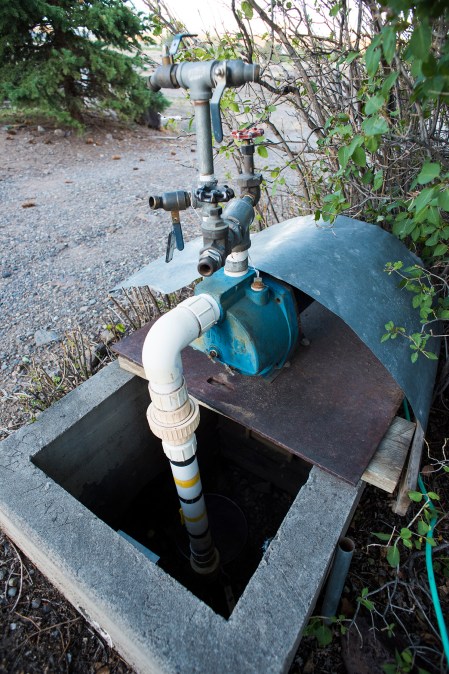
This is our water pump with screen to catch wildlife – raccoons, ground squirrels, marmots, whistlepigs, ponies, etc. – when they fall in. Looking forward to THAT happening.

We now own two shares of one of the Western Slope’s strongest irrigation ditches. There are dozens of ditch and reservoir companies; the vast majority of the area’s water comes from hundreds of lakes and reservoirs up on the Grand Mesa which are filled with precipitation each winter. When there is no snow, like last year, then there is no water in the ditches or reservoirs. And so water becomes a very valuable commodity.

QF Irrigation 03 sml

This is known as an “ag tap,” an abbreviation for agricultural. The water from this tap, however, is from our domestic supply. Confused? So are we.

QF Irrigation 04 sml

This is downstream of the water pump and will help irrigate our land with irrigation water. We think. Or maybe not.

When we want some of our water for irrigation – which we can have between the beginning of April and the end of October – we order a precise amount from the ditch company, accounting for absorption and loss along the way. Ditch riders, who live up on the mesa during the season, use a complicated system to send the water down the correct ditch to our property on a specific day. We have to be out at our headgates at about 6AM to start our run, and the water we use is debited from our account, just like a bank. We can lease, sell, trade or give away our water as we see fit, but if we order water, it’s coming to our property whether we’re ready or not. So figuring out our irrigation system is of paramount importance to our future success.

QF Irrigation 06 sml

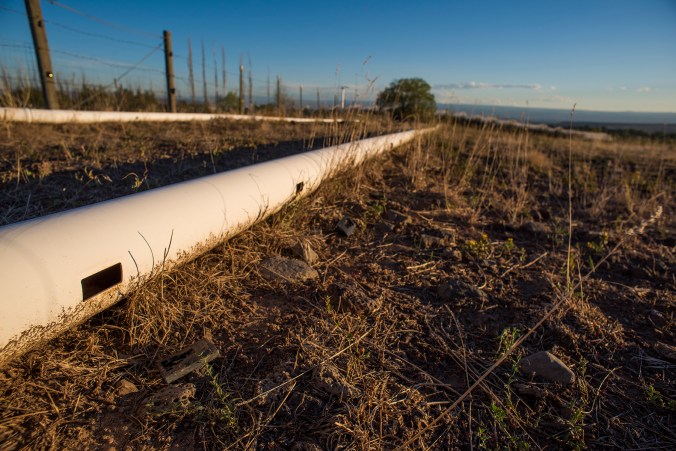
Our water will run through gated pipe, a common sight in our area. Big farms will own thousands of feet and it’s set up according to your property’s individual landscape and contour. The black gates open and shut to control the water flow.

QF Irrigation 08 sml

A lot of our gated pipe currently looks like this, which is obviously not workable. Even we know that.

In case you’re worried that we’re actually living in Little House on the Prairie, our house has a domestic tap, which is just like water in a normal house. Except that domestic water here is crushingly expensive, especially compared to Front Range rates, which means we absolutely cannot run a farm on domestic water without bankrupting ourselves. No more domestic taps are being issued in our area; local government doesn’t think we have the water to support additional growth – unlike on the Front Range, where greedy, short-sighted counties sell their water to the big cities and then wonder why their towns die. Domestic taps are worth tens of thousands of dollars over here, if you could even buy one.
QF Irrigation 07 sml

Apparently little critters like chewing on the gates inside the pipe. The gates cost $3 each, and we have dozens missing. The few remaining intact ones are probably being eaten right now while you’re reading this.

QF Irrigation 05 sml

The end of the line. Of course, if the pipes aren’t connected properly we’ll just flood everything and there is no way to turn the water off once we’ve called for it. So good luck with that.

We’ve got just about a month to figure this system out, because once the water goes off at the end of October we’ll have no way of testing our work. And when the water (hopefully) starts running again next spring, we want to be ready to get our pasture in good shape.

QF Irrigation 09 sml

Good news, though! We’re unknowingly growing a pasture of invasive elm trees that will need to be removed by hand…

QF Irrigation 10 sml

…when we’re not growing anything at all. Surprisingly, bare pasture is actually worse than having even invasive plants in the ground.

The moral of this tale, friends, is not to take water for granted. The daily luxury of fresh, clean, potable water is an absolute gift and one that not even everyone in the U.S. has access to. So treat your water like the precious resource it is, and know that it is finite. And wars over water will be much more devastating than wars over oil.

There is much work to be done, and winter is coming. Pray for snow.
An announcement

Many of you know this, and the rest of you have probably guessed, but N and I found Quiet Farm. (We’re not changing our website, however.) We closed on the property in early August and have just now gotten all of our things moved from the Front Range over to our (new to us) house. We heard too many horror stories about unscrupulous, lazy and irresponsible moving companies, so we opted to do the whole move ourselves. N had plenty of experience driving a 25-foot RV, so driving a 26-foot box truck couldn’t be much different, right? (P.S. We sold the RV. Bittersweet, but it served its purpose for our transient summer. And it’s just right down the road from us, so we can visit it if we want!)

QF 02 sml

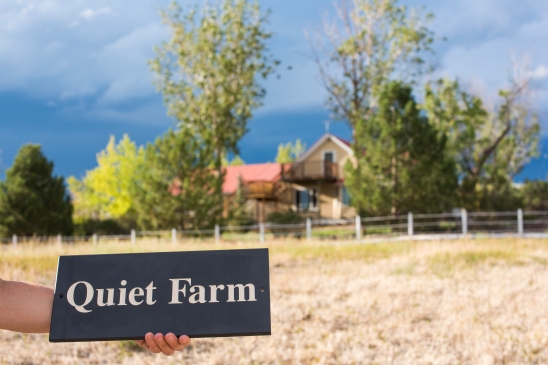
Quiet Farm is a ten-acre parcel just outside of Cedaredge, on Colorado’s Western Slope. We’re tucked under the Grand Mesa and surrounded on three sides by apple orchards; to the south we can see all the way to the San Juan Mountains. Just over eight acres of the property is in pasture, but both the land and the house have been essentially abandoned and unloved for about five years. It will take a lot of time and hard work and water to regenerate the pasture; historically it’s always been alfalfa, but we’re looking at other drought-tolerant options, too – maybe hops or quinoa?

Bluebird Rooster grey final

Our vision for Quiet Farm is an organic teaching farm and cooking school. We plan to build a certified commercial kitchen in a detached garage on the property. We’ll offer classes on everything from healthy cooking basics to bread baking to canning and preserving to beekeeping to fermentation to knife skills, and any other homesteading topics that our guests might be interested in. We’ll keep laying hens for eggs and pest control, goats for milk and entertainment, beehives and extensive vegetable and perennial plantings. We want to be part of the community and host potluck suppers and farm tours and coffee klatches and food swaps. We want to showcase the amazing fruit and animals and people this part of Colorado offers. We want Quiet Farm to be an agritourism destination.

QF sign 01 sml.jpg

We’ll post regular farm updates here, with before-and-after pictures so you can see our progress. It took us three years to find Quiet Farm, and we’ve got a lot of work to do to fully realize our vision, but we’re exactly where we want to be. Thank you for joining us on this journey, and we’re so much looking forward to all of the incredible adventures ahead. We can’t wait to share Quiet Farm with you!


Life in a small town

We came upon our new hometown by accident, on our way back from Oregon last fall. We’d spent seven or eight weeks working on farms and looking for farmland up in the Pacific Northwest, until we finally acknowledged that region wasn’t our place. We drove across Nevada on I-80 – a bleak journey if ever there was one – dropped down on I-15 when we hit Salt Lake, then took I-70 eastbound through Utah and back into Colorado.

Cedaredge 04 sml

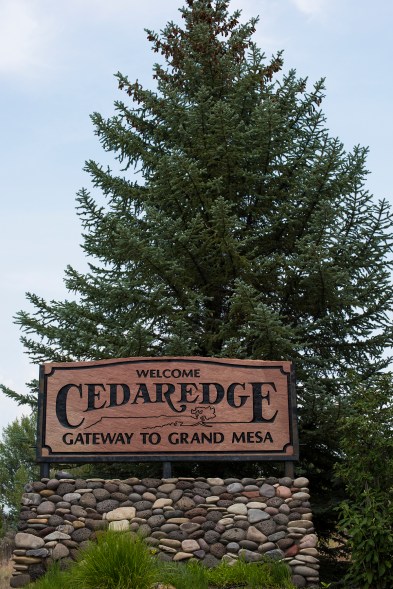
We needed a place to crash for the night, and I had booked us an unknown Airbnb in some tiny dot on the map called Cedaredge, in the shadow of the Grand Mesa. I’m a Colorado native and I’d never heard of it; most of the people on the Front Range haven’t, either. Cedaredge is in Delta County, along with Paonia, Hotchkiss, Crawford and Delta; it’s a town of two thousand people and it’s famous for its apples. The town’s annual Applefest, in early October, brings an additional twenty-five thousand people in.

Cedaredge 10 sml

Continue reading