Monkey hot pot

N was very keen on visiting the famous snow monkeys near Nagano, the site of the 1998 Winter Olympics. We traveled by train from our farm in the little mountains up into the serious mountains where at least a foot of fresh powder had just fallen. This is the largest skiing area in Asia, a network of nineteen different resorts spread over thousands of acres.

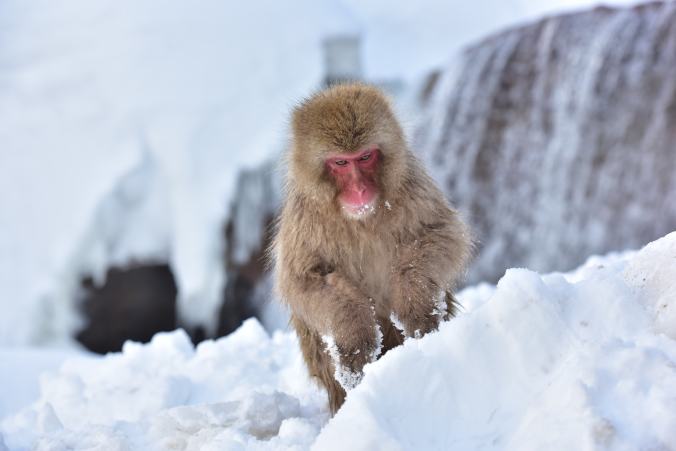
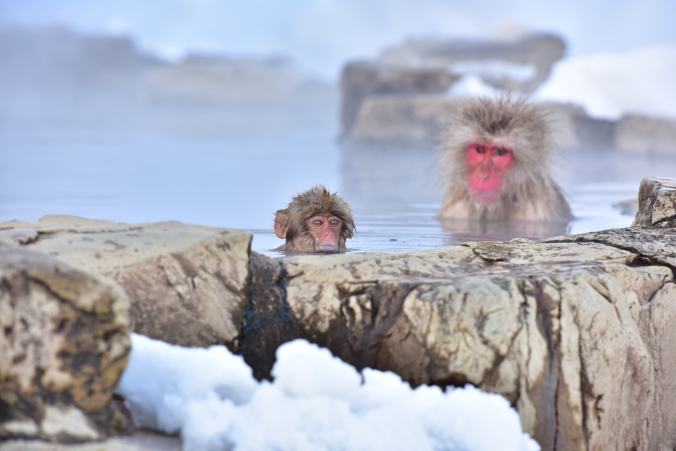
Snow monkeys, or more accurately Japanese macaques, are native to Japan and found all over the country, but nowhere do they behave like they do at Jigokudani. During spring, summer and fall, the nomadic monkeys have plenty of food high up the steep forest slopes and are rarely seen, but in winter they’re forced to search harder for sustenance. The park opened in 1964 after a local railway employee started feeding the monkeys in winter.

NJB_9871

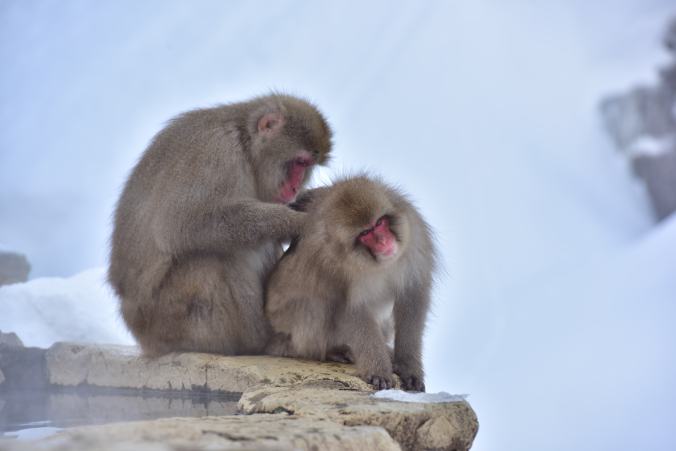
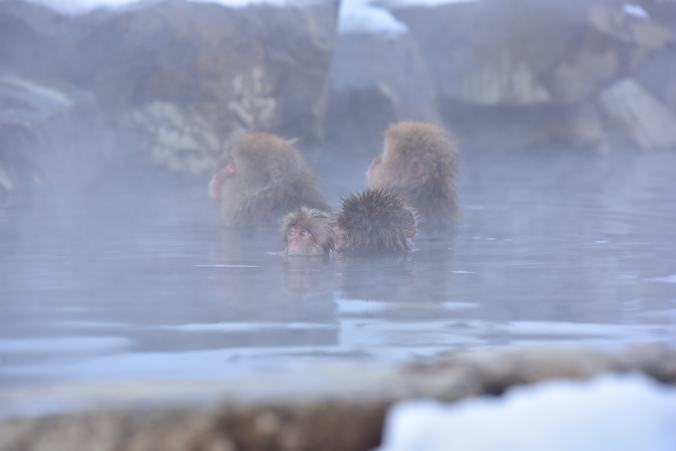
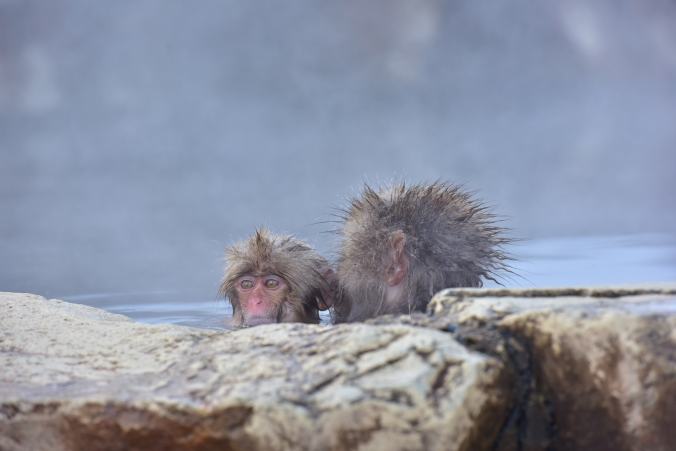
These monkeys are known for their particular habit of bathing in the natural hot springs that also draw so many visitors to the area. Legend has it that one baby monkey decided to dip a toe into the hot springs and found it very much to his liking. He introduced his family to the wonders of the local onsen and the rest, as they say, is history. Once park rangers figured out that the monkeys would bathe in the hot pools during the winter, they built a small pool along a river with pathways where visitors can observe the monkeys at close range (for a fee, of course).

NJB_9997

NJB_0049

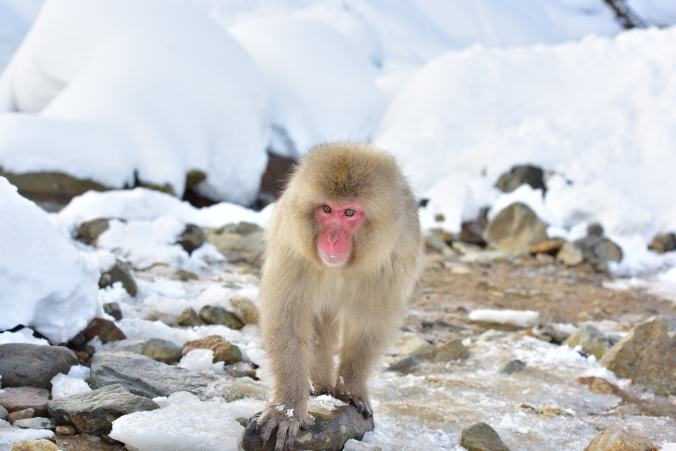
What makes this place so special is that the monkeys are neither disturbed by nor interested in the human visitors. Visitors are told explicitly not to bring food either for themselves or the monkeys, and as long as that rule is followed the monkeys are perfectly happy to go about their daily activities unfazed by the throngs. Monkeys will walk right by you, sometimes climbing over you if you’re impeding their path, but they’re neither aggressive nor timid. It’s a remarkable experience – as close as possible to actually seeing animals living in their natural habit without the restrictions of a zoo, but safe for both monkeys and humans.

NJB_0044

NJB_0108

The monkeys have carefully structured family groups and are constantly involved in small skirmishes, foraging and grooming. They also seem to love frolicking in the snow, followed of course by some relaxing hot tubbing. Seeing the monkeys in the hot pools is really funny, if only because they act so human.

NJB_0078

NJB_9919

The best part about the experience is that while there were hundreds of people there, everyone was extremely respectful. It was very quiet and very peaceful; no one shouted at or harassed or teased the animals, and the pathways weren’t littered with trash. It is the only place in the world where these macaques can be observed so closely, and it was absolutely worth the travel effort to see these fascinating creatures.

NJB_9935

NJB_9994


Your helpful onsen etiquette guide

While planning our five-month trip (in a ridiculously short period of time) I only researched a few activities for each country, assuming that the rest would take care of itself. In Japan, however, I knew I wanted to visit an onsen, or mineral hot springs.

P1030773

This cheery Scandinavian fellow greets you at the entrance to the onsen. Why isn’t he Japanese? I have no idea.

The onsen tradition is revered in Japan with hundreds of springs scattered all over. Many are located in scenic areas like the Japanese Alps, and are a natural complement to skiing and other winter activities. Onsens require a bit of introduction, however, especially to Western visitors – and it’s important to understand the etiquette before partaking.

Onsens are separated by gender and are always taken without clothing of any kind. (And they’re often used as company team-building activities! Can you imagine explaining to an American HR department that you’re going naked hot-tubbing with your work colleagues?)

IMG_20170116_184602344

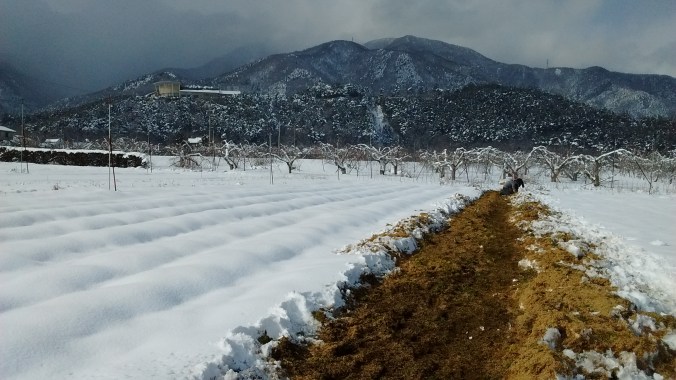
A row of harvested carrots on our farmstay. In the upper left you can see the onsen set high up on the hill. It was about a fifteen-minute walk from our farm straight up the wooden stairs built into the slope.

When you first enter the onsen, you remove your outdoor shoes and put on a pair of slippers. (In all of the places we’ve been thus far in Japan, you never, ever wear your outdoor shoes into a home. I love this.) You buy an entrance ticket – this one cost about $5 – from the vending machine then head to the changing area. All of your clothes and belongings are stowed in lockers, and you enter the central shower area. It’s imperative that everyone is very clean before entering the communal pools; not showering first is a major transgression.

NJB_0176

After showering, you can choose from a variety of different pools, depending on the onsen. At this location there were three: a large, warm pool and a hot tub with serious pressure jets, both indoors, and an outdoor pool constructed of rocks that looked over the snow-covered valley. When you move from the indoor to the outdoor pool you just walk – naked as a baby – and once you get past the Western mentality of embarrassment about being completely unclothed amongst strangers, it’s really amazing. The outdoor pool was the hottest and my favorite, because it was absolutely freezing outside and as soon as you got too hot you could sit up on the edge to cool off. I could have stayed there all day.

P1030778

The view from the balcony; for obvious reasons, I have no photos from inside the onsen.

A couple of interesting notes about onsens: you don’t use the large fluffy beach towels we might use at home. Instead, you can bring (or rent) a small body towel and a face towel. It is incredibly bad manners to put your face towel into the hot water; leave it resting on your head. You can also use the larger towel for modesty as you move from one pool to another, but many guests didn’t bother. Also, most onsens still prohibit any sort of tattoos. Traditionally, tattoos were only for yakuza, or gangsters, and onsens didn’t want this type of clientele. As tourism expands and foreign visitors become more and more important, it seems that the prohibition against tattoos is relaxing slightly, but only if they’re covered with a bandage or patch. Full-sleeve or other extensive tattoos (or piercings) will absolutely get you politely escorted out of an onsen, even if they already let you in.

NJB_0161

Steam from one of Yudanaka’s onsens.

Onsens are mostly silent too, a time to sit quietly with your thoughts and enjoy the soothing water. While there were children at the onsen I visited, they were polite and respectful and not splashing around. I heard very little conversation, and that I did hear was in appropriately hushed tones.

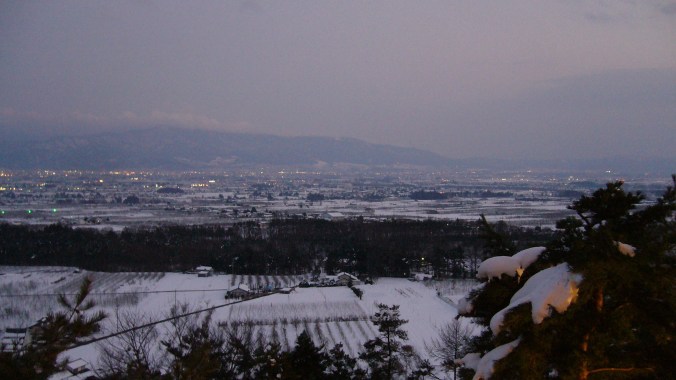
We visited the famous snow monkeys at Jigokudani, or Hell’s Valley, and the town we stayed in – Yudanaka – is known for its onsens. Much like Glenwood Springs and Idaho Springs in Colorado, the mineral-rich waters are seen as a cure for just about any physical ailment. Yudanaka has nine special onsens, each with a different mineral composition, located along public streets and marked by numbers. The doors are kept locked and keys can only be obtained by staying at certain ryokans, or traditional inns. Visiting all nine, and collecting a stamp from each to be attached to a special souvenir cloth, is thought to bring good fortune. While out walking we often saw ryokan guests walking from onsen to onsen in their designated yukata robes and wooden slippers. Many of the inns here are well over four hundred years old, and the streets have retained a truly lovely ancient atmosphere.

NJB_0179

Ryokan guests en route from one onsen to another.

After a week on the farm of harvesting and sorting carrots, chopping firewood and spreading rice husks in the orchard in bone-chilling temperatures, my two onsen visits were borderline miraculous. If you travel to Japan and have the opportunity to visit an onsen, go! It is a not-to-be-missed experience you won’t find anywhere else. Just get your tattoos removed first.

NJB_0160

Yudanaka’s ancient streets.

Want to learn more about the onsen tradition? Go here!

Food for thought

NJB_9683

Octopus skewers, Nishiki Market, Kyoto.

Food – ingredients, preparation, presentation – is something I think about far more than the average person. As I’ve mentioned, at home we almost never eat out, both because I love to cook and because I’m often testing recipes or preparing for a class, so I tend to have an excess of food on hand at any given moment. Food obviously plays a huge role in travel, too, and for me that’s both positive and negative. I love tasting unfamiliar ingredients and trying to appreciate a place through its food culture, but the reality is that more often than not restaurant food is disappointing and overpriced – especially when you’re traveling in heavily touristed areas. I know how much I’m overpaying for it and I hate that feeling of being cheated – paying $75 or more for a “nice” meal, only to leave with a bitter taste. It’s tough, though, especially in a country like Japan where everyday communication is delicate at best and a mess of unforeseen land mines at worst, to know where the locals eat. My answer to that, invariably, is “at home.”

NJB_9689

Prepared food counter, Nishiki Market, Kyoto.

Other people travel and visit art museums and temples and things. I travel and visit minimarkets and grocery stores, because I think few places tell a country’s story better than where the locals shop for food. I was looking forward to Japan for many reasons, but the food was high on the list. We have a superficial impression of Japanese food in the U.S. – primarily sushi, of course, then perhaps tempura or soba or various tofu dishes. I’m interested not in what people eat when they go out to celebrate a special occasion (do we all eat at The Capital Grille every night? I think not), but what they grab from the store at 5:30 on a Tuesday night after a long day at work.

FullSizeRender (3)

Soba noodles with shrimp tempura, Arashiyama.

And I’ll admit – I’ve been really surprised by Japanese food culture, at least what little I’ve seen of it. First and foremost, sugary drinks take a lot of rightful blame as a major source of excess calories in the American diet; we’re now seeing “soda taxes” and other measures designed to curb consumption and hopefully reduce our obesity and diabetes rates. But Japan, which I think many people perceive as one of the healthiest countries in the world (see The Blue Zones) is absolutely covered with drink vending machines. They are everywhere. There are apparently more than 5.5 million machines in this tiny country, while the U.S. has just under 7 million for nearly three times the population and a lot more landmass. While the machines do contain bottled water, they also contain sugared coffee drinks (cold and hot – and that is a miracle in the middle of this damp, frigid winter), sports drinks (the awkwardly-named Pocari Sweat is my favorite), and plenty of other sugary beverages. Clearly, the machines are worth the real estate – so why aren’t the Japanese plunging into a sugar-related health crisis like we are?

NJB_9687

Fried snacks, Nishiki Market, Kyoto.

I’ve also been surprised at the amount of refined grains, but that may be because I’m so focused on teaching whole grains at home. Obviously plain white rice is a staple served with every meal; we’re currently on a farm stay and the rice steamer is kept filled with fresh, hot rice for eating at any time of day. But the buns, pastries and breads are all soft, white and sweet – the bread available for our morning toast here is like that super-cheap, super-thick “Texas Toast” we used for French toast as kids. I watched the nine-year-old son eat four pieces slathered with fake butter and jam for his breakfast this morning, and he’s thin as a whippet. So again, I’m observing very high consumption of refined grains – which the body essentially converts to sugar – and yet not observing the expected results.

NJB_9681

One of N’s recent lunches, and the only time yet I’ve seen raw vegetables such as lettuce and tomato.

Meals for us have primarily been inexpensive, filling and warming – plenty of ramen, of course, plus other noodle soup variations, but also curry rice and simple “lunch sets,” which usually include miso soup, various pickles and a main such as chicken and rice (photo above). These too have surprised me with the overall lack of vegetables. While there might be a few small dishes of pickled or fermented vegetables, we’ve only once had any served raw – a fresh carrot and daikon salad here at the farm, with a delicious creamy, tangy dressing. There are never any vegetables in the soups or with the meat and rice, certainly nothing like what we’d think of as traditional stir-fry. That said, the Japanese tend to cook more seasonally than we do, and I suspect we’d see a greater variety of raw vegetables during warmer months than in the middle of bleakest winter.
NJB_9707

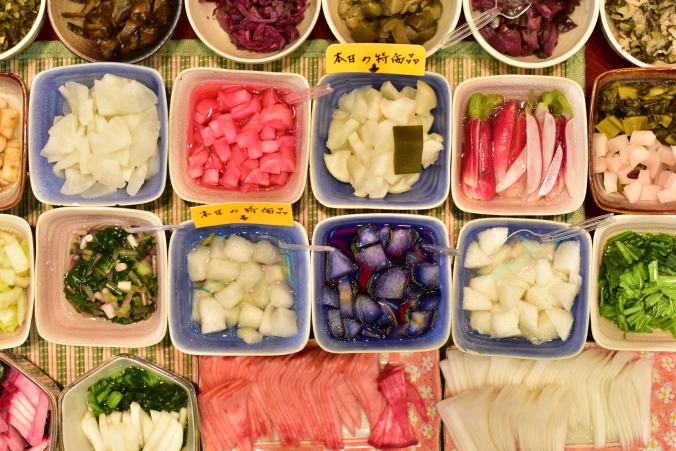
Pickled vegetable selection, Nishiki Market, Kyoto.

In stores, it’s package after package after package. From a thousand varieties of crunchy salty snacks to pre-made sandwiches to “Hot Pockets” to sushi and sashimi, I’ve noticed very little in the way of fresh ingredients designed for preparing meals at home. Fresh fruits and vegetables are almost nowhere to be seen and crazily expensive when found; I bought an apple in downtown Kyoto – one apple – for about $2.50. We’ve walked by a couple of small fruit and veg stands, but literally nothing that would rival your most basic American grocery store produce department with its stunning array of gloriously arranged, perfectly shiny, identically sized out-of-season fruits and vegetables. And yet the farm we’re currently staying on has acres of fruit trees and thousands of apples in cold storage right now, so where are they all going?
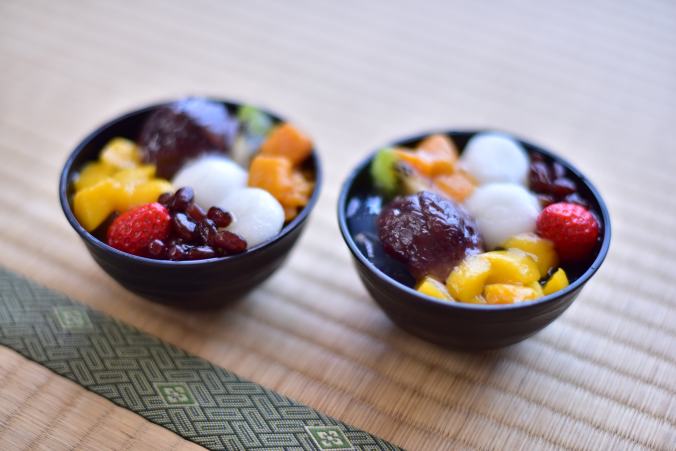
NJB_9565

The oddest dessert I’ve ever eaten…jellied fruit and red beans with clear gelatinous cubes underneath. Algae? Gelatin? Space-age packing material? Also it came with what I thought was a sauce and may have actually been hand sanitizer. Not dead yet.

So after nearly two weeks of eating and travelling in Japan, I’m left with a mess of contradictions. The diet appears, at least on the surface, to be as unhealthy as ours in the U.S. And yet the people here, at least from my extremely limited research, don’t seem to be plagued by the same health crises. What can we learn from this?

(P.S. Please know that these observations are only based on a few days here in Japan and are in no way intended to represent some sort of serious large-scale sociological study. If anyone has spent time in Japan and has additional insight to share about the food culture, I’d love to hear it!)
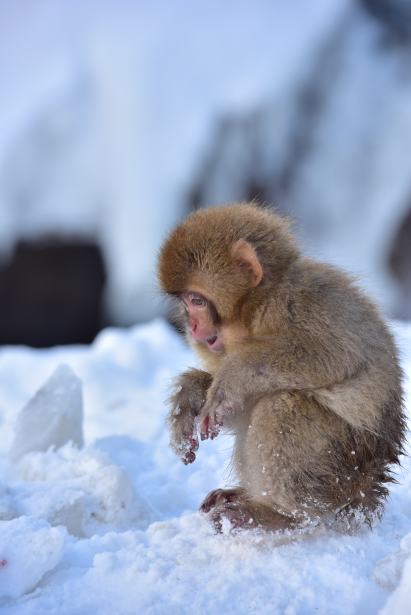
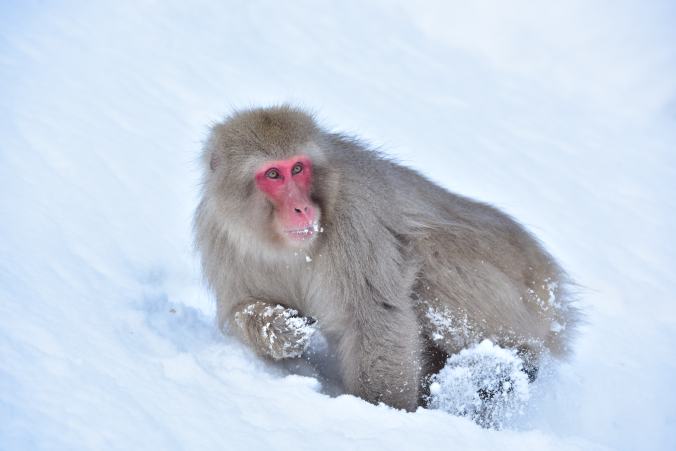
Scenes from Kyoto

We’ve spent six days in Kyoto and depart tomorrow for a long day of travel to Matsumoto, where we’ll volunteer on a farm. Below are a few of N’s photos from our first week of travels.

NJB_9602

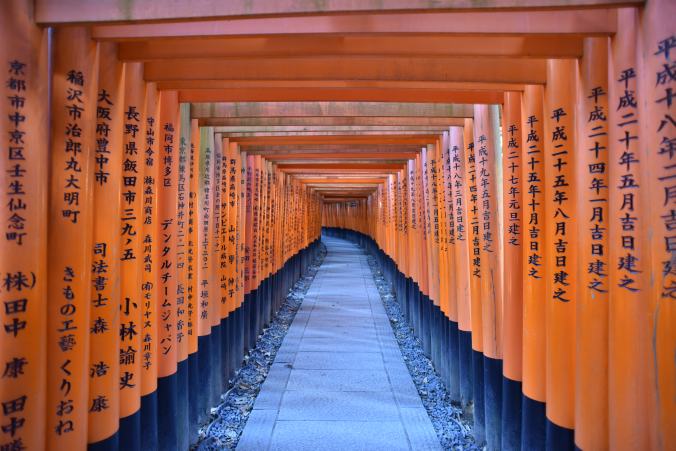
The Fushimi Inari-taisha Shrine is one of Japan’s most photographed sites. Thousands of bright orange shrine gates lead up Mount Inari, about 600 feet above sea level. You can’t tell from this photo, but it was snowing pretty hard on our way up.

NJB_9671

Kitsune (Japanese for fox) are one of the most common spirit animals seen at shrines and temples.

NJB_9657

Rather moody and dramatic, isn’t it?

NJB_9817

“Kimono Forest,” Arashiyama train station. These are tall sealed Plexiglas pillars that contain bolts of fabric traditionally used for kimono. As public art goes, it’s pretty spectacular.

NJB_9431

Looking up at the bamboo grove in Arashiyama.

NJB_9795

What a difference a day makes…eight inches of snow overnight. And we thought we’d left winter behind.

NJB_9495

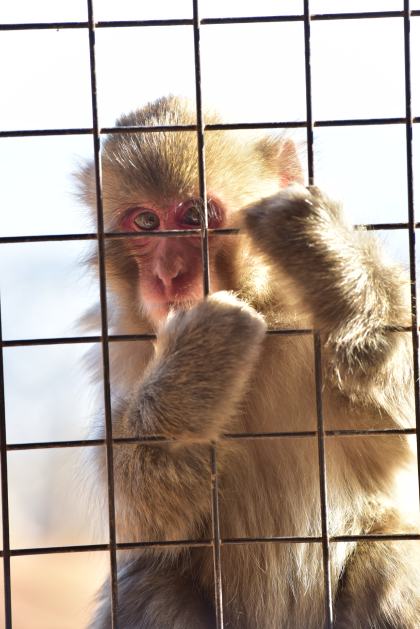
Snow monkey at Arashiyama Monkey Park. Ironically, the humans are inside the “cage” feeding the wild monkeys on the outside.

NJB_9841

Matsuo-taisha Shrine, Arashiyama.

NJB_9547

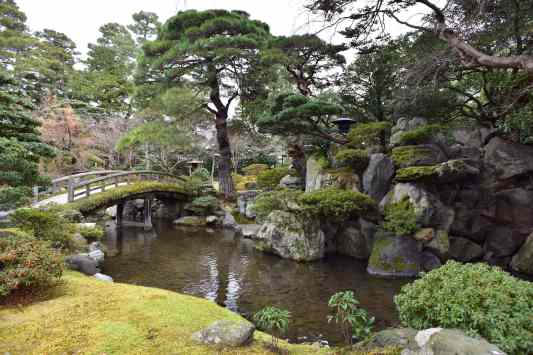
Imperial Palace, Kyoto.

NJB_9559

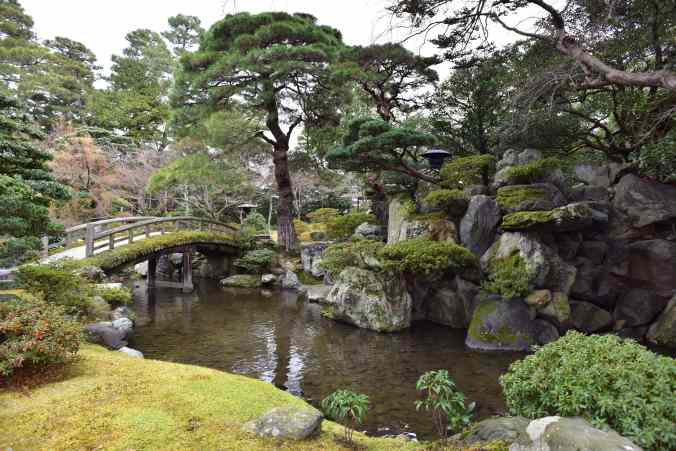
Imperial Palace gardens, Kyoto.

NJB_9761

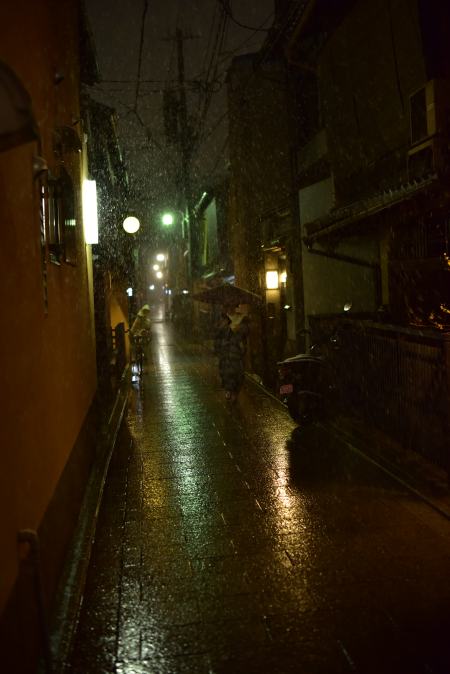
Gion’s famous “red lantern district.”

NJB_9753

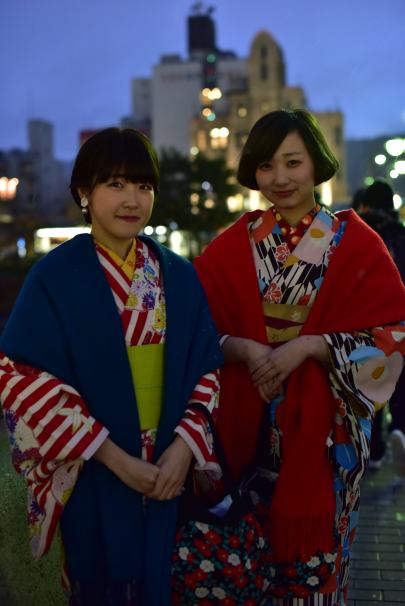
Gion District in Kyoto is known for its geisha culture. Many visitors pay to rent kimono and dress up like geisha or maiko (apprentice geisha). There are dozens of shops offering kimono plus hair and make-up services. You can identify the tourist geisha because they don’t have on the traditional white make-up and they’re willing to be photographed. Current estimates suggest that there may only be about two hundred true geisha and about one hundred true maiko in all of Japan, though accurate statistics are tough to come by. Can you spot the true geisha in the photo below?

NJB_9769


Minimart Challenge: Japan

So I have THE MOST AMAZING IDEA for a competitive cooking show and it goes a little something like this: cheftestants (yes, I hate that word too) are dropped into a random minimart in a random country and they have a specified amount of time and money to spend in said minimart. After they have made their selections, they are whisked away to an Airbnb where they’re obligated to craft their minimart purchases into something delicious. The challenge, of course, is that the Airbnb kitchen will most definitely NOT be stocked with the high-end equipment they’re accustomed to in their shiny professional kitchens. Instead, it will contain the oddest assortment of dull knives, thrift-store cookware and mismatched plates and cutlery. Good luck, cheftestants!

One of the biggest challenges of extended travel for me is not cooking. I’m well aware that most people would wholeheartedly disagree with this statement, but I cook virtually every single meal when we’re at home, including all of the food packed for N’s work lunches. (The irony, of course, is that I’m regularly asked for restaurant recommendations. We never eat out.) While others might relish a break from cooking, I dread it – because, as I teach in all of my classes, when you cook at home you hold sway over exactly what goes into your food. When we’re traveling, especially for a trip as long as this one, I have to relinquish a great deal of control over what we eat – and that doesn’t come easy. It’s not only that I want to know exactly what we’re eating, but also that as a chef I want the opportunity to cook with unusual ingredients that I might never find at home. And also that cooking sets everything right in my world.

NJB_9588

Sites like Airbnb, however, have made travel so much easier, especially if you want the option of staying in a home with kitchen facilities. We’re currently in an Airbnb in Arashiyama, just outside of Kyoto, and we have access to a reasonably well-stocked common kitchen. (I’ve certainly cooked in worse.) Today was a bit of a rest day for us, and as we didn’t feel like going out to a restaurant we opted for the minimart up the road.

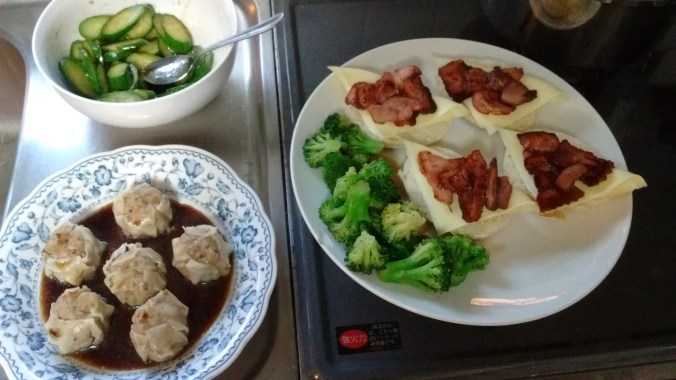
The result: sesame-soy cucumber salad with crunchy rice crackers, steamed shu mai, bacon and cheese sandwiches and crispy broccoli. All procured for about $17, and that included the wine. It took about 15 minutes to put this meal together. Was it the absolute healthiest? No, but it did include two different vegetables and honestly, there was a lot of rather mysterious unidentifiable fried food that we didn’t buy. My loves, the point is this: not every meal you cook at home is going to be perfect. Sometimes, it might even be a hot minimart mess. But – and this is specifically directed to all those busy parents reading this who think they’re not doing a good enough job – it matters. Cooking matters. So keep it up, because you’re doing great. See you on TV, cheftestants.

minimart.02

P.S. I’m sorry for the above photo; N was busy setting up the cribbage board. Let’s just put a copyright rule in place: if the photo is good, N took it. If it’s lousy, it’s mine. Avert your eyes accordingly.

The first stop

NJB_9448

Nihon e youkoso, or welcome to Japan. N and I have found our spiritual home in this lovely country. This is a society that values respect and politeness above all else, and we’ve loved everything thus far. Thinking of visiting Japan? Allow me to provide you with a few solid reasons to do so.

NJB_9441

  1. The people. From navigating our way from Tokyo to Kyoto via shinkasen bullet train, subway with transfers and elevated vintage tram to every person we’ve encountered in shops or restaurants, the people here are unfailingly polite and helpful, especially when you’re tall, fair-haired and very confused-looking. It is delightful.
  2. The silence. On public transportation, you’re greeted with numerous (polite) requests to silence your phone and if you do need to talk, to please remove yourself to the compartment between carriages. Thus, train rides are silent and peaceful, with a slight rustle of paper as everyone tucks into their meals and snacks. (Except for our carriage, where two American men – U.S. Department of Defense employees en route from Guam to the U.S. – FaceTimed loudly and disrupted much of the journey. N and I tried in vain to hide.)NJB_9398
  3. The toilets. If you’re not familiar with Japanese toilets, do a little reading. They may be reason enough to visit this magical land.
  4. The cleanliness. Streets contain virtually no litter, everyone cleans up after their dogs (they rinse the pavement with spray bottles!) and did I mention the toilets? Even public transport bathrooms – places most of us might normally avoid if at all possible – are immaculate. On our Japan Airlines flight to Tokyo the airplane toilet was freshened between every visit.
NJB_9524

Arigatou gozaimasu, Japan. You’ve stolen our hearts.

How not to plan a round-the-world trip

Passport 01.jpg

Today, friends, I bring you helpful tips on how NOT to plan a round-the-world sabbatical (or really any overseas trip). We are seven days out from our departure, and I am only just at this moment starting to feel somewhat calm about the to-do checklist that seems to become longer with every passing moment.

Let’s say – hypothetically, of course – that your little company’s primary client breaks up with you unexpectedly and you wait for your husband to come home from work and you petulantly say “Shall we just go traveling around the world in January for five months instead of the existing plans that we’ve been working on for years like proper grown-ups?” And he says yes because he’s thrilled to start traveling again even though he knows he’s always supposed to talk you out of your ridiculous ideas. And then you realize that you’re leaving IN EIGHT WEEKS and little things like visas and immunizations and closing up your house and your businesses and property taxes and mobile phone service and every other tiny adult detail starts to weigh rather heavily. So my first tip is to give yourself plenty of time to plan your trip. It takes longer than you think.

While talking with friends and family about our upcoming travel, I realized again and again that many people in this country simply aren’t aware of the requirements for traveling abroad. This may be because many Americans don’t travel internationally, or if they do, it’s as part of an organized package tour or cruise trip. And in those cases, a lot of the details are taken care of for you. If you’re an American citizen and you decide that you want to travel to a country other than Canada or Mexico, you need a valid passport. (In 2012, only about one-third of us had a passport – but that was apparently more than double the number in 2000. In comparison, some statistics show that over 80% of U.K. citizens have a passport.)

It’s also imperative that you find out that country’s visa requirements before you go, and the best place to do that is here. You will learn quickly that the requirements vary from country to country, and the amount of time you want to stay plays a big role too. Many countries (including most of western Europe, where Americans do frequently travel) have visa waiver programs with the U.S., and others offer electronic travel authorizations that can be easily obtained online. In certain cases, though, you need to send off your passport to an embassy or consulate so an adhesive visa can be attached. While many of the countries we’re visiting on our sabbatical don’t have visa requirements that apply to us, applying for our Indian visas has been one of the biggest challenges in planning this trip in a short timeframe. We did seriously discuss our options if our passports weren’t returned in time for our flight to Tokyo; thankfully, both passports are now safely back in our possession.

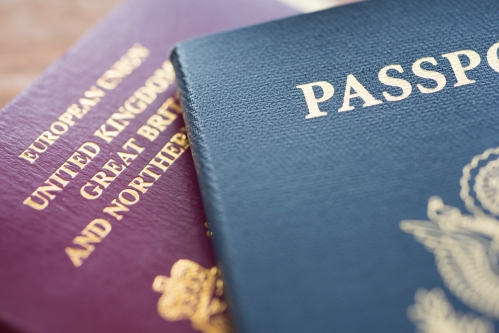
Our situation is also further complicated by the fact that I travel on a U.S. passport and N travels on a U.K. passport, so we had to handle each separately. You can learn a lot about geopolitical history simply by researching visa requirements. To wit: my Indian visa is valid for ten years and multiple entries, while N’s is single-entry and only good for six months. On the contrary, he doesn’t even need a visa to visit Vietnam for fewer than fifteen days, while I had to send my passport off again. Complex and intricate governmental relationships have a lot to do with the ease (or difficulty) of international travel for ordinary citizens.

The point is, start your research early. There are a lot of companies out there that will offer to apply for visas for you; this always comes with higher costs and some may not even be legal. If you want to travel overseas, know the country’s entry and exit requirements well in advance of your trip. “I didn’t know” or “…but I’m American!” are not valid excuses at any international border crossing.

And while we’re discussing starting your research early, you also need to know about any necessary immunizations. These might be required by the country for entry, or they might just be sensible to keep you healthy while traveling. Again, don’t wait until the last minute – certain immunizations might be a series of shots taken at timed intervals, and others only take effect after a period of time. Online resources now make this research so easy that I truly have no idea how I planned all of my solo travel when I was in my early twenties and we didn’t have this magical thing known as the “interweb.” N and I have traveled enough that we only needed typhoid shots prior to this journey, so that process was reasonably simple.

So! Visas, immunizations and now for a little on staying healthy while traveling. I’ll confess that at home, I’m not at all a fan of antibacterial everything, because I genuinely believe it damages our incredibly delicate and complex microbiome. That said, when I travel I am scrupulous about cleanliness – as much as I can be. I wash my hands whenever I can, use alcohol-based sanitizer and avoid ice in beverages.

Travel Plate sml

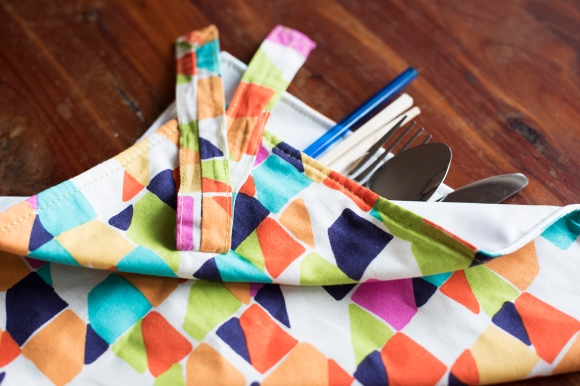
I refuse, however, to travel scared. I eat street food whenever possible, travel on chicken buses and stay in local homes rather than antiseptic hotels. I can minimize risk, though, while still traveling with an open mind – hence the meal pouch above. Because I am mad crafty when I’m not cooking, I designed and sewed these travel squares as both a placemat and a cutlery holder. We’ll eat local food with our own (clean-ish) utensils, and we’ll have a reasonably hygienic eating surface that we can wipe clean and sanitize when no other option is available. These are primarily designed for our lengthy train trip in India, when vendors will hopefully offer snacks and drinks along the way. So much of staying healthy on the road is about paying attention: where are the locals eating? Is food that’s supposed to be hot actually served hot? Are there flies on the meat? I aim, as always, to be practical without being paranoid.

Clean tap water is something we take for granted most places here in the U.S. but is one of the primary causes of travelers’ maladies overseas, so we’re also bringing a SteriPen. I’m adventurous but not stupid, and I’d love to make it through our five months without either of us getting dangerously sick – purifying all of our drinking water goes a long way towards that goal. A little tummy trouble is to be expected when traveling, but we’d certainly like to avoid anything major.

But wait – ignore the potential for cholera and dysentery! We haven’t even talked about all the diseases you can contract just from the mosquitoes! We’re bringing plenty of DEET-based repellent, and we’ll treat our clothes and our mosquito nets with permethrin before we depart New Zealand for southeast Asia. While I’m not enthusiastic about poisons as strong as DEET, I’d gargle with the stuff if it kept me from getting dengue fever. I’d think differently if I were traveling with small children, the very elderly, or anyone with a compromised immune system, but for two healthy adults I firmly believe that the benefits of heavy-duty mosquito repellent outweigh the risks, especially when journeying through Third World tropics.

After all this scary stuff, the message I want to leave you with is this: if you’re thinking about traveling anywhere outside the U.S., just go. The above isn’t designed to terrify you, just to remind you to be sensible and to do your research before your trip. So many Americans don’t travel for so many reasons and while I know we have amazing things to see and do in this beautiful country, I believe that we also have to get out in order to appreciate just how good things are here. So go. Wherever you’ve always wanted to travel, go. You can make it work, whether it’s about finances, or time off, or just plain fear. I promise you, travel will change your life for the better – and you’ll value what we have here even more. Just go.

NJB_9559.JPG


Things to do

So. Here we are, six weeks out from our round-the-world departure, and I’m starting to feel more than a little overwhelmed about the list of things to do. We’ve both traveled pretty extensively but it seems to me that traveling in my twenties was substantially easier than this time round. Is it because I have a house? A partner? Plants and a freezer and chickens and bees and a garden? Yes, yes, and yes to all that. Plus a business that requires a great deal of my focus and energy, even while I prepare to let it go dormant for a time. And I’m older, and wearier, for certain. And yet…every time I find myself in a state of absolute panic, I start thinking about that open road ahead of us in January. I think about getting on the plane in Denver – carrying, of course, a copy of the Sunday New York Times because I’m only allowed that special luxurious pleasure when I travel – and I think about all of the adventures we’re about to have that I don’t even know about yet. And that makes my list of immunizations, shopping, visas, storage, bank accounts, arranging and rearranging worth it. It will absolutely be worth it.

PTP#1

It all starts here

IMG_20170218_192138881_HDR.jpg

On January 8, 2017, we depart Denver for a five-month round-the-world sabbatical. By then we will have quit our jobs, put our businesses on pause, given away our chickens, mulched the gardens and closed down our house. We start in Japan, move south to New Zealand, come back up to southeast Asia, head to India for a five-week train trip, then finish with a month in England. The decision to take this trip was somewhat impulsive. There is so much to be done, and we’re in the thick of it right now.