Welcome to India

A friend mentioned recently that she describes India with “the three C’s”: color, chaos and contradiction. We couldn’t have said it better. There is literally nothing in the world that can prepare you for this country – not the noise, the heat, the traffic, the pollution, the incomprehensible number of people, nor the breathtaking beauty. India is almost too much – too much to absorb, to photograph, to process – but we’re doing our best. This is not easy travel, that’s for damn sure, but it is amazing and completely unlike any place we’ve ever been.

NJB_4926

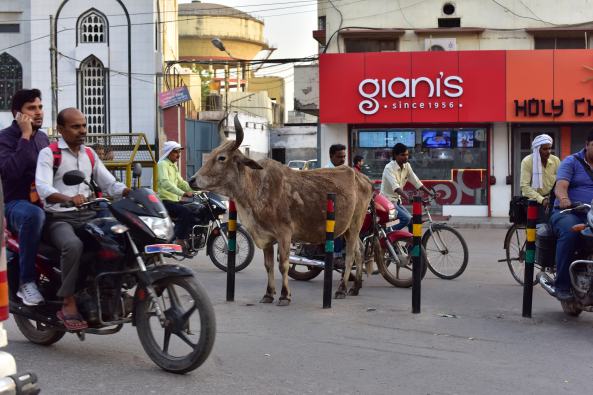
The iconic sacred cows are found just about everywhere, most often in the middle of the street.

NJB_4122

Chickens on their way to market.

NJB_4142

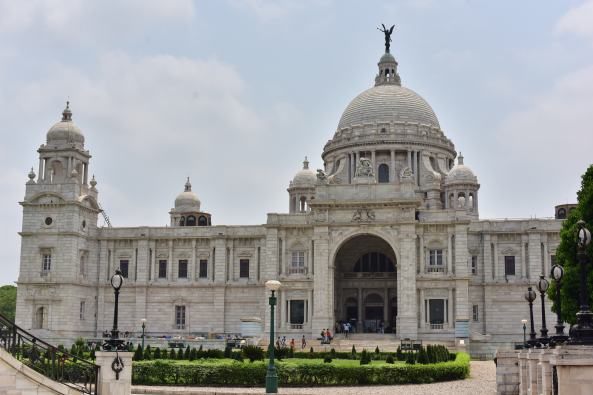
Victoria Memorial, Kolkata.

NJB_4429

The hill station of Gangtok, plus efficient solar drying of laundry.

NJB_5297

Milk delivery.

NJB_4318 - Copy.JPG

Mandala prayer wheels at a Buddhist monastery.

NJB_4068

Outside of New Market, Kolkata.

NJB_4444

Car and motorbike parts for sale.

We have been absolutely amazed – both in India and in southeast Asia – at the sheer number of tiny storefronts and street stands selling all manner of goods, from food to housewares to fabric. The typical American “big box” store definitely isn’t part of the lifestyle here.

NJB_4217

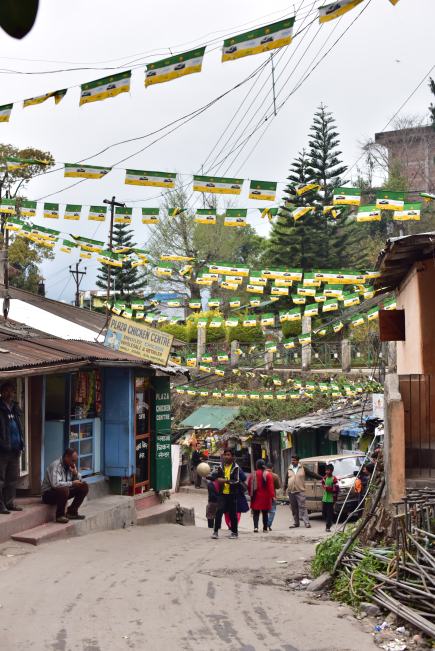
It’s election season in India and there are lots of flags, posters and rallies.

NJB_5247

Tractor repair shop.

NJB_4134

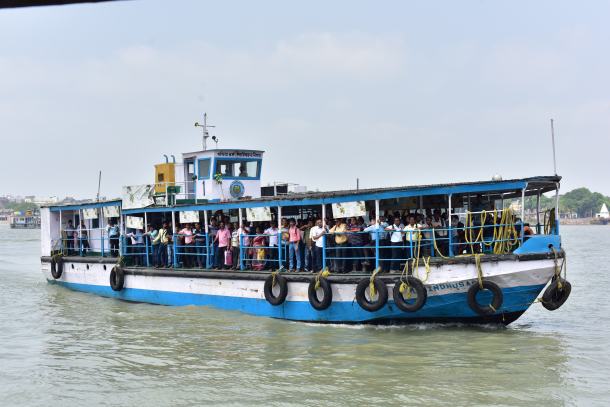
A ferry on the Ganges.

NJB_4228

See those apples? They’re from Washington! The U.S. is not the only country importing produce from thousands of miles away.

NJB_4056

Street scene, Kolkata.

NJB_4065

India’s classic Ambassador taxicab.

NJB_4225

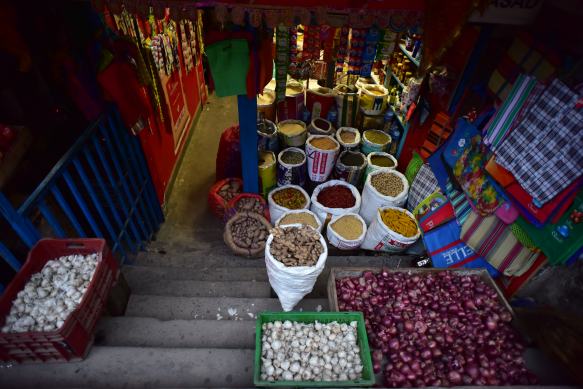
Spices and aromatics for sale at a basement shop.

NJB_4363

No room to build? Just put it on top of something else.

NJB_4304

A monk at Rumtek Monastery in Gangtok.

NJB_4389

Much like geisha culture in Japan, families often rent traditional costumes for photo shoots, like this group at a temple near Darjeeling.

NJB_4690

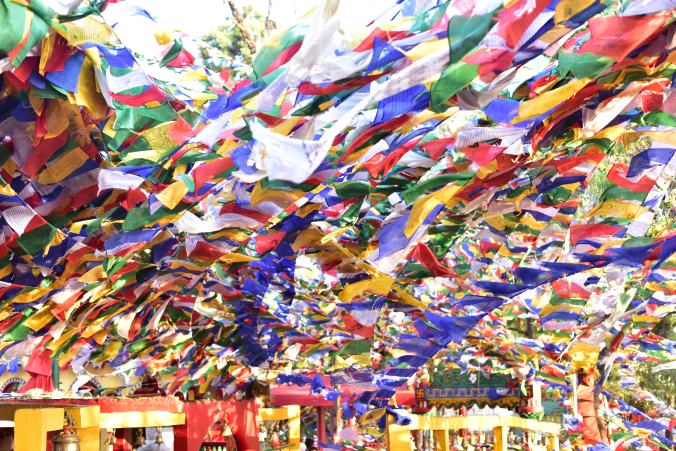
Prayer flags at a Tibetan Buddhist temple in Darjeeling.

Scenes from the Banana Pancake Trail

We’ve never claimed to be the world’s most adventurous travelers, and our travel in southeast Asia definitely adhered to the classic Banana Pancake Trail. Nevertheless, we had a phenomenal time here and loved seeing countries that were new to both of us. We visited Cambodia, Vietnam and Thailand in just under a month; below, some of our favorite images from this portion of the trip. We’re off to India!

NJB_3399

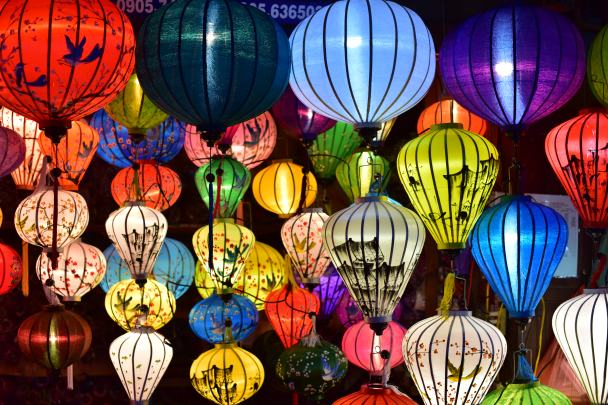
Illuminated lanterns in Hoi An’s Old Quarter.

Hoi An, near Da Nang on Vietnam’s central coast, was most certainly our favorite place in the country. We loved its antiquated feel and the charming Old Quarter, which is decorated with tens of thousands of brightly colored lanterns hung all over the shops and streets. Strolling here after sunset was such a pleasure.

NJB_3433.1

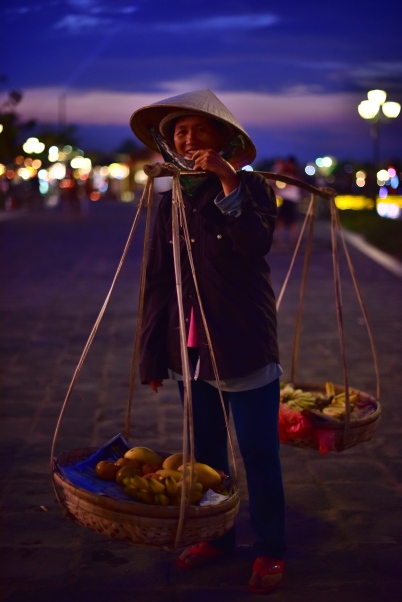
A fruit vendor in Hoi An.

NJB_3349.1

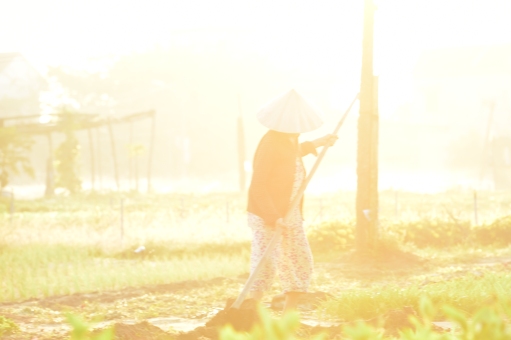
Early morning gardening in Vietnam.

In Hoi An, we participated in a sunrise bicycle tour that took us to the daily market, an organic farm and out to the rice paddies. Truthfully, most small village farms in developing countries are organic because labor there is cheap and chemicals are expensive. In the U.S., unfortunately, the opposite is true.

NJB_2552

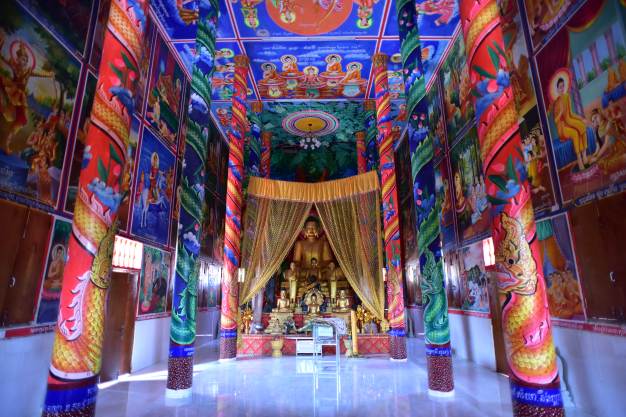
The stunning interior of a village temple outside of Siem Reap.

This gorgeous temple was on a dusty road leading out of Siem Reap; from the outside, you’d never know that the interior was this incredible. Each fresco had a number painted in the corner; this indicated the amount of money raised by the village to pay for that particular painting.

NJB_3491

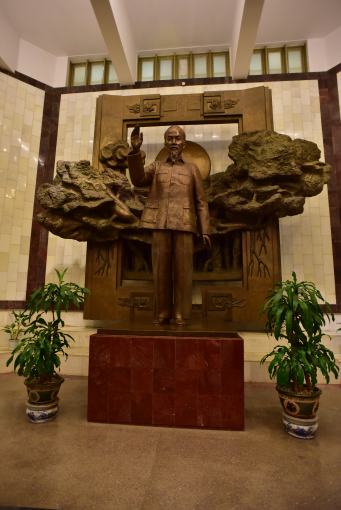
Vietnam’s favorite son is absolutely revered in this country.

Vietnam’s national hero, Ho Chi Minh, is celebrated all over the country but nowhere more so than in his namesake museum in Hanoi. The museum is one of the strangest and darkest – both in terms of actual light and the overall mood – places we’ve ever visited. It’s an unsettling combination of blatant propaganda and modern art installation, and worth seeing just for the weirdness.

NJB_3495

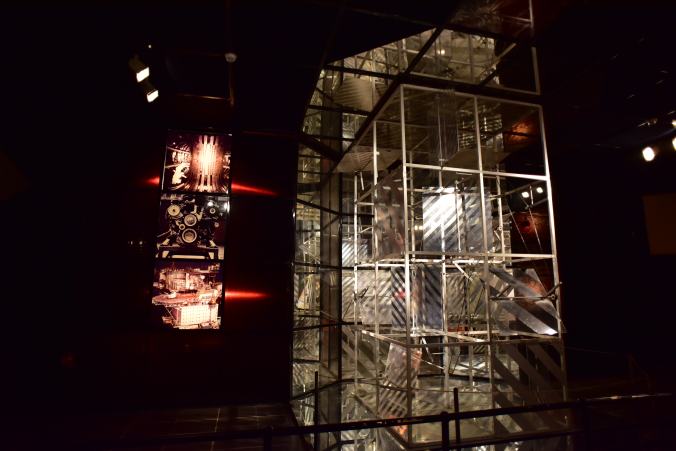
See how dark this museum is?

The placard on this exhibit in the Ho Chi Minh Museum read, in part, “The models in this hall give visitors information about how scientific and technical achievements have been made use of for peaceful and beneficial purposes. The models at the same time condemn those who have utilized these achievements for aggressive and destructive purposes.” What?

NJB_3717

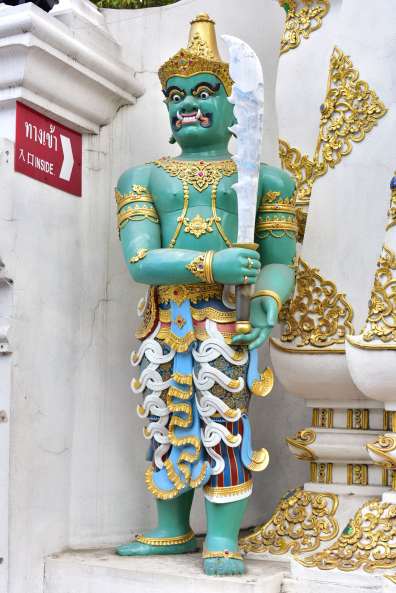
A ferocious temple guardian in Chiang Mai.

NJB_3353

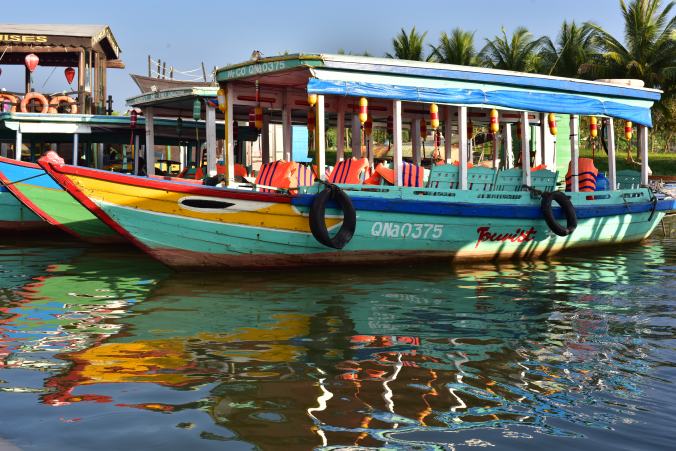
Look closely: the labeling on these boats in Hoi An lets everyone know you’re a tourist.

NJB_3482

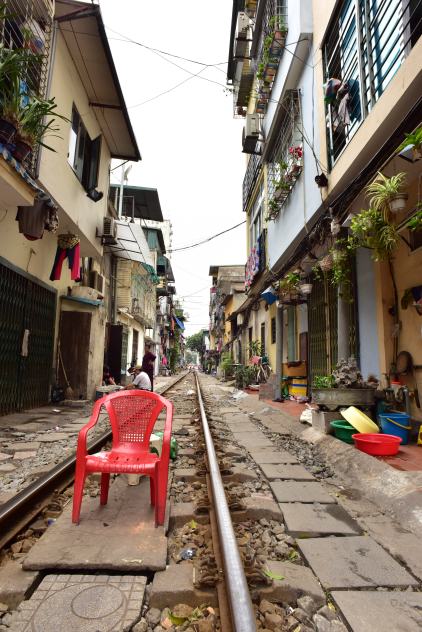
Trainspotting might be a bit risky in Vietnam.

NJB_3827

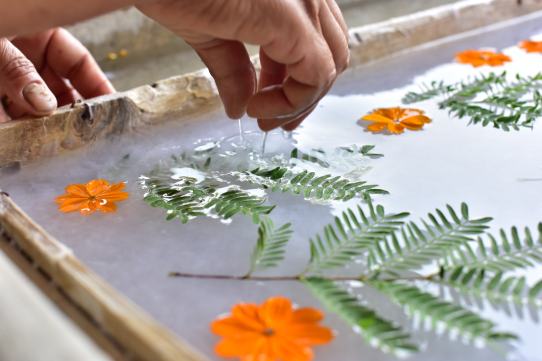
Adding decoration to our handmade paper.

In Thailand, we took a papermaking class and created gorgeous papers with leaves and blossoms. It’s simple and rewarding and beautiful; we’re hoping to make our own to wrap our handmade cheeses in at Quiet Farm.

NJB_2953

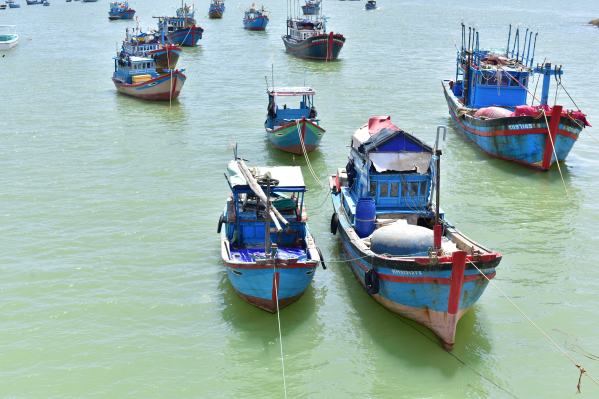
Fishing boats on the river in Nha Trang.

NJB_3700

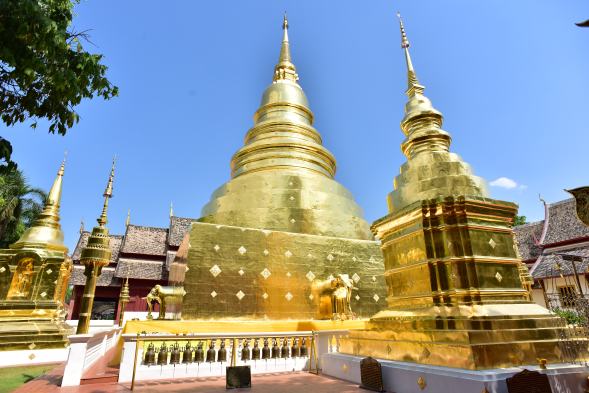
One of Chiang Mai’s many elaborately decorated temples.

NJB_3138

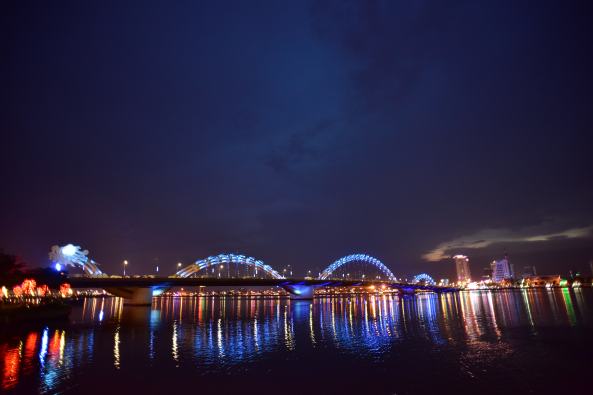
Da Nang’s famous (and very expensive) Dragon Bridge changes colors – and on weekend nights, it also sprays water and breathes fire!

NJB_3389

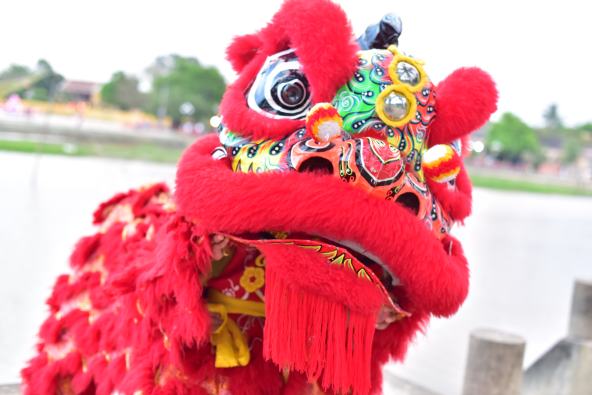
We found this lion dancer at an international food festival in Vietnam.

NJB_2917

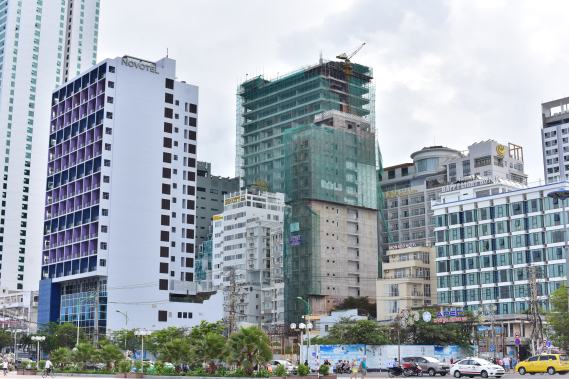
The building boom in Nha Trang, a beach resort popular with Russian tourists.

Vietnam is in a mad rush to modernize, so hotels are constructed at a breakneck pace. This means that not only are there hammers and saws competing with motorbike horns at all hours, but that a lot of construction is left partially finished when workers move on to the next project.

NJB_3550

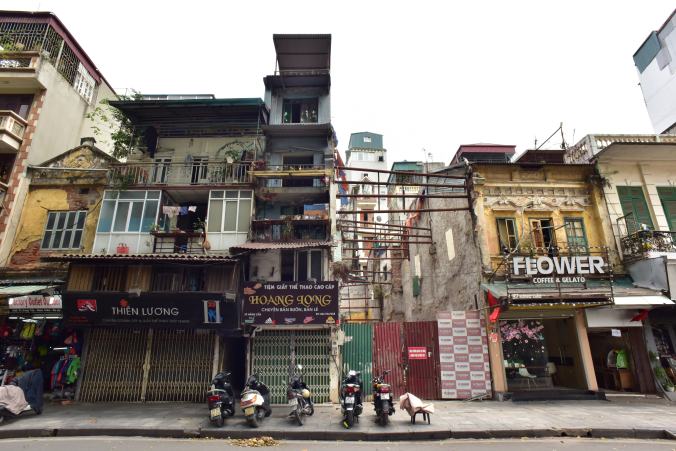
A “skinny house” in Hanoi.

Even more common than all the new construction is making do with what’s already there. The skinny house above has been tucked in; notice that the bamboo poles are actually structural and are keeping the two buildings from leaning in. Presumably something will be quickly built in that empty space. But there’s a fancy coffee shop! With gelato!

NJB_3565

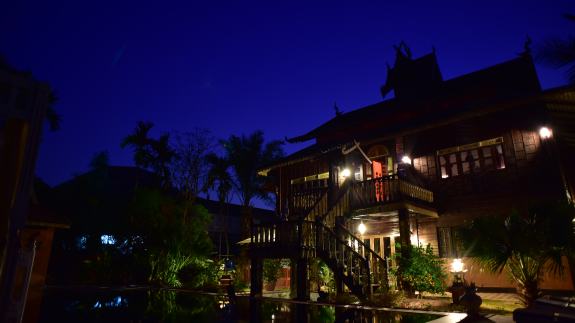
The exterior of the traditional lanna house we stayed at outside Chiang Mai.

NJB_2742

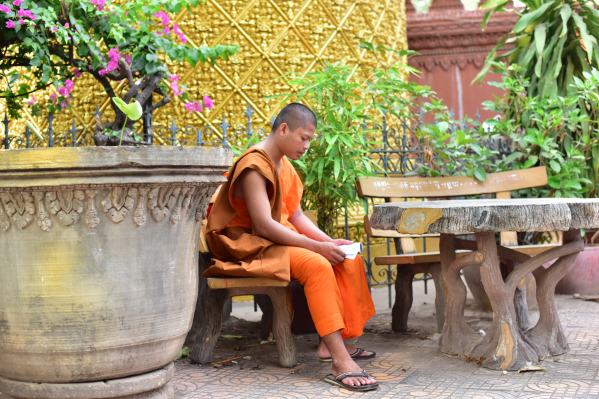
A monk studying at a temple in Phnom Penh.

Monks in orange robes with shaved heads are a common sight throughout southeast Asia; it’s amusing to see them with earbuds and mobile phones, too. Even monks have to modernize.

NJB_3747

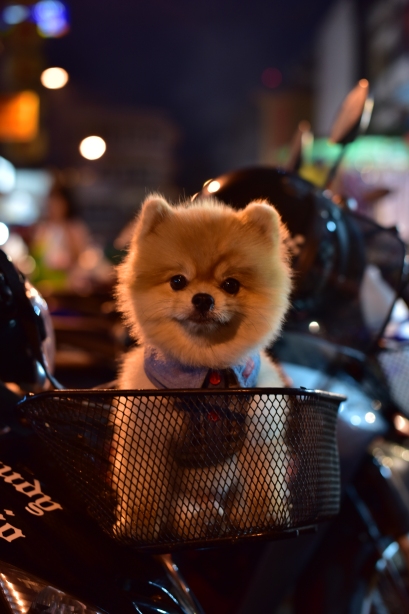
Is this for here or to go?

And we leave you with this photo, and dare you not to smile. While dogs are still eaten in southeast Asia, as the region grows in economic prosperity, its people want what they perceive as middle-class luxuries – and that includes house pets. So now it’s more common here to see dogs on a leash rather than on a grill.

Street food

After the markets, street food vendors are one of the most colorful sights in southeast Asia. From fresh fruits and vegetables to juices, meat and snacks, just about anything you fancy is available from a street stall. Although you might not know exactly what you’re eating, it’s worth watching just for the show.

NJB_2928

A lobster stall in Nha Trang setting up for business.

NJB_2926

Crocodile farming – for both meat and leather – is big business in central Vietnam; the industry is definitely not PETA-approved. This enticement is outside a restaurant in Nha Trang.

NJB_2645

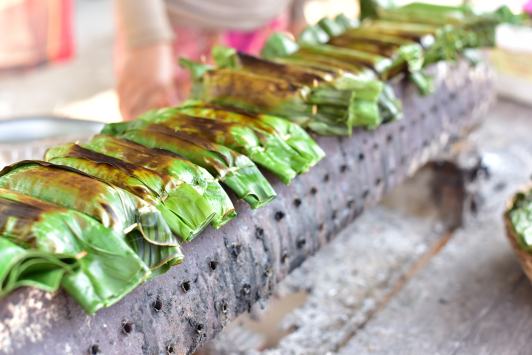
These delicious little packets contain sticky rice stuffed with bananas, eaten as a snack or dessert.

NJB_3735

These lovely women are running a rotee stand. Rotees in Thailand fall somewhere between a crêpe and a pancake and are filled with sweet or savory ingredients.

NJB_3723

Carts are set up along just about every street.

NJB_2923

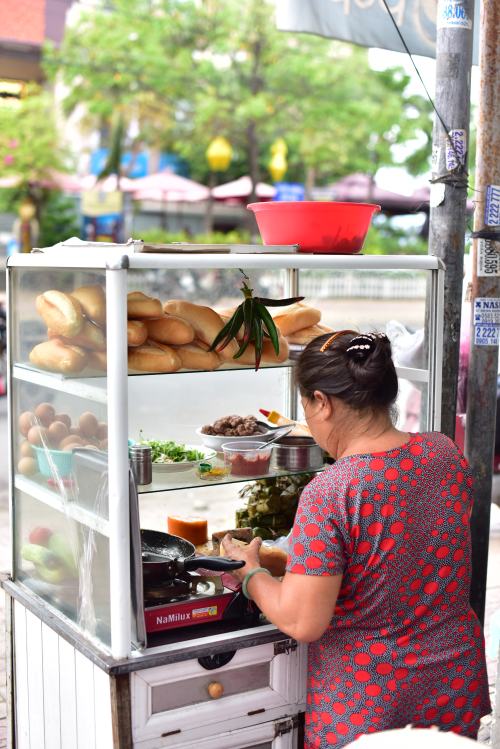
This woman is making Vietnam’s world-famous banh mi sandwich, sold for about 75 cents.

NJB_2911

These tiny bananas (about the length of a finger) are so much more flavorful than the standard Cavendish variety we get at home.

NJB_3173

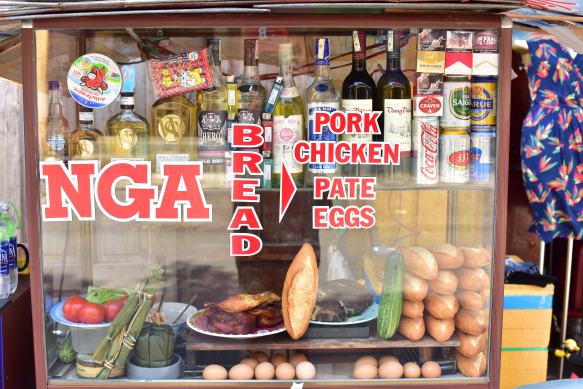
Fancy some whiskey or red wine with your street food meal? You can have it.

NJB_3743

Perhaps you’d like a meatball skewer?

NJB_2496

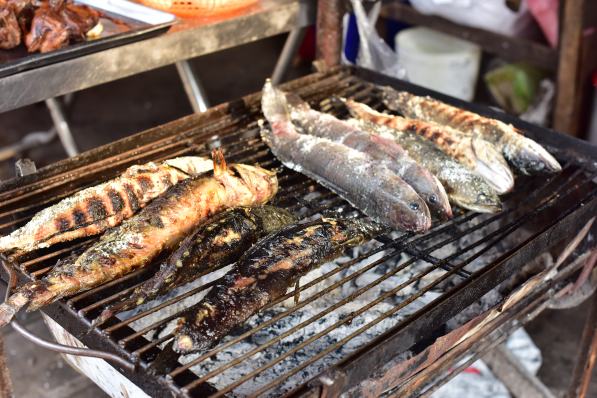
Salted whole fish, ready to eat.

NJB_2486

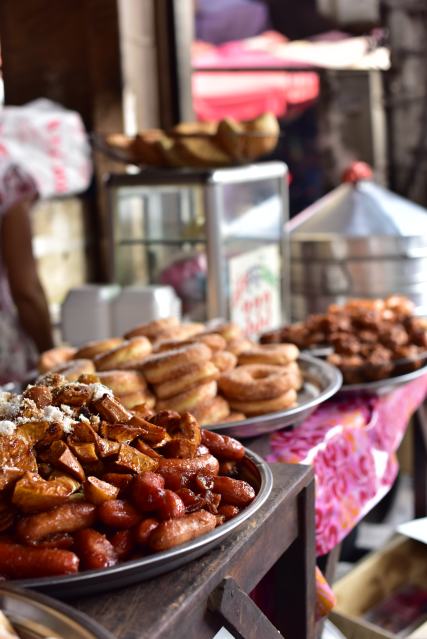
Fried sweet potato, banana and other tasty treats.

NJB_2597

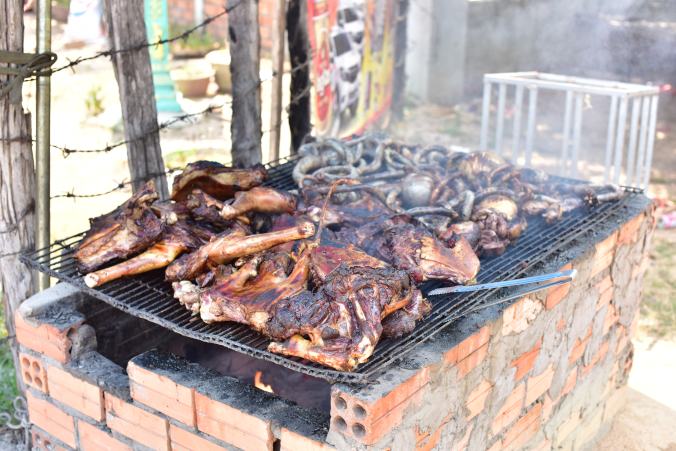
The “special meat” restaurant outside of Siem Reap. Sit, stay…good dog.

NJB_2488

Little sweet cakes, served hot.

NJB_2781

Skewers and more, ready for the grill.

NJB_2755

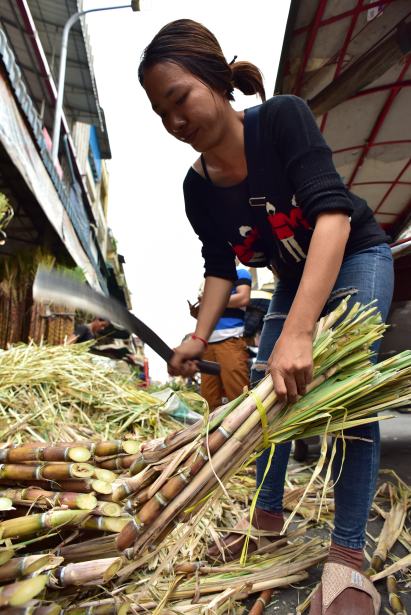
Baling sugarcane on the streets of Phnom Penh.

NJB_2479

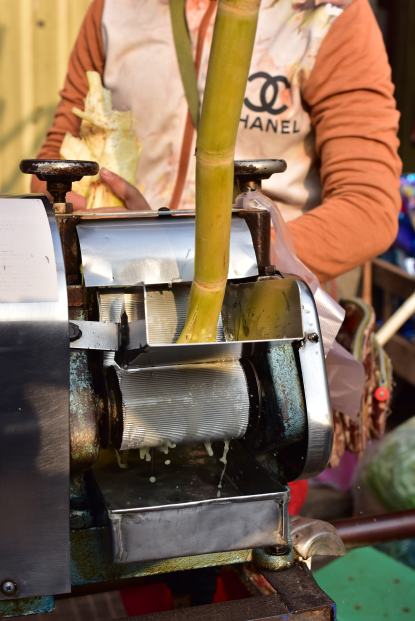
The sugarcane is crushed through a press to produce delicious juice, which is flavored with fresh lime and sold in little baggies as a refreshing drink.

NJB_2656

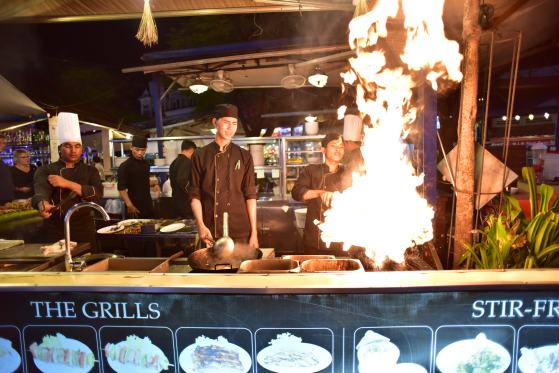
Chefs demonstrate their stir-fry skills at Siem Reap’s night market.

NJB_3740

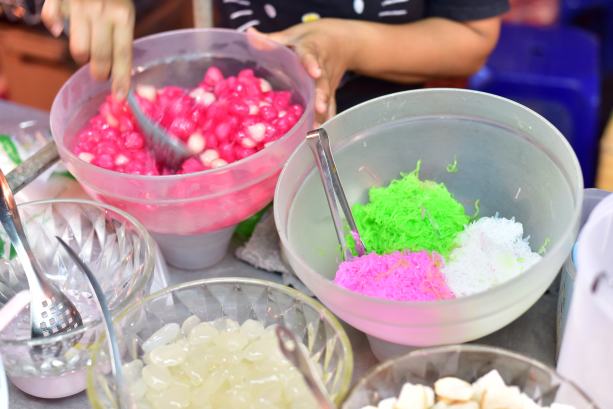
Honestly, I don’t know. But what colors!


Vietnam by train

Thus far on this trip, we’ve used just about every imaginable method of transportation, so long-distance trains in Vietnam fit perfectly into our plans.

NJB_3279

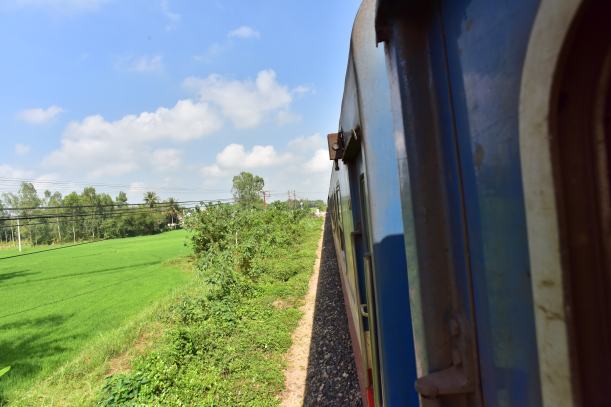
Hazy sunrise over the rice paddies.

Long-distance trains were established by the French in Vietnam in the 1880s; the North-South line, connecting Hanoi and Ho Chi Minh City (formerly Saigon), opened in 1936. The line was cut in 1954 at the beginning of Vietnam’s war against the French when the country divided into North and South. It was rebuilt in 1976 and is still known to many as the Reunification Express.

NJB_2900

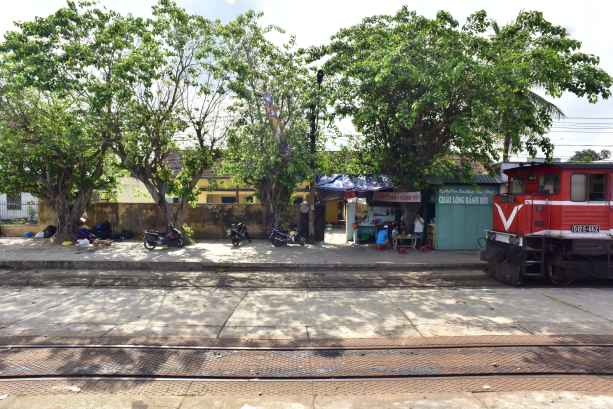
No one is striving for architectural greatness at these train stations.

NJB_2985

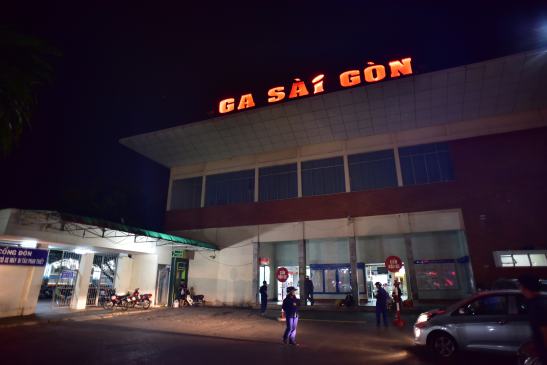
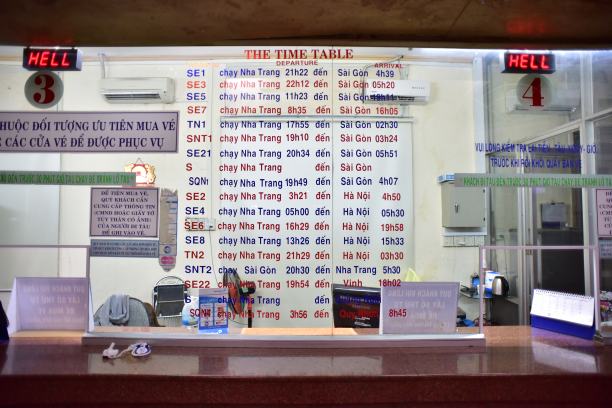
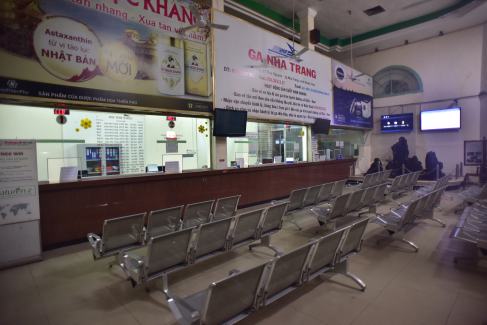
Though it’s officially called Ho Chi Minh City, the station signage and the timetables still use Saigon. We’re not certain which one is socially correct.

NJB_2904

It is advisable to purchase snacks for the journey from the station vendors, though they will almost certainly shortchange you.

NJB_2982

This doesn’t show the large family groups camped in the room behind, but the waiting rooms are clearly both luxurious and comfortable.

NJB_2986

Unlike the precision of Japan, Vietnamese trains are on a bit more of a casual schedule.

NJB_2992

A four-bed “soft sleeper” cabin.

Train accommodations in Vietnam come in fairly self-explanatory flavors: hard seat, soft seat, hard sleeper and soft sleeper; sleepers can be either four-bed or six-bed. We first used soft seats for day trains, but learned the hard way that this meant we’d be subjected to Vietnamese musicals played on the communal televisions at ear-splitting volume. Presumably this was very enjoyable for the Vietnamese passengers, but it did diminish our love of train travel somewhat. So did the physically aggressive food vendors who hopped on board at stations.

NJB_2994

NJB_3000

NJB_3005

This rice paddy photo is clearly lacking the iconic tiny Vietnamese woman in a conical cap.

NJB_3023

Everything – and we mean everything – is under construction in Vietnam. This includes every single hotel we stayed at.

NJB_3018

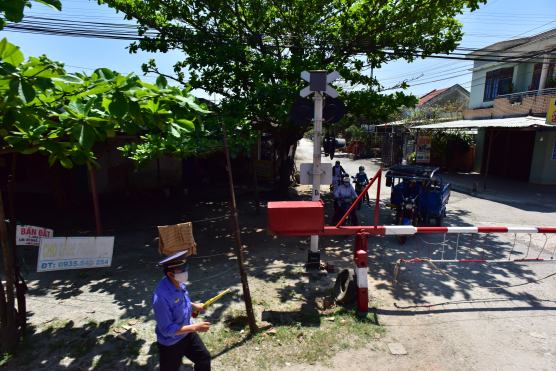
Railway crossings are not automated, so the train employee runs to shut the barrier as the train passes.

NJB_3025

NJB_3016

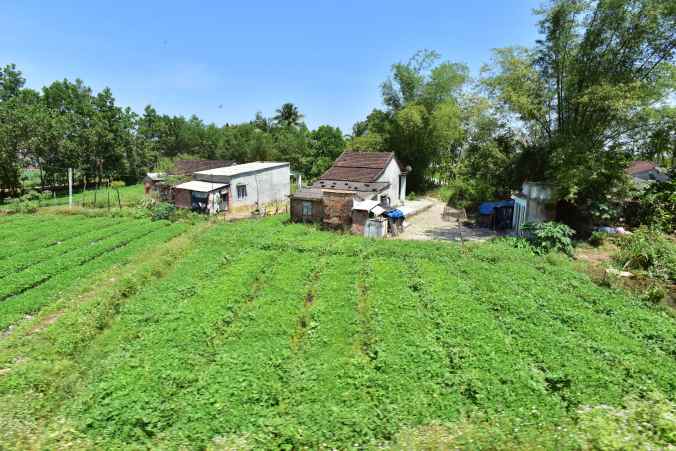
Almost every house we passed had a large vegetable garden.

In addition to the vegetable gardens we saw at most homes, families also harvest part of communal rice paddies. Their allotment is determined by the size of the family, so there is certainly an incentive to have more children. Obviously, no one actually owns land here; land is theoretically owned collectively by the people, but of course in reality controlled entirely by the government.

NJB_3010

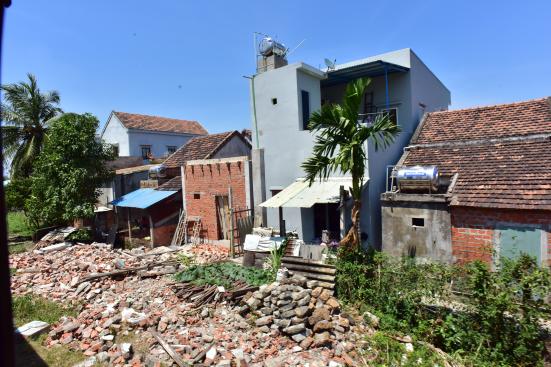
On many occasions, we passed close enough to touch the buildings outside.

NJB_3026

We were a little surprised by the cavalier attitude towards crossing live tracks, but when in Vietnam…

Here’s the honest truth: trains are not the most efficient way to travel around Vietnam, and unfortunately they’re not the most economical, either. Though we had planned on doing all of our travel up the coast via train, budget airlines like AirAsia and JetStar have made the decision much more difficult. From Da Nang to Hanoi, for example, it’s sixteen hours by train and about ninety minutes by plane. The trains are by no means particularly comfortable or clean, and the airline tickets are often cheaper! So we’d love to tell you that we honored the backpacker credo and traveled slow, but that’s not the entire story. This is a complicated, difficult country, and the vagaries of train travel are just the beginning.

NJB_3040

We finished our train journey about halfway up the coast at Da Nang, or “China Beach” to Americans.

Walk this way

We believe that one of the best ways to explore a big city is by walking it. During this adventure, N and I have tackled Kyoto, Tokyo, Auckland and Wellington, plus numerous small towns and villages. Never before, however, have we encountered as much danger as we did when exploring Ho Chi Minh City (formerly and still sometimes Saigon) and Hanoi in Vietnam.

NJB_2811

NJB_2791

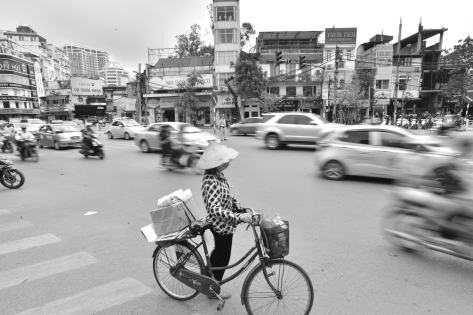
It’s every man (or woman) for themselves out here.

Imagine the biggest non-motorway road you can. Now envision it filled entirely with cars, and fill in the empty spaces with thousands of motorbikes. Add more motorbikes. Throw in pedestrians, elderly women on bicycles, wheeled carts filled with vegetables, tuk-tuks, and a few more motorbikes, just for good measure. Feel free to paint in lane lines and dividers on your imaginary road, but don’t worry too much as everyone will assiduously ignore these. Now imagine that everyone who has access to a horn or a bell or any other noisemaking device is using it – at the same time. Oh, and don’t forget to let everyone text while they’re driving. Now you might just barely have the tiniest inkling of the risk involved in walking Vietnamese city streets.

NJB_3544

Southeast Asia is absolutely overrun with motorbikes. Tourists can rent them, but do so at your own risk; serious accidents are common.

NJB_3542

We love walking (maybe me just a touch more than N, especially in the southeast Asian heat) but never before has it been quite so difficult. Even on the sidewalk – ostensibly a safe haven – we faced myriad obstacles.

NJB_3474

Sidewalks in Vietnam aren’t so much for walking as they are for sitting down to catch up with friends.

NJB_3529

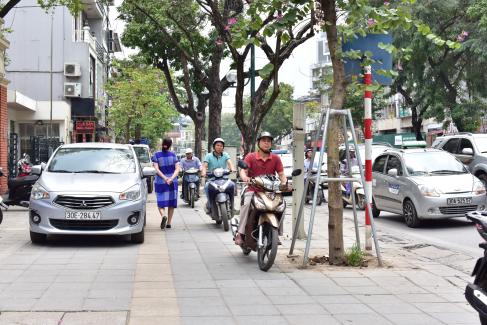
If the road traffic is too much, the motorbikes will join the pedestrians on the sidewalks. Also, feel free to park your car wherever you’d like, as demonstrated on left.

NJB_3475

Pop-up meat markets, like this one, also make navigating sidewalks in Hanoi somewhat challenging.

NJB_3458

Oranges, anyone?

NJB_3176

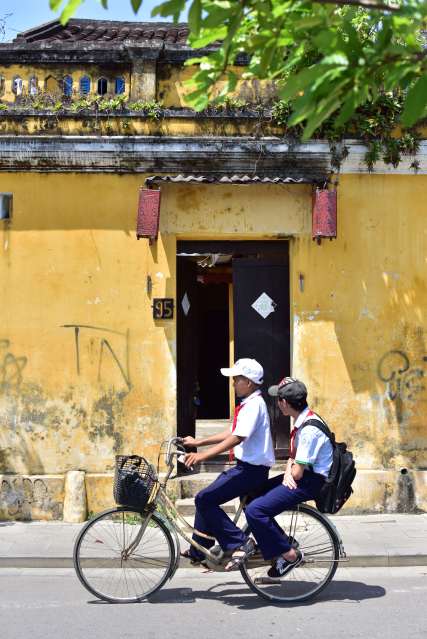
We regularly saw bicycles and motorbikes loaded with two, three or four family members. Child safety seats? Not so much.

NJB_2858

The kid sandwiched on the motorbike in the foreground apparently doesn’t need a helmet.

NJB_2869

Even when the crosswalk light says it’s the pedestrians’ turn, this is typically the gauntlet you face. Beware.

NJB_3535

No, that isn’t a crashproof bike helmet.

NJB_3531

We saw motorbikes carrying all manner of goods, from extension ladders to mini fridges to lengths of steel pipe to balloon bouquets.

NJB_3486

The bicycle on the right is loaded with ceramics for sale. Imagine how heavy and unwieldy it must be to ride.

We learned quickly that the only way to make progress was to take a deep breath and step out into traffic. No one is actually driving all that fast, and the motorbikes will elegantly navigate around pedestrians like a shoal of fish. As long as you move smoothly and consistently – and don’t stop in the middle – the system actually works, surprisingly. It defies all Western conventions. Numerous times, we saw panicked tourists frozen on the side (or the middle!) of the big roads. Know that a good degree of faith is required.

NJB_2521

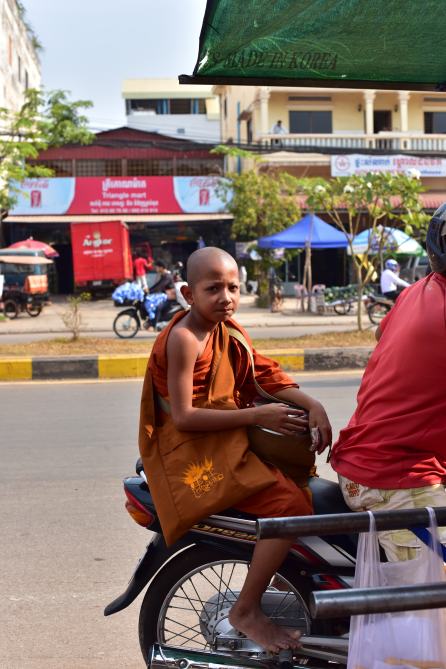
Apprentice monks have places to go, too.

NJB_2853

Yes, N was crossing the road when he snapped the shot. Risky job, this.

NJB_3195

Drivers wait for a fare…these carts only seat one passenger, so they’re not practical unless you’re traveling solo.

NJB_3476

Notice here that lane lines and directional traffic are merely a suggestion.

NJB_2887

NJB_3465

We read a helpful travel trip: “If taking a motorbike taxi, ensure your driver is sober and lucid.” Honestly, how would you know? Our airport shuttle bus driver fell asleep with alarming regularity along the journey.

NJB_3553

4AM and we can finally use the pedestrian crosswalk safely.

Navigating Vietnamese cities on foot has been one of the trickiest and most tiring parts of our travel thus far, but it certainly qualifies as an adventure!


To market, to market

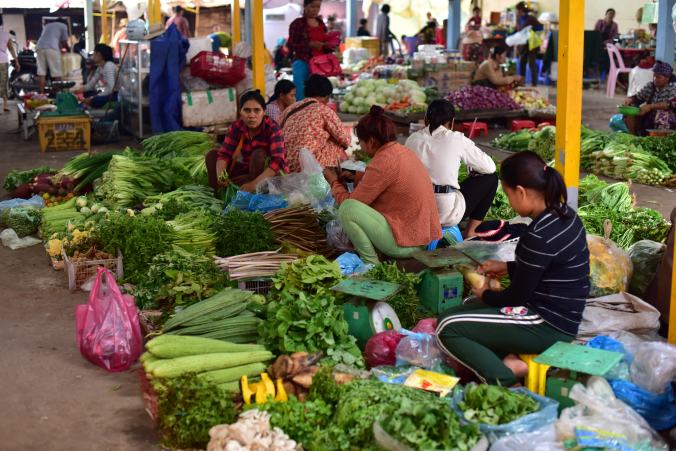
For a chef and a photographer, traditional food markets are a wonderland. We visit markets whenever possible and do our best to capture the scents, sounds and tastes through our words and photos. These markets are often messy, fragrant, hot and noisy, to say the least, but they capture a place and its people the way few other tourist attractions do.

P.S. If you’re in the Denver area, I’m teaching an incredible cooking class on exploring ethnic markets in June at the Botanic Gardens. Learn more here!

NJB_2489.JPG

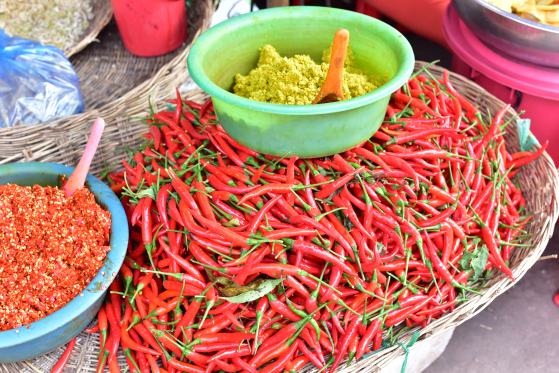
Chile paste, fresh chiles and ground turmeric.

NJB_2513.JPG

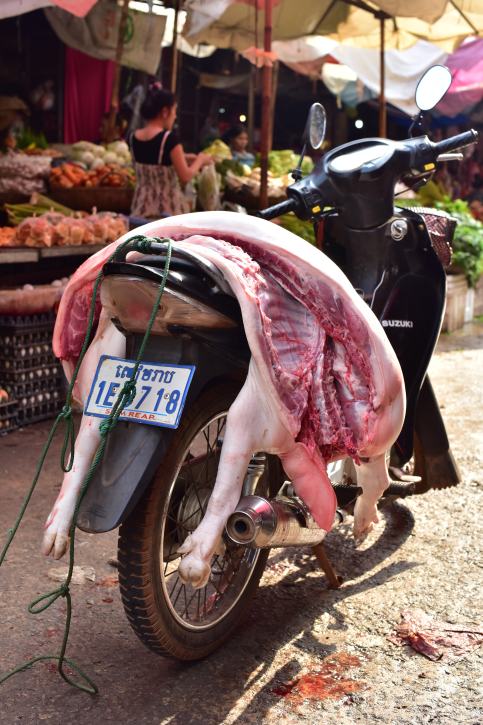
This little piggy went to market…

NJB_3271

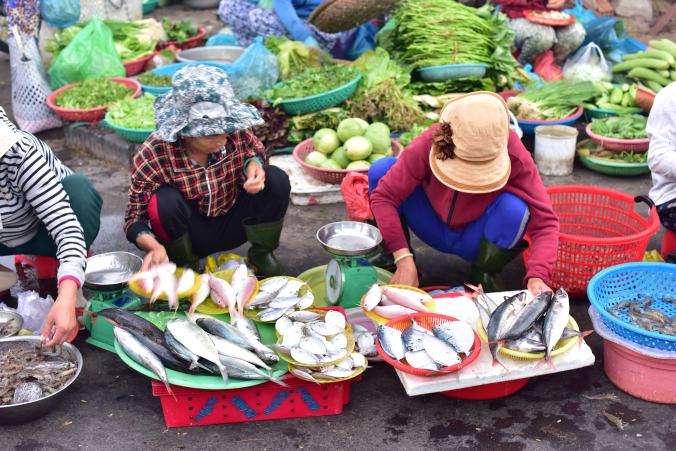
The morning fish market in Hoi An.

NJB_2504.JPG

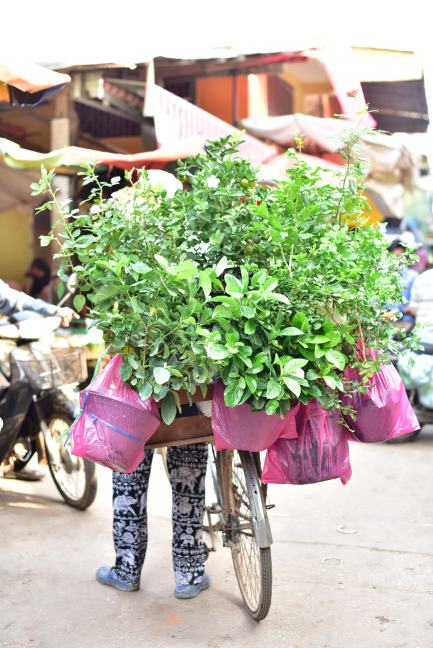
Fresh herbs, delivered by bicycle.

NJB_2491.JPG

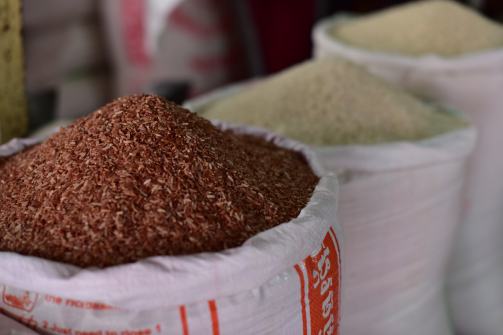
Rice is the staple food for more than two-thirds of the world’s population, unsurprisingly, there is a lot available for purchase here.

NJB_2510.JPG

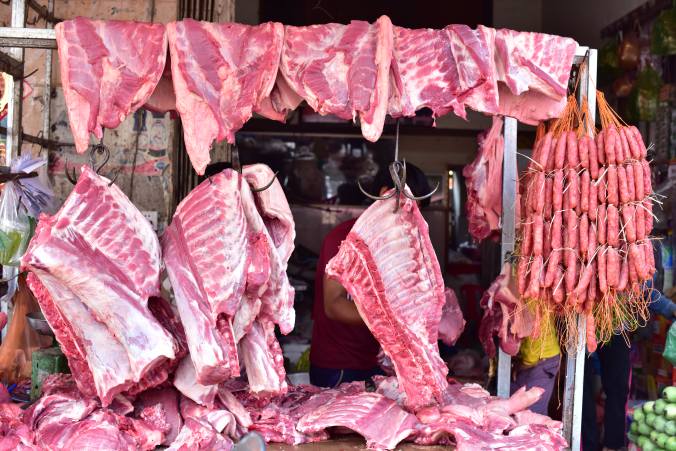
Know where your meat comes from.

NJB_2317.JPG

Siem Reap’s famous Night Market.

NJB_2503

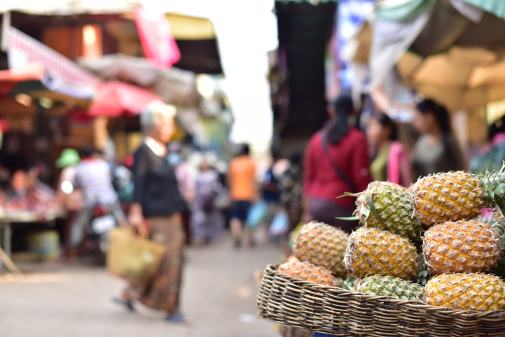
Fresh pineapples are often sold peeled and cut for an easy to-go snack. 

NJB_2472.JPG

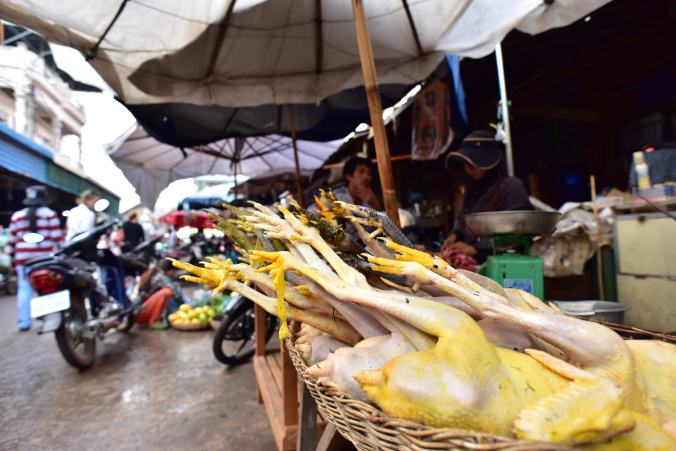
The “blackfoot chicken” is just one of the many poultry options available. Every conceivable type and size of bird is eaten here.

NJB_2763.JPG

Lots of unusual fruit varieties that I’ve never seen before!

NJB_2500.JPG

This is what chefs mean when they talk about “nose-to-tail” cooking.

NJB_2477.JPG

Most markets we’ve seen are conducted primarily on the ground.

NJB_2519.JPG

This is not the gluten-free section.

NJB_2493

Spices ready to blend into fiery curry pastes.

NJB_2306

NJB_2304

Markets in southeast Asia aren’t just for food; Cambodia and Vietnam produce a great deal of the world’s “fast fashion,” typically in abysmal working conditions.

NJB_2507.JPG

Everything you need to garnish pho.

Needless to say, I’m looking forward to cooking again when we get home!


Temples of boom

We thought of calling this post “Angkor what?,” but it’s a bit of a cheap shot. To sum things up rather simplistically, tourism in Cambodia exists primarily because of one place:

NJB_2392

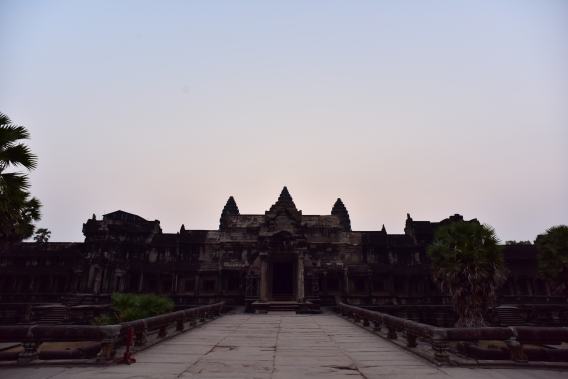
The famous view of Angkor Wat at sunrise. 

Over two million tourists visit Cambodia each year, and the vast majority – like us – make Angkor Wat and the nearby temples central to their trip. Last year, the government-run organization that recently took over management of the temples (some sources claim this cultural treasure is actually owned by a businessman) announced a dramatic increase in the price of a one-day temple pass, from $20 to $37.

NJB_2336.JPG

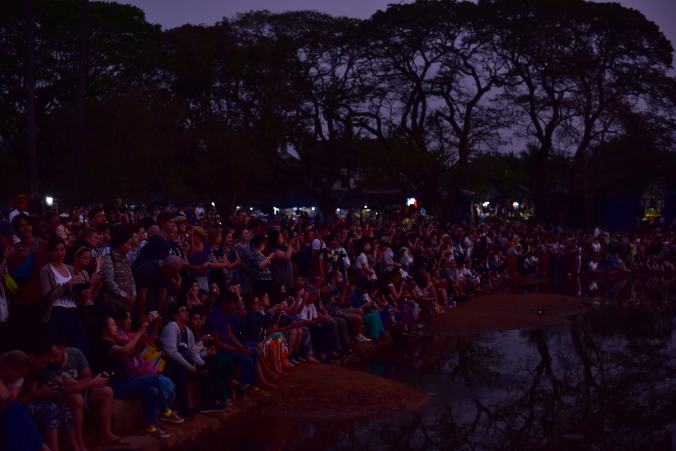
You’ll want to arrive early, since you’ll be jostling for space with hundreds and hundreds of other tourists angling for the same sunrise shot.

Based on the throngs of people already at Angkor Wat at 5AM, it seems very few tourists have been put off by this price increase, despite concerns to the contrary. Although there are hundreds of temples in the immediate area, most tourists – like us – visit just a few and if we’re speaking honestly, it’s because this is a tourist attraction we’re supposed to see, rather than one we’re really interested in. It’s easy to get “templed out” here very quickly, especially in the blistering heat and pervasive dust of the dry season.

NJB_2372

One of Angkor Wat’s towers.

NJB_2369

Stone carving detail, Angkor Wat.

NJB_2349

Angkor Wat is the largest and best-preserved of the main temples, hence its overwhelming popularity.

As good tourists with unlimited access to travel guides and “places to go before you die” lists, travel too often becomes a series of boxes checked off, mostly based on others’ experiences (or glossy Instagram photos). Angkor Wat and its compatriots are UNESCO World Heritage Sites and regularly cited as one of the world’s most important historical monuments. The reality, however, is that unless you’re a devoted student of history, archeology and/or crumbling stone, you might actually find the endless piles of rubble and maddening crowds rather underwhelming.

NJB_2399

Temple entrance at Banteay Srei.

NJB_2414

Banteay Srei is carved from red sandstone, making it particularly unique amongst other temples in the area.

It’s also difficult for us, at least, to feel charitable towards a government who might have made somewhere in the neighborhood of $30 million last year (based on a conservative 1.5 million visitors buying $20 temple passes) plus about $35 a head for visitor visas (again, conservatively about $70 million) but can’t seem to find the resources to organize clean drinking water or trash collection for its citizens. Where, exactly, are these millions going?

NJB_2407

Stone guards on duty at Banteay Srei.

NJB_2416

Carving detail, Banteay Srei. The temple’s name roughly translates as “citadel of the women;” one possible explanation is that men couldn’t have managed the intricacy of the carvings.

NJB_2439

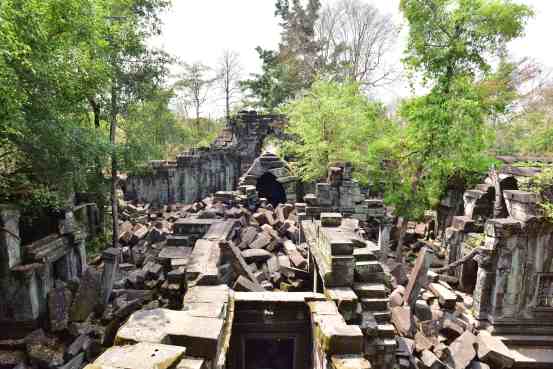
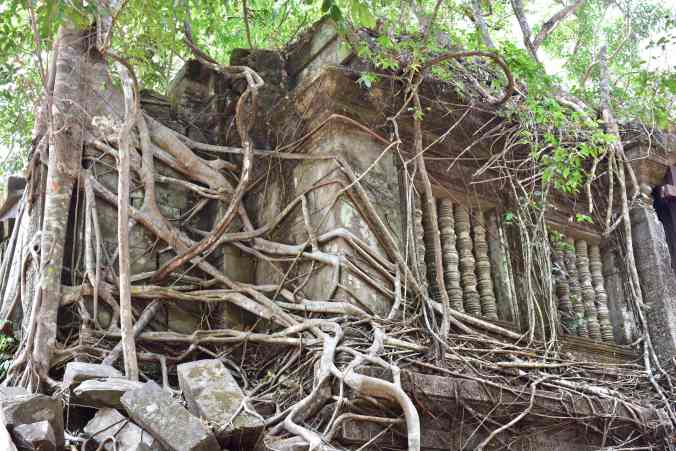
Some of the thousands of tons of rubble at Beng Mealea.

NJB_2432

Beng Mealea’s grounds were only recently cleared of landmines and opened to the public.

NJB_2447

Crumbling walls at Beng Mealea.

NJB_2470

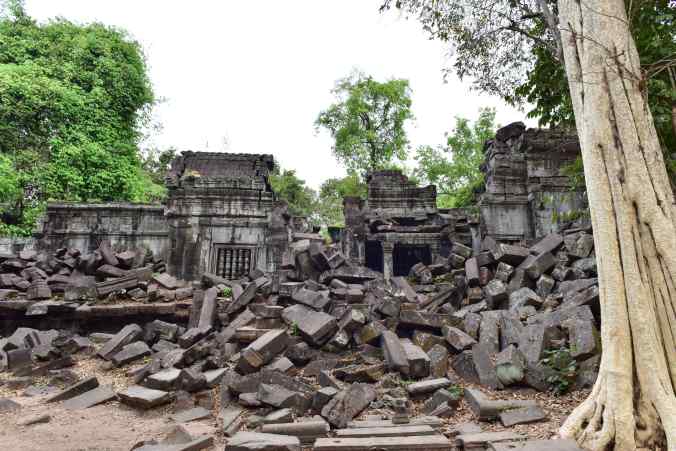
It’s a bit of a fixer-upper…

NJB_2455

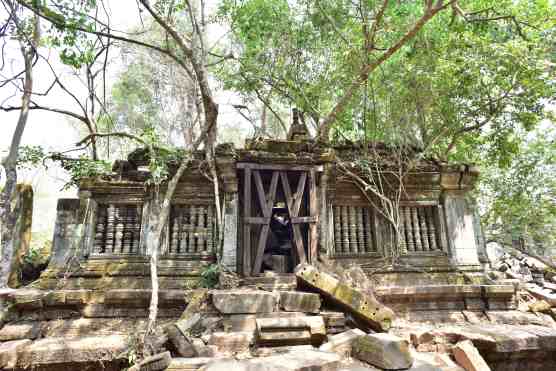
Need any more convincing that nature rules absolutely?

Please don’t misunderstand: the temples are absolutely amazing. Most were built during the 10th or 11th centuries, and the Angkor area once comprised the world’s largest city. The history and craftsmanship carved into this stone is palpable. But it’s also hot, crowded and dirty, and it’s essential to acknowledge that when you travel, you will probably visit some “touristy” spots.

Look past the trash and the hordes, close your eyes and imagine what life might have been like in these temple complexes over a thousand years ago. Birth and death and war and famine and joy and love would all exist then, just as it does today. The main challenge we as tourists face now is how to appreciate significant places like this while still preserving them for future generations. Is there really such a thing as sustainable tourism?

How things are made

Hi! We’re in Cambodia! Adjusting to southeast Asia’s extreme temperatures (currently 96°F with 43% humidity) after New Zealand’s temperate climate has been a bit of a shock, but we’re adapting. The key? Drinking plenty of water and a hotel with a pool. Plus, no heavy-duty touring activities (like dusty temples) between the intense hours of noon and 5PM. One must take good care of oneself when traveling.

NJB_2321.JPG

$29 a night gets you quite a bit of luxury in Siem Reap.

One of the benefits of traveling in less developed countries like Cambodia is often the opportunity to see things being made by hand that are almost always created by machine elsewhere. We participated in a tour that took us through small villages outside of Siem Reap where we had the chance to see incense, rice noodles, and tofu, among other things, all crafted by hand.

NJB_2608

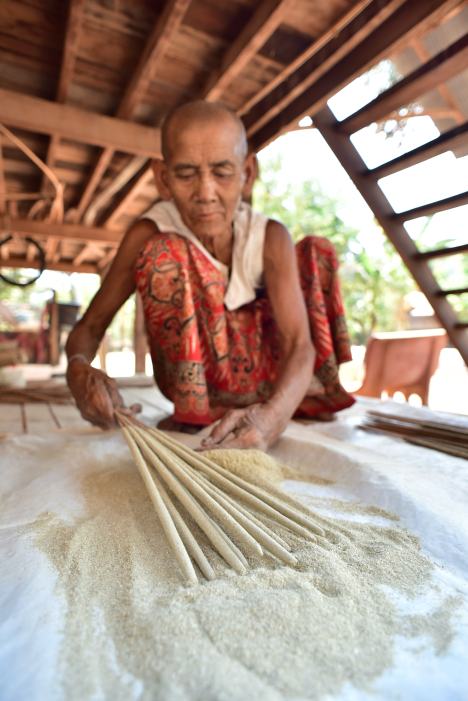
This incredible woman has been making incense sticks since she was 15. She’s now 76.

NJB_2614

Scented bark, used as the base for the incense sticks.

Bark and other raw materials for the incense are collected from the surrounding area, then sifted and made into a paste with water. The paste is rolled around bamboo sticks, dusted and dried in the sun.

NJB_2609.JPG

61 years of making incense by hand might be the embodiment of mastering one’s craft.

NJB_2620

Dusting the incense sticks before they’re left to dry in the sun.

NJB_2613.JPG

The finished incense sticks are collected into bundles and sold at the market for ceremonial use at altars such as the one below.

NJB_2558

An altar at a village pagoda.

We stopped at a home in a village outside of Siem Reap where fresh rice noodles are made. As with most of the homes we visited, this business is a family affair, with everyone participating in the household’s livelihood.

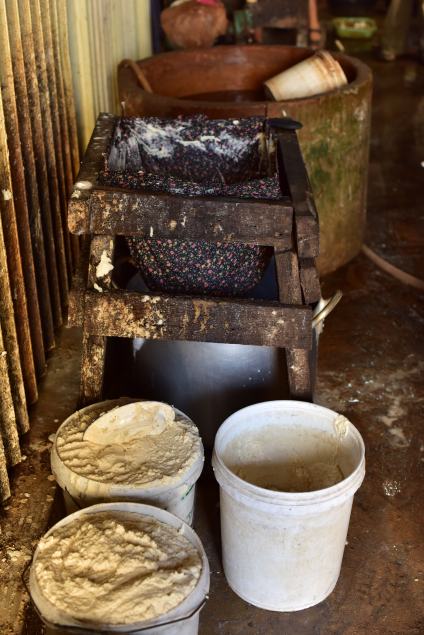
NJB_2583

The dough for these noodles is simply finely ground rice and water.

NJB_2592

This contraption uses the well-known engineering theory of “playground seesaw” to knead and pound the dough in shallow pans.

NJB_2577

The noodle dough is placed in the cylindrical press and tamped down with a wooden plunger.

NJB_2584

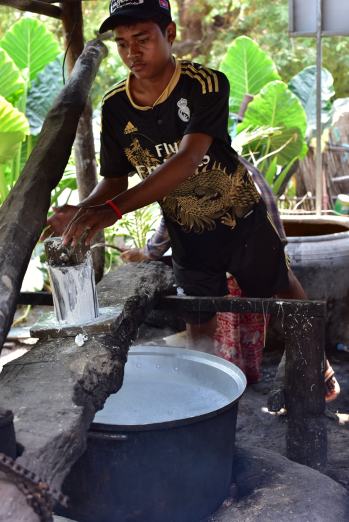
The boy wasn’t heavy enough to weigh down the press, so another family member joined in.

NJB_2580

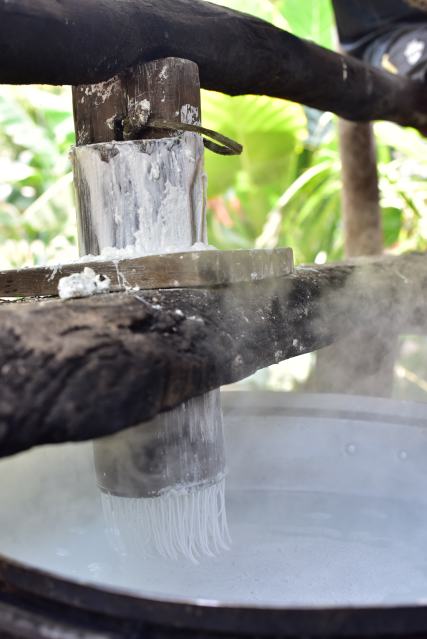
Noodles gently dropping into their hot bath.

The family’s press is a simple yet ingenious human-weighted device that forces the thick, dense dough through a metal sheet pricked with tiny holes, creating the thin noodles. The noodles are quickly cooked in boiling water, then removed and drained.

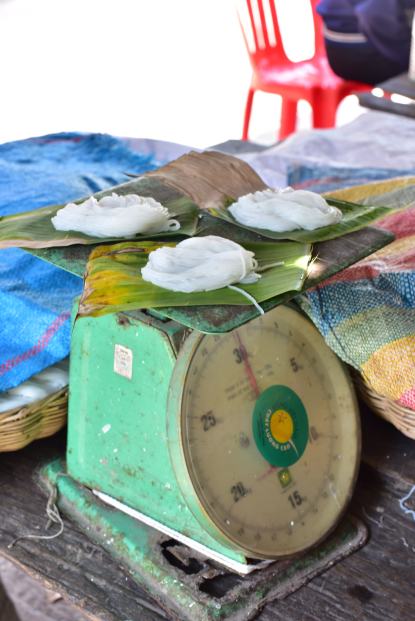
NJB_2590

Bundles are carefully weighed, although these women are so skilled and accurate that the scale probably isn’t even necessary.

NJB_2576

The noodle bundles are packed in bamboo-lined rattan baskets for transport to the market and local restaurants.

Another stop was a house near Siem Reap’s wholesale market where a local family makes fresh tofu. Batches and batches are made every day and sold at the market or to a multitude of small restaurants. The “production kitchen” is of course also the family’s home.

NJB_2525

The wood-fired stove used for heating the soymilk.

Tofu is made in a manner very similar to cheese: fresh soy milk is heated, a coagulant is added to curdle the milk, and the mixture is pressed to remove liquid.

NJB_2537

The hot soymilk curdles immediately after the coagulant is added. 

NJB_2526

The curd is drained through fabric before being placed in the press.

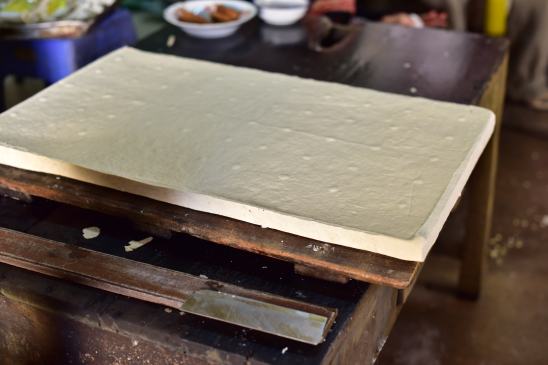
NJB_2527

The drained curd is placed in a tray and pressed to remove liquid. Note the clever use of a bottle jack!

NJB_2529

Finished tofu.

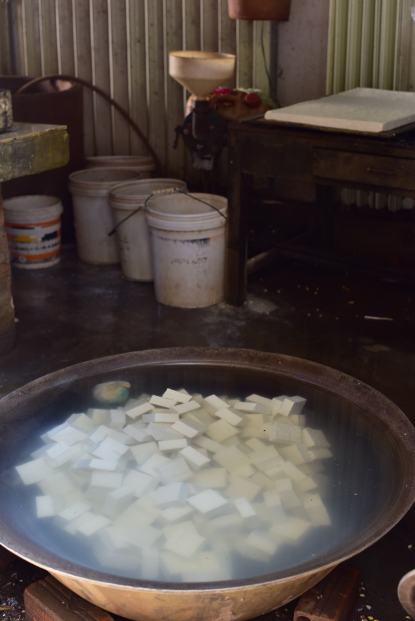
NJB_2531

Tofu cubes, ready for sale. Tofu is always stored in liquid (usually filtered water) to keep it fresh and moist. 

If you’re interested in making your own homemade tofu, start here!

A walk in the woods

Any time we stop at a campground or visitor information booth in New Zealand, we face brochure racks stocked with dozens of flashy, full-color advertising cards for every adventure imaginable. Sky diving! Bungee jumping! River rafting! This country’s tourism industry caters heavily to the adrenaline junkie, and many of the young backpackers we’ve encountered seem more than happy to shell out hundreds of dollars pursuing their long-held dreams of jumping into, and out of, various modes of vaguely dangerous transport.

NJB_1733

Gnarled old trees on the walk to “The Snout” in Picton.

N and I, however, are sage and sensible in our advanced years, and we choose quieter, calmer, less aggressive activities. Like walking, for example. For all its jumping and rafting and diving, New Zealand really is perfect for people who just want to put on a pair of sturdy shoes (and perhaps lug thirty pounds of camera gear) and walk.

NJB_1984

Boardwalk into the bush near Tongariro National Park.

The country is absolutely overrun with well-maintained tracks, perfect for a few hours or for multi-day treks. While we’ve only ever gone out for day trips, all of our walks have been more than worth the time and effort, and a great way to see the country slowly. The photos collected here truly emphasize New Zealand’s incredible natural diversity.

NJB_2235.JPG

The Champagne Pool at Wai-O-Tapu Thermal Park.

All of New Zealand is volcanic, but thermal activity is highly concentrated around Rotorua, roughly in the center of the North Island. The Wai-O-Tapu Thermal Park allows visitors to see volcanic activity in a close and colorful manner.

NJB_2151

Wai-O-Tapu’s famous Boiling Mud Pool in action.

NJB_2268

This is not Colorado’s EPA-poisoned Animas River; rather, it’s a sulfur pool at Wai-O-Tapu. 

NJB_1510.JPG

Abel Tasman National Park, on the northern edge of the South Island, is rightfully famous for both its kayaking and its extensive coast track. We only spent a couple of days here but loved its beachy-desert feel.

NJB_1488

View from the Abel Tasman coast track.
NJB_1491

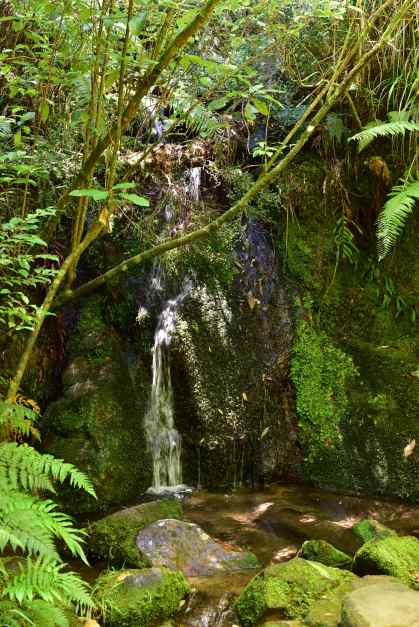
Tropical waterfall in Abel Tasman National Park.

NJB_1709

Lumberyard and harbor near Picton. Timber is New Zealand’s most important agricultural export.

IMG_20170226_130837035 (1).jpg

Pro tip: while foraging may be all the rage, don’t ever, ever eat mushrooms you find while hiking unless a mycologist can confidently identify them.

NJB_1721.JPG

On the way to Picton’s “Snout.” Most of the walking tracks we encountered varied between open country and tropical forest.

NJB_1323

Huka Falls, near Great Lake Taupo.

Huka Falls is apparently New Zealand’s most-visited natural attraction. We’re convinced this is because it’s located about ten feet from the parking lot.
NJB_1744.JPG

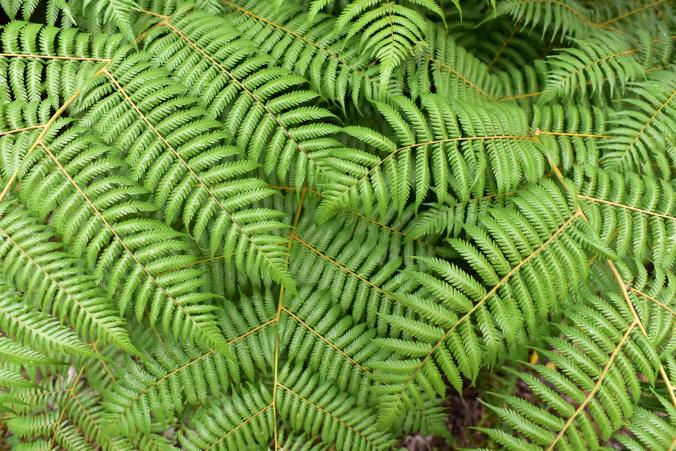
New Zealand has a wealth of diverse plant life, but ferns are ubiquitous.

Kiwis are rightfully very proud of their country, and the fern emblem is seen everywhere, most notably on the All-Blacks’ uniform. Recently, the country even tried to change its flag to incorporate the iconic fern image, though the referendum failed.

NJB_2108.JPG

Whakarewarewa Forest, Rotorua.

Like many island nations, New Zealand has fought for hundreds of years against invasive non-native species. The most destructive example is the possum, introduced in 1837 in an attempt to start a fur trade. Now there are thought to be more than 30 million – and they eat more than 20,000 tons of vegetation every night. The Redwood Forest pictured above, however, is an example of a non-native species that hasn’t spread ferociously. These trees, native to California, were planted in Rotorua in 1901 in the hopes of expanding the country’s timber industry. Unfortunately (for the timber industry) but fortunately (for the island’s native trees), only six hectares of the original twelve hectares survived, and the wood produced is far too soft for use in construction. They love the rich volcanic soils in this sheltered grove, but they can’t grow beyond this particular area.

NJB_2060.JPG

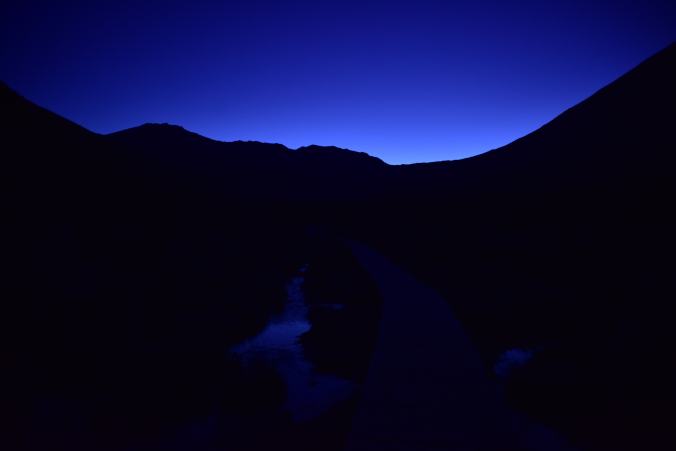
The hardest hike we did by far was the legendary Tongariro Alpine Crossing, considered New Zealand’s best one-day hike and also one of the best in the world. It’s only about twelve miles from start to finish, but it ascends more than 2,000 feet and descends more than 3,000, and it’s tough, even for these Colorado hikers. We started before dawn – both to beat the crowds and the midday sun – and completed it in about six hours.
NJB_2002.JPG

The beginnings of sunrise on the Tongariro Crossing.

NJB_2012.JPG

Looking west at the ominous shadow of Mount Ngaurahoe, more famously known as Mount Doom.

NJB_2032.JPG

This photo of Mount Ngaurahoe emphasizes the area’s stark volcanic landscape.

NJB_2069.JPG

The weather shifted frequently while we hiked the Crossing, from bright sun to low enveloping clouds. It’s easy to see why Tolkien’s books were filmed here!

NJB_2054.JPG

The Emerald Lakes of the Tongariro Crossing.

Thank you, New Zealand, for your beauty and your hospitality. We’ve loved our time here and look forward to returning. Onwards to Cambodia!


Happy hour

Between filming Hobbit movies and grilling lamb chops, New Zealand also manages to make some pretty decent beverages. Wine represents a hugely important component of New Zealand’s agricultural exports; craft beer has always been second fiddle to wine here, but the microbrew industry is definitely on the rise. We obviously wanted to be as fair and open-minded as possible, so we made sure to taste just as much beer as we did wine during our time here.

NJB_1523.JPG

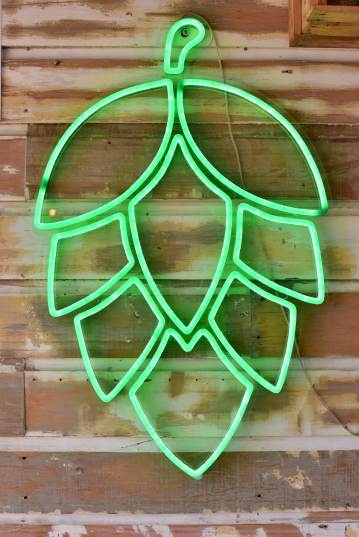
Hops are the flowers of the female hop plant (Humulus lupulus), and they’re used primarily as flavoring and stability agents in beer.

NJB_1522.JPG

All of New Zealand’s hops are grown in the Nelson region on the South Island. As the craft beer industry has exploded around the world, hops have become a much more lucrative crop.

NJB_1519.JPG

The tap line-up at Hop Federation, Riwaka.

NJB_1628.JPG

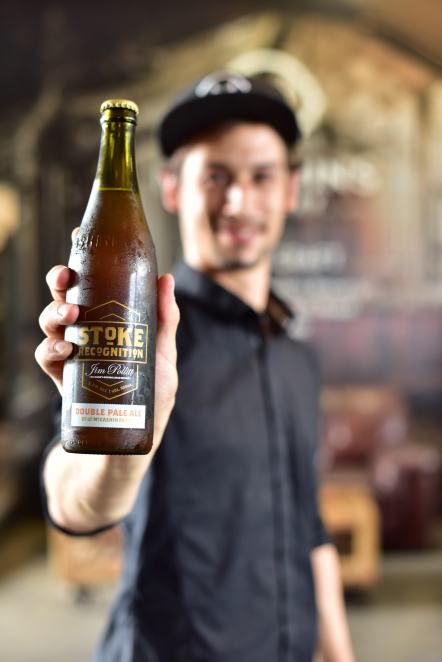
Rule No. 1: when photographing for your blog, find a friendly, amenable bartender.

NJB_1623.JPG

NJB_1621.JPG

A beer tasting board at McCashin’s.

In the U.S., at least, New Zealand is most known for its sauvignon blanc, specifically from the Marlborough region at the top of the South Island. Walk into any American wine shop and you’re almost guaranteed to find a bottle of Cloudy Bay, the wine that basically introduced the rest of the world to New Zealand wine. Central Otago pinot noir, however, is also starting to make a name for itself, as are a number of other unique varietals.  Like other New World wine regions, New Zealand has more freedom to experiment with its grapes and winemaking styles than the Old World with its deeply entrenched rules.

NJB_1659.JPG

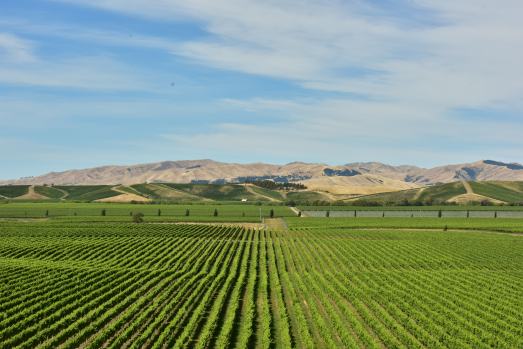
Brancott Estate, Marlborough.

NJB_1691

Harvest is about three weeks away for these merlot grapes.

NJB_1946

These fruit crates are seen everywhere in New Zealand; they’re used for apples, plums, pears and of course wine grapes too.

NJB_1699

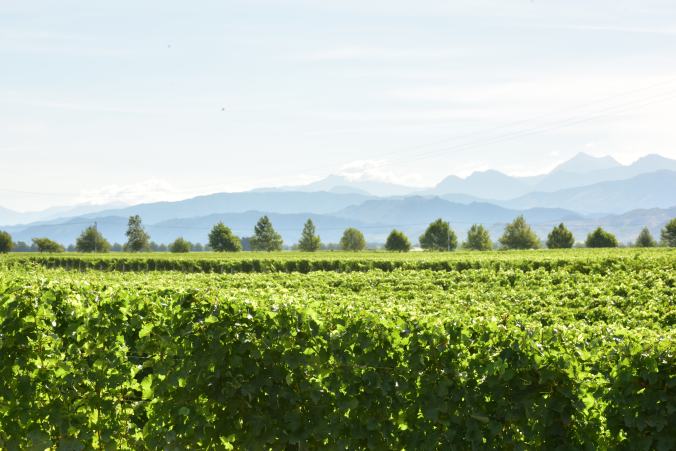
The vines and the mountains in Marlborough.

NJB_1695

Cellar door at Forrest Wines, Marlborough.

Wine tasting in New Zealand is easy and accessible; cellar doors are signposted and tastings usually cost between $5-$15 per person. Many regions, such as Hawke’s Bay, have numerous cellar doors close enough to tour by bike, and of course there are dozens of tour companies happy to drive while you drink, too.

NJB_1527

Neudorf Winery, Nelson. The vines are covered in netting to protect the ripe fruit from hungry birds. Many of the wineries have lovely gardens where you can enjoy a glass of wine and a picnic.

NJB_1945

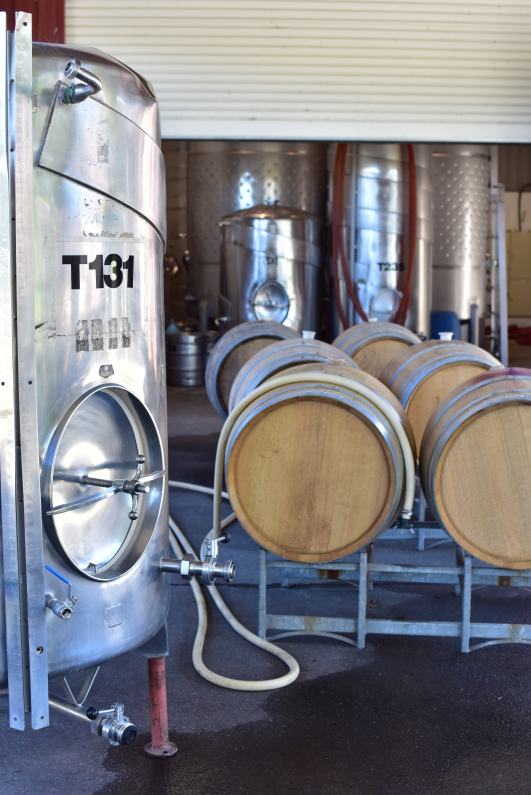
Wine moving from tank to barrel at Moana Park, Hawke’s Bay.

Surprisingly, most of the lower-end bottles ($8-15) you find in the grocery store here are actually from Australia or South Africa, because New Zealand makes more money exporting its wines – especially to China – than it does selling them at home.

NJB_1924

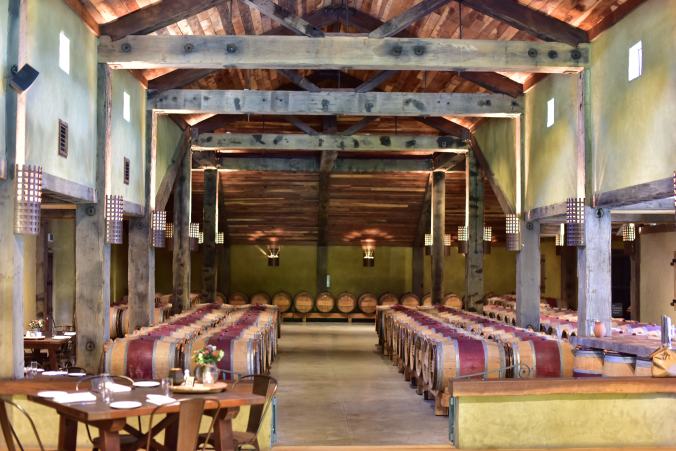
Old barrels put to good use as decor at Church Road Winery, Hawke’s Bay.

NJB_1948

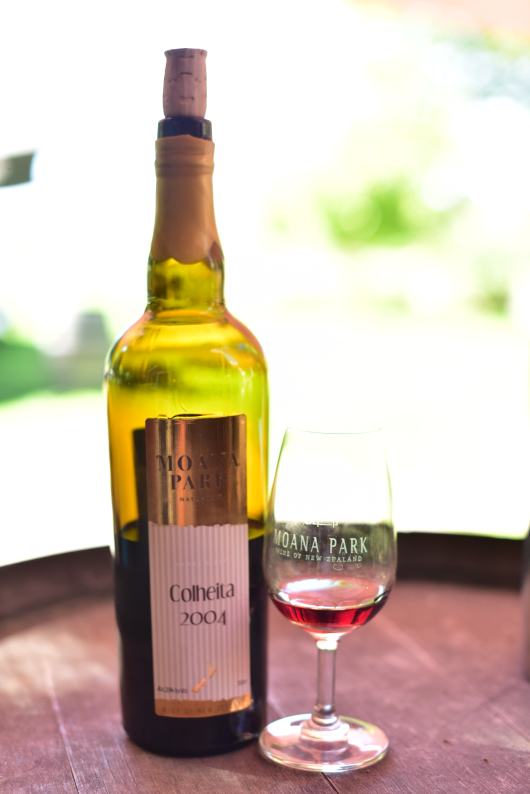
Finishing our picnic at Moana Park with their 2004 Colheita Port.