The FAQ Series: Sugar, Part One

It’s February, and in America that means we’re celebrating both American Heart Month (take care of your heart!) and Valentine’s Day (so much excess sugar!). Ironic, no? We’re going to return to travel posts from our winter trip to Europe shortly, but in every single one of my recent corporate presentations, I’ve been asked about sugar. Therefore, I think it’s time that your trusted team over here at FQF HQ answer some questions about this ubiquitous yet widely misunderstood ingredient – one that we absolutely need to survive but that is also making us very, very sick.

Sugar 02 sml

Oh my goodness! So very many sugars! All in my own cupboard!

We’re going to start with the basics, and we’re going to break this post into three parts because it’s that lengthy and it’s that important. (Also, I don’t want you to tune out due to boredom.) I’d argue that no other single ingredient in our collective Western diet right now is as significant as this one, so let’s get a few things straight.

  • sugarany of the class of soluble, crystalline, typically sweet-tasting carbohydrates found in living tissues and exemplified by glucose and sucrose; present in sorghum, maple sap, honey, etc.; used extensively as an ingredient and flavoring of certain foods and as a fermenting agent in the manufacture of certain alcoholic beverages

Let’s break that definition down a bit further: almost every single food we eat – fruit, vegetables, dairy – contains some quantity of naturally occurring sugar. It’s a carbohydrate, and it exists in simple and complex forms, and we need it to survive. But it’s not so much the naturally occurring sugars that are killing us, it’s the added sugars in just about everything.

In this first section, we’re going to talk about commonly available sugars: the ones we might find in our grocery store or pantry, the ones we use every day in our own coffee and tea and cookies and other things we make at home. And in the second section, we’re going to talk about industrial sugars: the ones that are added in for us, the ones we’re totally addicted to and the ones we eat way too much of. Finally, we’re going to discuss how the sugar industry has conspired for decades to convince us that butter and cream and eggs and bacon are the true villains, not sugar, even though they’ve long known otherwise.

Continue reading

The FAQ Series: Box Meal Kits

Well, hello there! How is 2018 treating you thus far? We over here at FQF are currently swanning our way through France and Germany, and we’ll be sending you some delightful travel missives in the not-too-distant future. But until then, we’d like to talk about box meal kits, because they’ve been a popular topic of conversation lately on both our professional and personal circuits.

What are box meal kits, you might ask? They’re basically recipes and ingredients shipped to you on a regular or on-demand basis, from which you craft (hopefully) delicious, quick(ish) meals. You don’t need to shop or plan; all you need to do is decide which meals you want and how often you want them. And there are many, many companies from which to choose. HelloFresh is probably the most well-known, but there is also Blue Apron, Green Chef, Purple Carrot, Plated, Sun Basket and many others. Plus, Amazon recently bought Whole Foods, so they’re expected to enter the ring any day now, and Wal-Mart is jumping in, too.

Food Box 01 sml

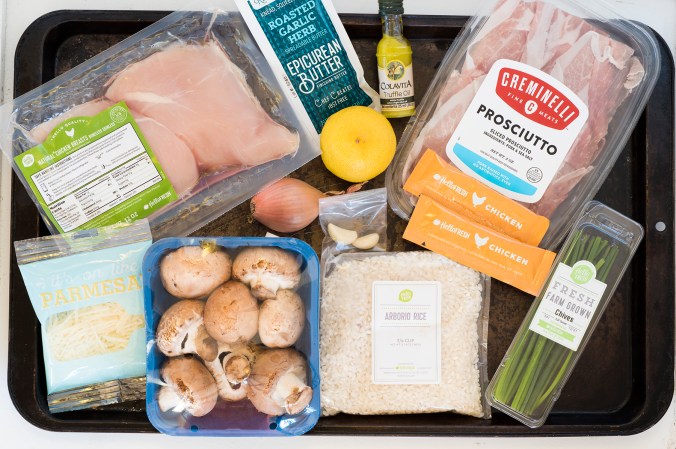
Thanks to our good friends over at Epicurean Butter, we received two HelloFresh meals to test: Prosciutto-Wrapped Chicken with Mushroom Risotto and Kale Grilled Cheese Sandwiches with Tomato Soup. Although HelloFresh offers a number of different plans to choose from, these two meals were each designed to serve two people and they cost about $20 each, or $10 per serving.

Each meal arrives much as you see above: a shopping bag contains the ingredients, plus a photo recipe card and nutritional info; the shopping bags are then all tucked into an insulated box with packing material and ice packs. Typically, you receive three different meals in a box, but again, this varies according to your plan and the company. Cooking oils, salt and pepper are not included, but everything else you need should be.

Food Box 02 sml

Despite the fact that I find following recipes very similar to being put in a choke collar, I wanted to honor the spirit of this experiment and pretend that I was a standard HelloFresh customer, rather than a professional chef. So I laid out all of my ingredients, checked them carefully against the recipe card, and followed the directions to the letter. N even read out the instructions to me while I was at the stove; this resulted in much hilarity as my natural instinct was to do everything my way – he had to correct me frequently, and of course I argued. My goal, obviously, was to see how close I could get to the presentation in the photo as well as the preparation time indicated.

Continue reading

How to eat healthier

I may not love Thanksgiving, but I do love everything about January. I love the quiet after the holidays, the fresh start, the clean slate. And of course, this is the time of year when so many of us promise to do better. When we promise to eat right, drink less, stop going out to restaurants so often, quit smoking, save our money, exercise more and all the rest.Snowy trees.jpgI don’t subscribe to the negativity often associated with New Year’s resolutions. (By mid-January, over a quarter of all New Year’s resolutions have been discarded, and only a scant 10% are actually followed through to the end of the year. Those are some pretty bleak statistics.) Changing habits is hard enough; I’d much rather start off on a positive note. I make a list of goals, not resolutions.

And with that positivity in mind, how about a quick primer on eating better in 2018? This isn’t designed to be an exhaustive list, nor a restrictive diet plan, merely a few simple tips to get your head in the right place for making healthy changes in your daily eating. Diets don’t work, but changing your mindset does.

Continue reading

How to make yogurt

There are foods and drinks we should buy, and foods and drinks we should make at home. I would place things like tofu, amazing soft-ripened cheeses, bacon and hoppy IPAs in the first category; though I can make these things, other people are doing a much better job at it. The second category, however, would include granola, bread, salsa, applesauce, hummus and yogurt, among many others – all of these are much better-tasting, healthier and certainly cheaper made at home.

I’ve been asked a number of times recently for instructions on how to make yogurt, and since I make it once a week on average, I thought it might be high time to share this magic with the world. Making yogurt is not difficult or expensive, but it does require a bit of patience and a basic understanding of fermentation – which is typically referred to as “culturing” when used in context with dairy products. Keep in mind that the instructions below are for cow’s milk yogurt; other milks, such as sheep or goat, or non-dairy products, like almond, soy or hemp, don’t turn into yogurt the same way.

Yoghurt 01 sml

Yes, that is the current temperature in our sunroom.

Let’s be clear on what you absolutely do not need to make yogurt: you do not need a fancy yogurt maker, or an Instapot, or specially-purchased mail-order yogurt cultures. You can use these things if you have them, but to me they all fall firmly into the category of “convincing people they can’t cook without expensive gadgets and hard-to-find ingredients.” Peasants have been making yogurt for literally thousands of years; I’m pretty sure they didn’t stop at Bed Bath & Beyond to grab a yogurt maker on their way back from the fields. What you do need: fresh milk, starter yogurt culture, a heavy pot, an accurate thermometer, a ladle, a wooden spoon, clean jars and lids, and a warm, safe place to keep your yogurt while it’s culturing.
Yoghurt 03 sml

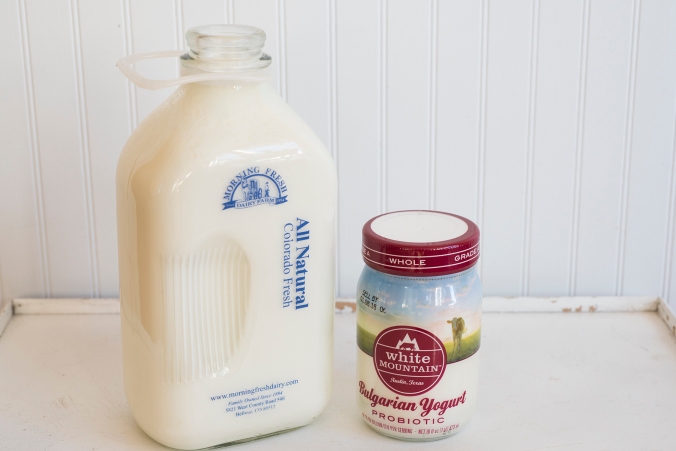
Fresh milk + starter culture = homemade yogurt!

I make my yogurt in one-gallon batches, which yields four quarts plus a bit. If your household doesn’t eat much yogurt, or if you want to start small, make a half-gallon batch. You can always scale up when you realize how much yogurt you’re eating. Don’t buy UHT or other long-life milk to make yogurt or other cultured dairy products; its protein structure has been irreparably changed by the heating process used to make it shelf-stable. And when you’re buying a starter yogurt culture, buy plain, full-fat yogurt; no fruit or other sweeteners, thickeners like carrageenan or pectin, stabilizers or other mysterious ingredients (please, no M&Ms, sprinkles or chocolate chips). Yes, you can use skim or low-fat milk to make yogurt, but why would you? I am an advocate for full-fat dairy at all times; cows don’t give skim milk, so I see no point in consuming it.
Yoghurt 04 sml

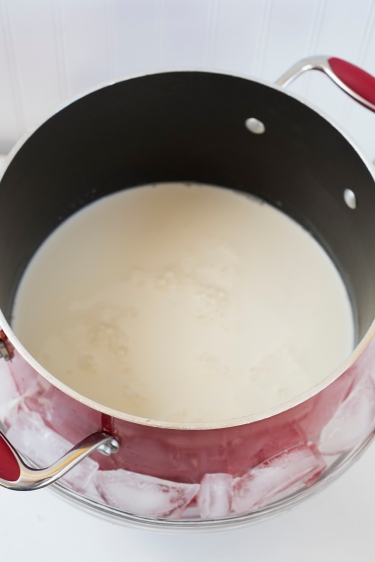
Placing your pot of hot milk in an ice bath will cool it to 110 degrees quickly.

To start, place two tablespoons (for a half-gallon) or four tablespoons (for a full gallon) of starter yogurt into a medium bowl and set aside. Pour the milk into the heavy pot. If your thermometer clips onto the side of the pan, attach it now; ensure the tip doesn’t touch the bottom of the pan or you’ll get an inaccurate reading. Heat the milk gently, stirring occasionally to prevent scorching; you’ll want to bring it up to about 175 degrees F (this could take as long as thirty minutes for a full gallon). Once it’s reached 175, remove it from heat and place it into an ice bath to rapidly bring its temperature down to about 115 degrees F. You can let it cool as is, but icing it is much quicker; stirring it frequently will bring the temperature down, too. (For those of you at altitude, please note that you do not need to adjust these temperatures.)

While you’re waiting for the milk to cool, bring a kettle of water to a boil, and place your clean jars on a folded kitchen towel on your worktop. Fill each jar with boiling water; always wash and warm one more pint jar than you think you need. Place the lids in a separate heatproof bowl and cover those with boiling water, too.

When the milk is around 110 degrees, whisk about one-half cup into the bowl you set aside with your starter culture. This tempers the culture, bringing the two liquids to a similar temperature and ensuring that the starter culture doesn’t cook when it’s added to the warm milk. Now, add the thinned and warmed starter culture to the pot of milk, and stir well. Pour the boiling water out of your first jar, and set it back on the towel. Ladle the warm milk and starter mixture into this clean, hot jar (a funnel comes in handy here). Repeat the process for the remaining jars until you’ve used all of the milk. Put the lids on the jars and close gently; the lids just need to be snug enough to keep from falling off but they shouldn’t be lumberjack tight. Wipe the jars and lids with a clean, damp towel to remove any milk residue.

You can now place the jars into a cozy spot, like a cooler lined with towels, or your (turned off) oven or microwave. The idea is to keep the jars pretty warm, which allows the culture to activate and thicken the milk. I use my dehydrator on a low setting; some people use a slow cooker or even surround the jars with heating pads or hot water bottles. You may need to experiment to figure out what works best in your household; just remember that you’re trying to keep the yogurt reasonably warm and undisturbed. Yogurt cultures love an ambient temperature range of 95 to 115 degrees; the cooler it is, the longer it will take to get a set (but it will still work!).
Yoghurt 05 sml

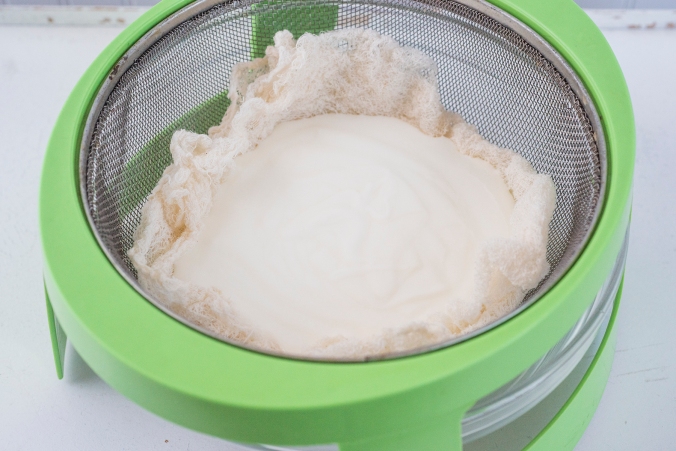
Draining the yogurt in triple-layered cheesecloth will create a thick “Greek-style” yogurt.

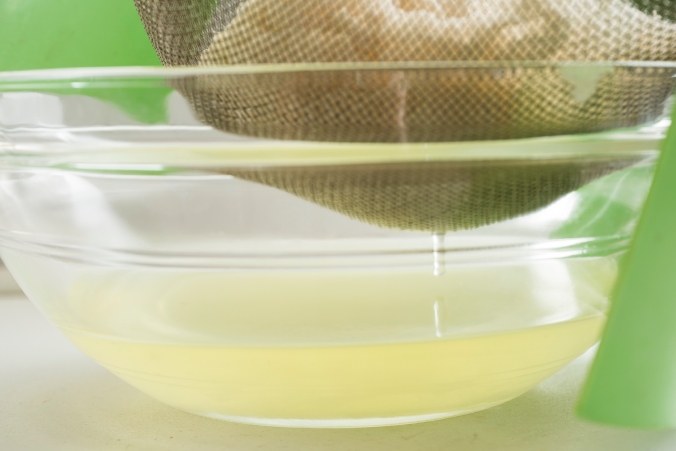
I typically leave my yogurt to culture overnight, depending on how much I’m making and the ambient temperature in my house. It will thicken more once it’s been refrigerated, and you can also drain the whey out, leaving you with thick, “Greek-style” yogurt. Drained whey can be added to bread doughs or smoothies, or used as a starter culture for lacto-fermented vegetables, if you’re so inclined. I almost never drain my yogurt, preferring instead to let it culture longer so I have a thicker product and can use every bit of it; when I do have leftover whey I use it to cook grains, like farro and wheatberries. I always leave my yogurt plain so I can use it in both sweet and savory applications; if you want to add in jam or vanilla or honey or maple syrup or any other sweetener or flavoring, do so on an individual basis and not to an entire batch.

Of all the hundreds of batches of yogurt I’ve made, I’ve never had a batch not set. That said, if your yogurt isn’t turning out, I’d recommend first calibrating your thermometer so you know that you’re adding culture at 110 degrees. Too hot and it will die, too cold and it will go dormant. Just like using yeast in bread baking, temperature matters a lot. If you’re confident your thermometer is accurate, I’d next change the brand of milk you’re using, and then I’d change the starter culture, again thoroughly examining that ingredient label to verify that there is nothing in the yogurt besides milk and active cultures. Storebought yogurt has a lot of junk in it; read all your food labels carefully.
Yoghurt 06 sml

Use the drained whey to bake bread, cook grains or ferment vegetables.

The temperature and speed that your yogurt cultures at determines the thickness of the final product, so once you’ve got the basic technique down, feel free to experiment with how long you let it set, and at what temperature. I’ve read that heating the milk to 195 degrees F allows for an even thicker yogurt because it denatures the proteins further, but I haven’t tried it. Know also that eventually your starter culture will wear out; if you’re making a lot of yogurt, you might find that you need to purchase a fresh starter yogurt every few months to keep your set strong.
Yoghurt 02 sml

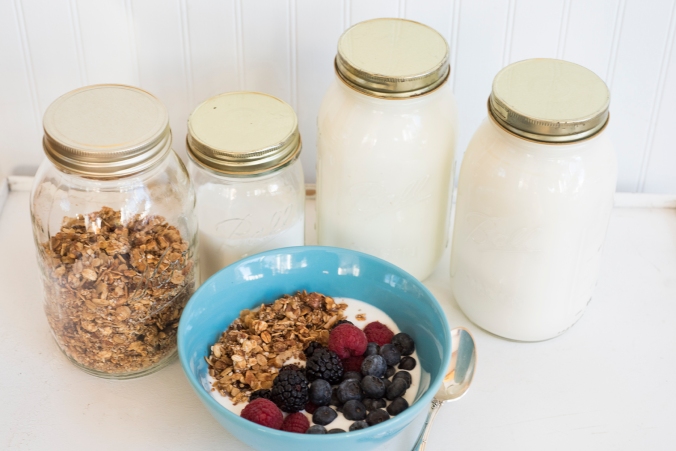
Homemade yogurt, homemade granola and fresh berries. Nom nom nom.

What else should you do with your homemade yogurt, besides enjoy it with fruit and granola? Bake with it. Blend it into smoothies. Use it to marinate meats. Freeze it in popsicle molds with swirls of jam and honey to make your own frozen treats. Add in fresh herbs and salt and make it into a tangy salad dressing or dip for fresh vegetables. Just remember to save a couple of tablespoons to start your next batch!
Cooking in cast iron

In my holiday-themed classes, I talk about how I’d rather have two or three really stellar, delicious dishes at a meal than an extensive buffet of mediocrity. I feel the same way about cookware and knives: that is, I’d rather have a few sturdy, durable pieces that perform perfectly and can take a beating, rather than dozens of cheap, flimsy pans or knives that bend, warp, break or just plain fail. Cooking well isn’t only about starting with the best ingredients, but having the tools (and the skills) to turn those ingredients into something remarkable.

Cast Iron 01 sml

See how well-loved they are? I use mine every single day.

I love classic cast iron cookware. I love its heft, its lived-in appearance, its ability to retain heat. I love that it can be passed down through generations, and it only gets better. I love that it’s not shiny, not new, not a throwaway item. I love that it looks like something I should be using over a rickety camp stove to make a fry-up for hungry cowboys out on a cattle drive. I love that there is something of quality still manufactured in the United States. I love that cast iron asks you to cook well and simply and honestly.

Cast Iron 04 sml

You can roast peppers to smoky, tender perfection!

Cast iron cookware has been in use around the world for over two thousand years, and there’s a reason for that: nothing retains heat better while still holding its form. Before we became such a disposable society, cookware like this was valued for its durability and its effectiveness, especially when slow simmering tough cuts of meat. Cast iron goes from stove to oven, and it can be used to make anything: flavorful stews, crispy yet tender cornbread, smoky, filling beans. And nothing – I mean nothing – sears a steak like cast iron. Ask any cowboy.

Cast Iron 02 sml

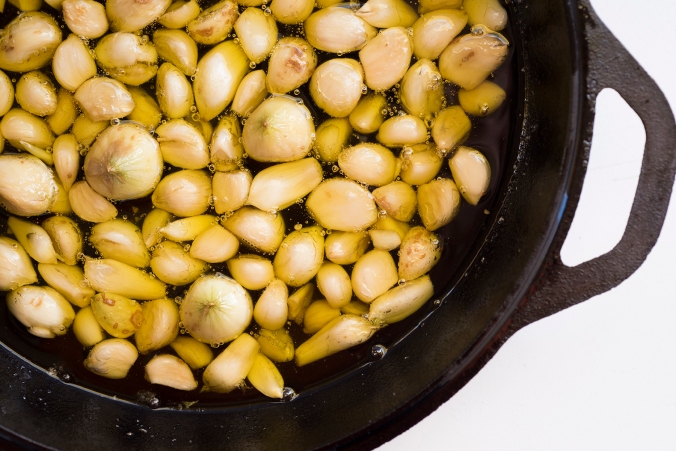
You can create the most amazing garlic confit!

In the first half of the 20th century, cast iron cookware was ubiquitous in America. Then – coincidentally, right about the time we started turning to processed “convenience” foods – cast iron fell out of favor. It was too heavy. Too unwieldy. Impractical for TV dinners. Not suitable for microwaving soup. Couldn’t be put in the dishwasher. And so, most of the American companies went out of business. Today, Lodge is the only major manufacturer in the U.S., although a couple of smaller, “artisan” brands like Finex have appeared recently.

Cast Iron 06 sml

You can make one-pan meals!

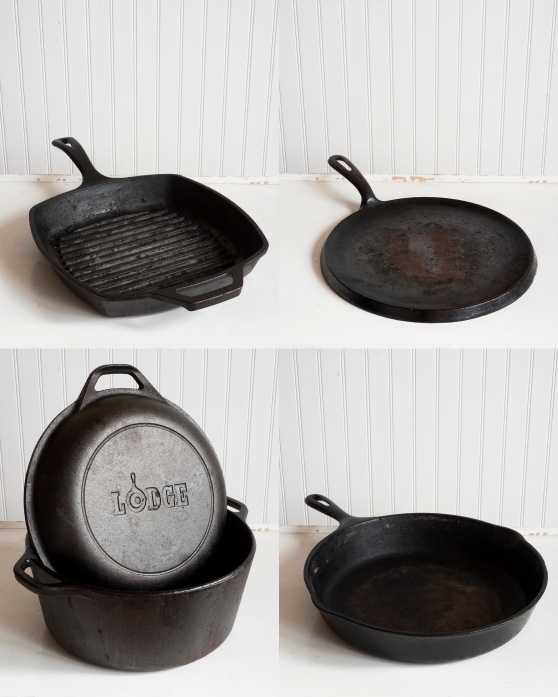
I got rid of my grandmother’s cast iron pans at a garage sale years ago. Freshly minted from an uppity French culinary school, I thought cast iron was too down home, too low-class, too American for my lofty European cooking skills. What misplaced arrogance; to this day, I regret selling those pans. Thankfully, N found a ten-inch skillet for me at a church rummage sale, and I picked up my comal, a flat, round griddle traditionally used for making fresh tortillas, at a thrift store. My other two are classic Lodge, a Dutch oven and a grill pan. They’re all pieces I love cooking with.

Cast Iron 03 sml

You can put a little char on your tomatoes!

If you have any cast iron, take good care of it and it will take care of you for decades. Once it’s seasoned, meaning that you’ve basically created a nonstick surface through a combination of cooking fat and heat, never, ever use soap or any other chemical cleaner on it. Don’t immerse it in water, either. I typically just wipe my pans with a dry paper towel, if necessary, but if you’ve got stuck-on bits, you can heat the pan with a bit of water until they loosen, then scrape them out with a spatula. Really tough messes can be tackled with coarse kosher salt and a scouring pad. You can’t scratch them, can’t break them, don’t have to use any fancy utensils. They are indispensable workhorses.

Cast Iron 07 sml

And the most essential thing you can cook in your cast iron Dutch oven…

Cast iron’s greatest advantage, of course, is also its greatest downfall: their weight means they retain heat beautifully, so they get hot and stay hot, and they’re heavy. Treat them carefully and respectfully. Use both hands when lifting; never try to “one-hand” a cast iron pan. When you remove the pan from the oven and set it back on the stove or other protected surface, do as restaurant chefs do and make sure you leave your kitchen towels on the pan to remind everyone (including you) that it’s hot. Large pans that have been heating for a while may take a couple of hours to cool down, so have a safe place to put them where no one will burn themselves. Don’t leave water in the pan, either, as they can rust, though if you find an unloved, rusty specimen, you can always remove the rust with salt and reseason the pan.

Cast Iron 08 sml

…is quite simply the best bread you’ll ever taste.

Want to build your own cast iron collection? Start here, and thanks for buying American. Their stuff is top-notch and remarkably well-priced. Visit thrift stores and garage sales and flea markets (maybe you’ll find my grandmother’s pans?) but stay away from anything called an “antique store.” Little-known fact: antique is actually French for “overpriced stuff bought cheaply in a thrift store and aggressively marked up.” Cast iron’s resurgent popularity in recent years means anything even vaguely vintage can cost a fortune.

Cast Iron 09 sml

And while we’re on the topic of the French and expensive things, this stuff is cast iron too, but with an enamel coating. It’s gorgeous, comes in an array of coordinating colors so the kitchen at your Provencal château can match the Parisian pied-a-terre and it’s priced for really rich people. Tread carefully with these: they’re beautiful and colorful, but you can scratch that enamel without too much effort, and not all of the knobs and handles are designed for high heat. These definitely require a bit more attention, and a lot more money.

Go cook, friends. And save me some cornbread.


Crantastic!

We continue our never-ending quest to absorb everything we can about all types of farming, and just in time for America’s most revered Day of Gluttony, N and I learned how to harvest, sort and process cranberries! One of the farms we worked on in Oregon was home to three organic cranberry bogs, so we were able to see firsthand how this unique fruit is both grown and harvested.

NJB_1166

A one-acre dry cranberry bog with harvester. The portion on the left still needs to be harvested, while the section on the right is finished. 

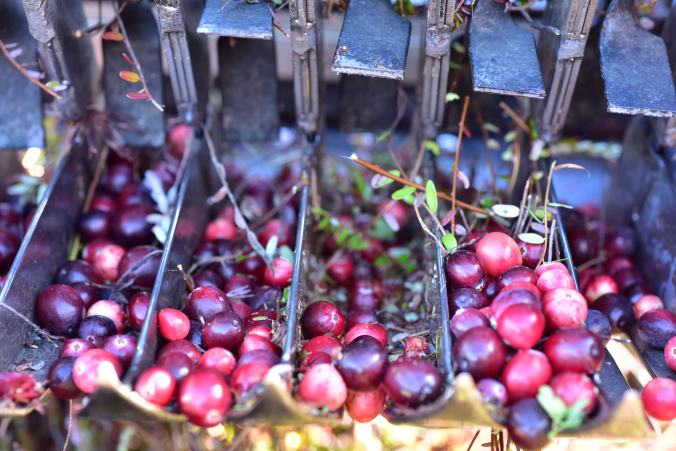
Cranberries are grown in Washington, Oregon, Wisconsin, Massachusetts and New Jersey, as well as in Canada; they’re a low-growing vined shrub and the plants can live indefinitely if cared for properly. The vast majority of cranberries are conventionally wet-harvested, in the traditional bog we know from the Ocean Spray commercials. The organic farm we worked on, however, used dry harvesting. This is substantially more labor-intensive and has lower yields, but organic dry-harvested berries sell for nearly twenty times the amount that conventional wet-harvested berries do. This is primarily because dry cranberries can be sold fresh, packaged into bags in your produce department. Wet berries need to be processed into juice or other cranberry products almost immediately.

NJB_1160

Aren’t they gorgeous? And so good for you. I ate a lot.

NJB_1114

The harvester at work.

NJB_1164

The harvester removes a lot of branches, but not all.

NJB_1141

We filled burlap sacks with berries for transport to the packing shed.

NJB_1225

A surprising number of cranberries are left behind after harvesting.

We followed our farmer with clean, dry burlap sacks, ready to replace the one on the harvester as soon as it was full. It’s really important not to overpack the bags and not to double-stack them on the trailer, as too much pressure will crush the berries and render them unsaleable. I hand-harvested a few pounds of berries left behind; this was unbelievably labor-intensive. Agricultural work is not for the faint-of-heart.

NJB_1245

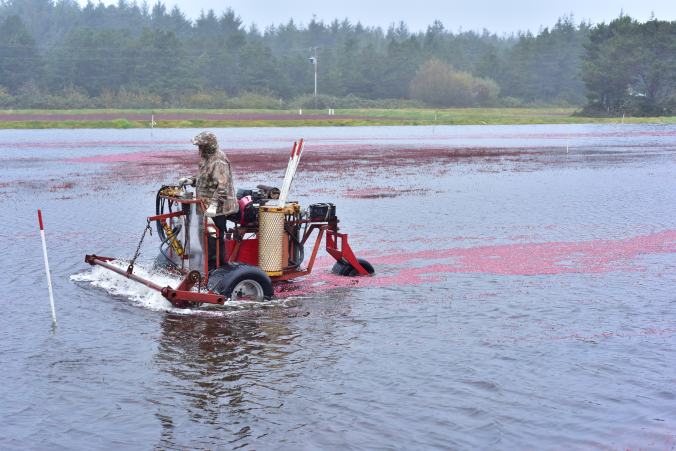
Traditional wet-harvesting involves flooding the bogs and a harvester like this one.

NJB_1246

The berries float to the surface of the flooded bog, where they can be easily scooped. 

We watched a traditional farmer wet-harvest his bogs on a miserably cold, rainy day: not at all fun. Our farmer can only harvest when it’s dry and clear, as the goal is for the berries never to get wet. Even the morning dew had to dry before we could harvest.

NJB_1239

Our daily harvest, ready to be put through the sorter.

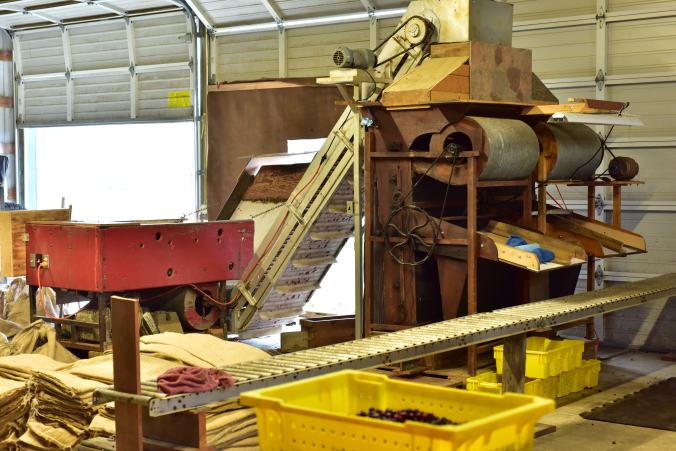
Every day after we harvested, we took our berries to a shared packing shed. Our farmer ran the berries through the sorter, and N and I sorted and packed on the opposite side. Once the berries started tumbling through the chute on our side, we really had to work quickly to keep up, and to ensure that our crates didn’t get too full. As with loading the bags during harvest, it’s essential not to crush the berries on the bottom.

NJB_1241

Berries are run up the conveyor belt, where they’re tested for ripeness.

NJB_1250

We stood here and sorted through the berries as they came down the belt, removing small branches, twigs, leaves and any damaged berries.

Unusually for most produce, cranberries actually bounce when they’re ripe (and float when they’re flooded), so the sorter both removes the larger vines and branches and tests the cranberries for ripeness. Berries that don’t make the cut are dropped into the yellow crates down below, and they’ll eventually be fed to pigs – just like our apple cider waste.

NJB_1211

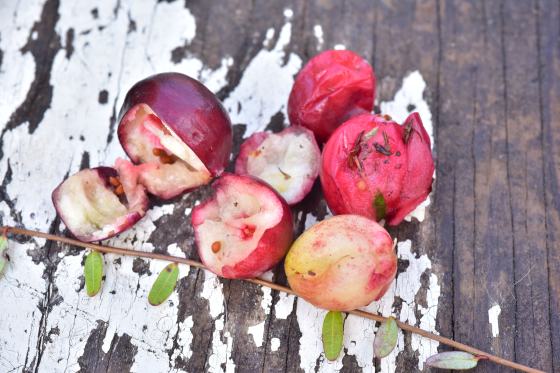
Berries that are split, crushed or otherwise open need to be removed, or they’ll spoil.

NJB_1249

Each crate holds about fifteen pounds of fruit after sorting.

Once our cranberries were sorted into the crates, they would be sent to a central distribution center, where they would be sorted again, washed and bagged. And then they’ll be on the shelves at your local grocery store!

IMG_0976

Only in cranberry country would you see fresh cranberries in bulk; mostly they’re sold pre-bagged.

I grew up in a household where the only “cranberries” we ever saw were in the exact shape of the can they came in. Once I discovered fresh cranberries, I always wondered why Americans only seem to use these once a year. They’re tart, crisp and delicious, and high in vitamin C, fiber and antioxidants, among numerous other health benefits. They’re delicious in oatmeal, baked goods, smoothies and of course as a condiment for roast turkey, goose or ham. Plus, they freeze beautifully, so buy a few extra bags when they’re on sale, and use them throughout the year. They’re great dried, too, but be aware that Craisins and other sweetened dried cranberries can contain as much as 85% sugar by weight, so they’re not nearly as healthy as you’d like to think. Buy unsweetened dried cranberries whenever possible. Oh, and “cranberry juice cocktail”? More sugar than soda. Don’t ever, ever drink it.

Cranberry sauce

Making your own cranberry sauce is by far the easiest thing you’ll prepare for a holiday dinner, and you can do it well in advance. Rinse one bag of fresh cranberries and place in a medium saucepan. Add about 1/2 cup water or orange juice (or Grand Marnier, if you’re feeling flush), a pinch of salt, the grated rind of two oranges or clementines, a bit of grated fresh ginger (or 1/4 tsp. powdered ginger) and about 1/4 cup brown sugar or honey. Simmer gently to allow the cranberries to burst, and stir occasionally to keep the sauce from sticking. Cook over low heat for about fifteen minutes or so, or until the sauce is the consistency you’d like, adding more liquid if needed. Taste and adjust the seasoning. I like to keep my cranberry sauce super-tart because I love the flavor and don’t like things overly sweet, but feel free to add more sweetener if you like. The sauce will thicken once refrigerated and will keep in the fridge for at least two weeks. I keep it thick and use it as jam on toast, too!

Need more inspiration for fresh cranberries? Go here.


Eating healthy on the road

Oh, the quintessential American road trip. Our country’s iconic open highways have been immortalized in so many classic movies, like when we thought “the Rocky Mountains would be a whole lot rockier.” Or perhaps you need to bootleg a few Coors Banquets from Texas to Georgia? Maybe two legendary ladies in a ’66 T-Bird is more your style? Whatever your favorite road trip film might be, there is no arguing that eating healthy while driving American highways is no easy feat.

IMG_20171014_101120147

Hello Wyoming, and thanks for inventing cruise control. (Photo may have been taken in 1987 or 2017. With filters, who knows?)

I like to move food. It’s my thing. Whenever we leave our house, it’s a guarantee that there are a few canvas shopping bags and maybe a plastic tub or two stacked by the door. We go to my sister’s for dinner and I bring jars of homemade applesauce, fruit leather for my niece (also known as “repurposed jam”) or gorgeous cheese from these lovely folks. My book club ladies leave with end-of-the-garden produce, dinner leftovers and more cheese. And if we’re off on a trip, whether by car or by plane, I simply will not be held hostage by the American industrial food complex.

IMG_0764

Mmmm…McDonald’s or Cinnabon? Why not both?

The vast majority of food in this country is based on two key ingredients: corn and soy. We are very, very good at growing corn and soy, and even better at turning it into cheap meat, soda and processed food. And these “edible foodlike substances” are most of what’s on offer at your standard convenience store or truck stop. And to add insult to injury, it is absurdly priced! I will not play by those rules.

IMG_20171016_204714

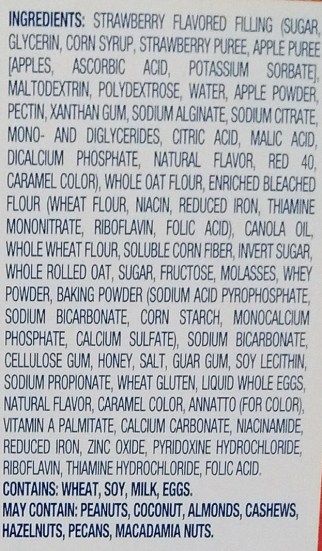
Example A, above. Look! It’s a $2.79 “meal replacement bar!” You know, so we don’t have to eat an actual meal! Can you read the first ingredient? It’s soy protein isolate. The second ingredient is sugar, and the third is soluble corn fiber. If all of your standard meals are composed of soy, sugar and corn, then by all means, please choose this as a meal replacement. But this is just one of many examples of a giant, powerful marketing machine that has convinced the American public that we 1. don’t have time to cook and 2. can eat some junk like this with “PROTEIN” printed in large font and call it a meal. No, no and no.

IMG_0760.JPG

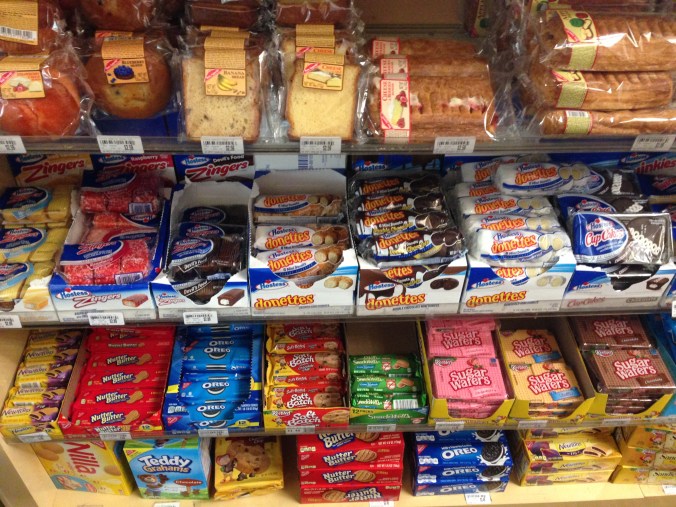
Absolutely no actual food was harmed in the making of these edible foodlike substances.

If you’re on a road trip, whenever possible get off the highway and into a town supermarket. Gas stations, convenience stores and truck stops are by their very nature stocked with cheap, non-perishable food, so that’s what you’ll buy. Their staff has neither the time or inclination to stock and then dispose of fresh fruit, vegetables and meat, so instead you’ll encounter a display like the one above. If you can make it away from the interstate and into a small grocery store, you’ll hopefully have access to a much better selection of food.

IMG_20171015_122515762

I genuinely pity the poor animals who died to make these “meat sticks.” (Also, “thungry?” Is this like “hangry?” Notice that it’s trademarked.)

NJB_0687.JPG

Part of our road trip survival kit.

So what’s a person to do in the face of this pretend food trash? Easy answer: plan in advance. Just like cooking healthy food at home, eating well on the road requires a bit of time and planning. But if you’re already doing other pre-road trip tasks like checking your tire pressure and refilling your windshield wiper fluid, why not get some healthy food in order? For me, it’s mostly shelf-stable items, plus a few perishables in a cooler. My basic road trip essentials, most of which are easily found in the bulk section of a good supermarket:

  • stellar cheese and good crackers are mandatory
  • dried fruit, including figs, apricots and homemade fruit leather
  • fresh fruit that can last, such as citrus and apples (no berries or bananas!)
  • homemade granola, to eat on its own or with purchased yogurt
  • jerky, either homemade or from well-raised animals
  • nuts, which for us are typically roasted salted almonds
  • rice cracker mix, pretzels or other reasonably healthy salty snacks
  • homemade granola or energy bars, or packaged bars with clean labels (be able to pronounce and understand every single ingredient, and the first three ingredients shouldn’t be soy, sugar and corn)
  • good-quality dark chocolate, preferably without soy lecithin

And for equipment:

  • without question, a good chef’s knife and paring knife, protected in sheaths, and a small polypropylene cutting board.
  • we bring our own coffeemaker, grinder, beans and mugs. We sleep cheap, and I’m not drinking Motel 6 coffee. Not negotiable.
  • cutlery rolls, which include an inexpensive metal fork, knife, spoon, reusable straw and corkscrew. We don’t use single-use items, with the exception of compostable paper napkins.
  • Mason jars with screw-top lids and a few plastic containers. These can be used for drinks, storing snacks or to eat meals.
  • a wooden spoon, rubber spatula and metal tongs
  • a small electric burner plus a frying pan and mini stockpot. This makes meal prep on the road easy – and more importantly – possible.

In all honesty, at various stops along this trip I did notice small containers of cut fresh fruit, hardboiled eggs and some seemingly fresh sandwiches and wraps, which indicates that demand is shifting. But there is no guarantee that every gas station will have these, and if you pack your own food you’ll have a much better selection and save a ton of money. I saw two packaged hardboiled eggs priced at $1.99; with a cooler and ice packs, a dozen well-sourced hardboiled eggs, flaky salt and hot sauce can easily be brought along for about $4 and a few minutes’ work in advance. There is simply no one thing you can do to improve both your physical and financial health more than planning, cooking and bringing your own food. Enough said.

Friends, please remember that your health is your responsibility, and what you choose to eat makes a huge difference in your health. Take some time prior to your next trip and bring food along, and stand in opposition to a system that insists you have to eat what it offers.