Farm update: July 8

It is official: we crown 2024 The Year of Mediocrity. Six years into our farming journey, it is expected that we might hit a slump – and so here we are. Numerous farming challenges large (hay delivery canceled, annual shearing rescheduled again and again, a goathead invasion, an apocalyptic plague of grasshoppers, rampaging rodents, hail) and small (late planting, poor germination, ricocheting temperatures) mean that this season, we’re going to be happy with anything we get. Anything! I’m not even weighing our harvests, because I’m not going to judge this year’s output against previous years – it’s not a fair fight. The brassicas were mowed down by hungry grasshoppers. The beets and carrots got too hot and never germinated. The strawberries were devoured by ravenous baby squirrels (a terrific band name!). The tomatoes and cucumbers and peppers and squash are all still so tiny and fragile and battered that the prospect of harvesting anything before Christmas seems laughable at the moment, but perhaps the tide will turn in our favor as we move into high summer. We do have plenty of irrigation water this year, which is something we never take for granted.

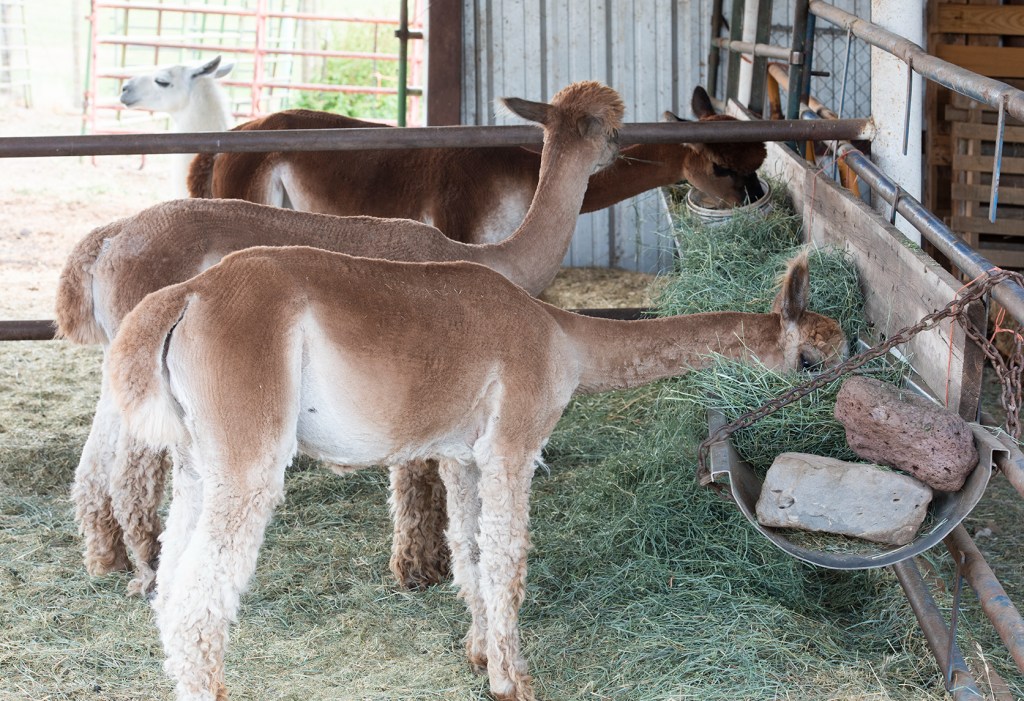
Much happier after taking off their winter sweaters.

Despite an unplanned six-week delay that was entirely out of our control, our four rescue alpacas were successfully sheared a few days ago. They had really started to suffer in June’s abnormally high temperatures, constantly seeking out shade in the pasture and the cooling waters whenever we irrigated, and we were very glad to get their winter coats removed. I am in the process of learning how to spin their fleece into yarn and have attended a local spinning and weaving guild to observe and practice this ancient art. Like all handcraft there is a meditative aspect to spinning that soothes my constantly anxious mind, and this winter I hope to make some real headway on the bags of fleece we’ve accumulated over the years.

Continue reading

Farm update: May 20

Hello friends, and how are things with you? We are quickly entering our busiest season on the farm, jumping between planting, irrigation and weeding, and are working hard on keeping ourselves physically and mentally healthy while still accomplishing our tasks. Here are a few recent images from the farm, if you’d like to see.

Plant ID is not tricky with this one.

The lilacs have nearly finished for the year, but the blooms and their scent were spectacular this season. We have primarily the classic pale purple flowers with a few white ones thrown in for good measure. While we have planted lots of things during our time at Quiet Farm, we cannot take any credit for the lilacs as all were planted before we found this place. They are such a welcome addition to our spring and we love their unmistakable scent as we go about our farm tasks. Do you have a favorite spring flower?

Continue reading

The 2023 bean harvest

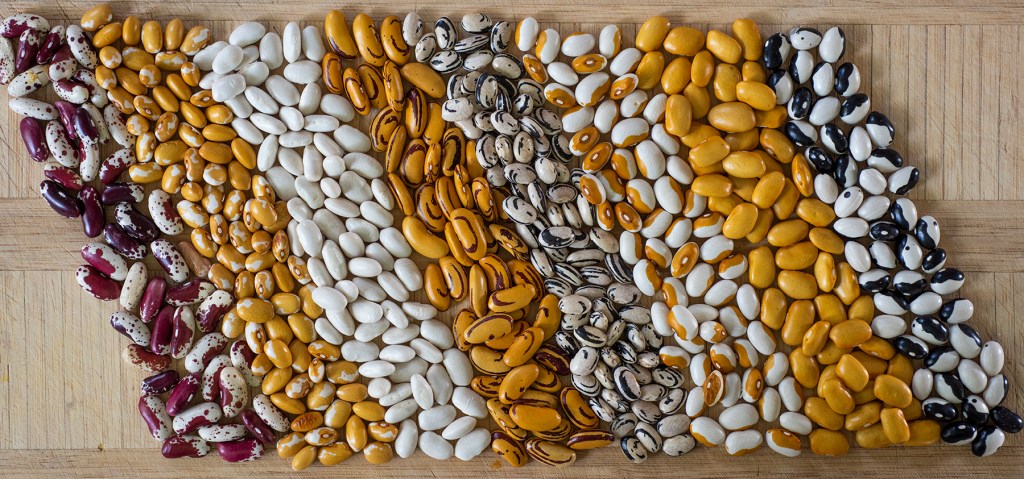
Well, hello there. It’s nice to be here again. We’ve taken a break from posting, but we certainly haven’t taken a break from farming. On the contrary, we have expanded our growing area and our crops. This year, we grew hundreds of pounds of organic vegetables, but we’re most proud of our dry bean harvest – twenty varieties! Read on to learn more about what we grew.

Clockwise from top left: Hopi Yellow, Vaquero, Bolita, Dragon’s Tongue.

Hopi Yellow: A classic yellow bean, larger than Buckeye. Perfectly at home in any soup or stew, this is a bean that will enhance any recipe yet never steal the spotlight. Excellent productivity.

Vaquero: Also called Orca or Yin-Yang (for obvious reasons), these small, dense beans cook up beautifully and produce a rich, inky pot liquor. A stunning bean and surprisingly productive for an heirloom.

Bolita: A lovely, delicate little bean in the pinto family, but smaller and sweeter in flavor. Bolitas are native to southwestern Colorado and New Mexico and figure prominently in the Indigenous cuisine of the region.

Dragon’s Tongue: These pale lavender wax beans grow inside pretty dark purple-striped pods and are most commonly eaten as a fresh green bean, though the attractive pod stripes unfortunately disappear when they’re cooked.

Clockwise from top left: Aztec White, Rio Zape, Jacob’s Cattle, Tiger’s Eye.

Aztec White: One of our very favorite varieties, Aztec White is our top producer and a bean we will likely always grow. These beans are perfect for a white chili or a lush, garlicky dip for crudités.

Rio Zape: We’re proud to grow this spectacular purple and black bean that inspired the creation of the legendary Rancho Gordo. An impressive member of the pinto family, this bean offers deep, dark flavor with coffee and chocolate notes.

Jacob’s Cattle: Like most beans in the kidney family, Jacob’s Cattle’s is dense, meaty and full-flavored. It holds its shape and stands up to strong seasoning, so it makes an excellent chili bean.

Tiger’s Eye: These stunning beans are honestly almost too beautiful to eat. Almost! Tiger’s Eye ripen early due to their thin pods; their correspondingly thin skin nearly disappears in cooking, but they’ll hold their own in any chili or soup.

Clockwise from top left: Hutterite, Cranberry, Palomino, Midnight Black.

Hutterite: Possibly brought to the northern Midwest by Ukrainians in the 1850s, or maybe selected from China Yellow by settlers – like many beans its origin story is a bit murky. This bean is creamy, productive and mild, perfect for any gentle, warming soup or stew.

Cranberry: This comes from a huge bean family; it is likely native to Colombia but is now bred around the world. It’s also called Borlotti, Wren’s Egg and more. Cranberry beans are soft and thin-skinned and they produce a luxurious pot liquor, perfect for pasta e fagioli.

Palomino: This bean is a golden variation of Anasazi, but we choose not to use that disputed name and so have branded it Palomino. Like other yellow beans, it is creamy, mild and versatile.

Midnight Black: A true black turtle bean with traditional flavor and an inky broth, this bean originates from Rancho Gordo’s seedstock. Fresh black beans, cooked from dry, will completely change hearts and minds on using canned black beans.

Clockwise from top left: Forelle, Mayocoba, Peregion, Yellow Eye.

Forelle: Officially known as Forelle fliederfarben, which translates to ‘lilac trout’ in German, these round, purple beans with black stripes are absolutely gorgeous. This variety produced abundantly, always a surprise for heirloom beans.

Mayocoba: Native to either Peru or Mexico, these are creamy, pale yellow, thin-skinned beans with a soft, buttery texture. They make excellent refried beans.

Peregion: These come out of the Pacific Northwest and have a gorgeous zebra coloration. One of the few beans where the striping is still (faintly) visible after cooking, Peregion are productive and delicious.

Yellow Eye: These beans are both rich and mild, more a supporting character than an outright star. They are an old New England variety and the bean of choice for classic Boston baked beans.

Clockwise from top left: Garbanzo, Buckeye, Marcella, Red Cranberry.

Garbanzo: Also called chickpea or ceci bean, this legume is most commonly used in hummus and other Middle Eastern dishes. Garbanzos are not native to North America like most other beans here and are low-yielding and tricky to grow – but the unusual, fronded plants are fun to see in the field.

Buckeye: Rancho Gordo says, “A small, dense yet velvety bean that holds its shape and provides a rich bean broth. Easily one of the staff’s favorite beans. Buckeye is incredibly creamy, almost more like a classic black turtle bean than anything else. It’s dense without being intense, if that makes sense.” Can’t top that description.

Marcella: A long white cannellini-style bean, named by Rancho Gordo in honor of the great Marcella Hazan. Thin-skinned and creamy; ideal for brothy Italian-style soups and rich, flavorsome dips and spreads.

Red Cranberry: An old variety, likely grown by Indigenous tribes in the northeast U.S. Gorgeous rich red color and much rounder than the more common striped/speckled cranberry bean above. Listed in Slow Food’s Ark of Taste.

We could go on and on about dry beans (and have, previously), but let’s sum it up like this: they’re native to our region and therefore exceptionally drought-tolerant. They’re an incredibly nutritious source of plant-based protein and beneficial fiber. They require almost no care, and they are not plagued by pests, viruses or disease so require no inputs, at least in our microclimate. They keep well. And they actually give more than they take, replenishing the soil with each season’s growth. Beans are an absolute powerhouse in every category, and they’re a great addition to Quiet Farm. We’re deeply proud of our 2023 harvest, and are already evaluating what varieties we’ll grow next year.

More than ever, we know that small, regenerative farms are the only sure way out of this increasingly catastrophic environmental mess we find ourselves in. We encourage you to support small farms in whatever way makes the most sense for you and your household.

As always, thanks for being here. We’ll be back again soon!

The season in review

It’s surprisingly cold now, in late November, although dry and clear. As always, we’d love for some of the snow blanketing other parts of the country (hello, six feet in Buffalo!) to bestow its generosity upon us here, but nothing shows in the forecast as yet. Days are crisp and blue, and nights definitely require extra quilts. The sunroom is still full of cardboard trays of slowly ripening tomatoes and peppers; this unheated room works perfectly for cold storage and allows these vegetables to ripen slowly with sunlight but without so much warmth that they’d rot. Certainly something is sacrificed in terms of flavor when crops aren’t allowed to ripen outside, but we have a reasonably short growing season here so we have to work with what we have – and it’s a lovely treat to enjoy our own fresh tomato salads well into winter.

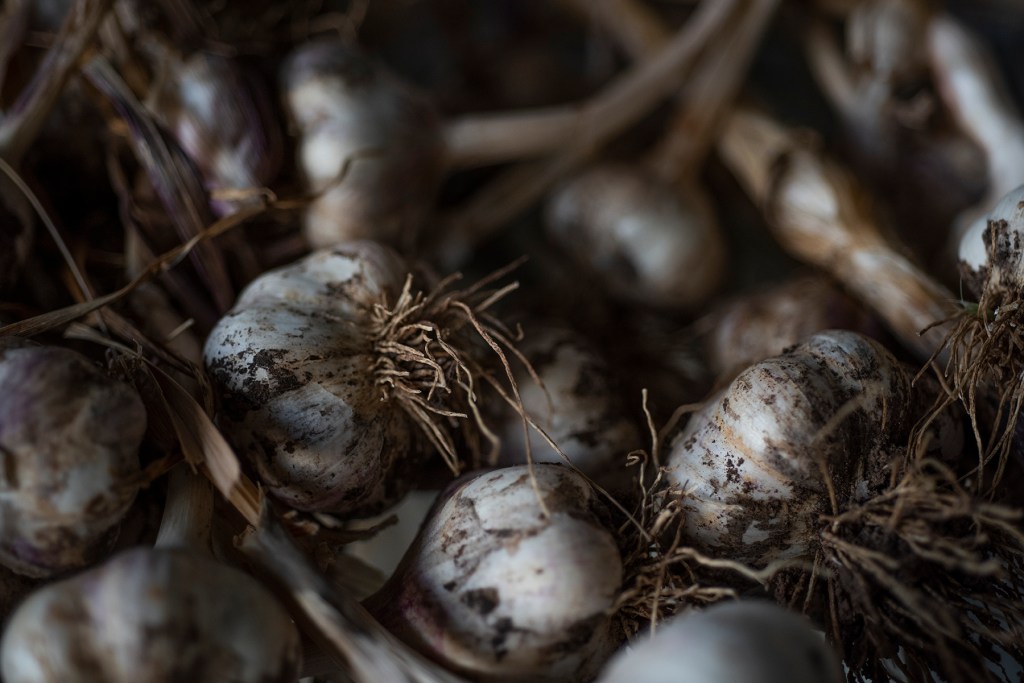
Those cardboard trays are slowly transforming into rustic, delicate ristras and canning jars of salsa and sauce; seeds are mostly dried and packed away. The winter squash bounty hasn’t been tapped into yet; that will carry us through the coldest months and into fragile spring with warming soups and curries. New planting rows for next year have been plowed and filled with compost. The plants we pulled out have been mowed into bits to break down into compost over winter; the beds have been mulched with spent straw and next year’s garlic has been planted. In all ways, our season is gradually winding down and we’re more than ready to tuck ourselves in for a couple of months of much-needed rest.

We’re still reviewing our season, cataloguing our successes and noting what changes and improvements we plan to make for next year. This year certainly had its challenges, but it definitely offered wins, too! Read on for more about the 2022 growing season.

Continue reading

The bean harvest

Our eight bean varieties from the 2022 harvest.

Here we are, dear friends, and yet again I’m singing songs of love and devotion to beans – specifically our own 2022 harvest! My total and complete adoration of dried beans is no secret. Not only are beans one of the most inexpensive yet nutritious whole foods available, but as nitrogen-fixing legumes they actually improve soil. They grow well in our tricky high-plains desert environment, they don’t require much water and they’re very low-maintenance. There can hardly be a better edible crop to grow! Plus, as the world gradually starts to realize that a meat-centric diet for nine billion people simply won’t work, beans (and other nutritious legumes and pulses) will become ever more important as plant-based proteins. We’d like to get ahead of that curve and start cultivating more edible legumes on our farm, for both our own health and our soils, so this year we planted a test crop.

Continue reading

Seed saving + free class!

Mid-October and still no hard freeze here yet…not even a frost. We had such a late start to our growing season this year that I can’t really complain about the extended warmth, but it’s time to wrap things up. The forecast for this coming weekend shows that we might be in for a big downward shift in temperatures, and we are ready. But! Before then, there is much to do, including harvesting everything and collecting all our seeds for future planting.

And to that end, I am teaching a free class on seed saving at our local library on October 22. We’ll talk about how easy yet how important seed saving is, and you’ll learn how you can benefit our local foodshed’s seed sovereignty as well as help the library’s seed bank! The class is free but advance registration is required; more information here, if you’d like to attend. No matter where in the world you are, please consider saving and sharing your seeds!

The beef tax

“We’re all paying it, every day.

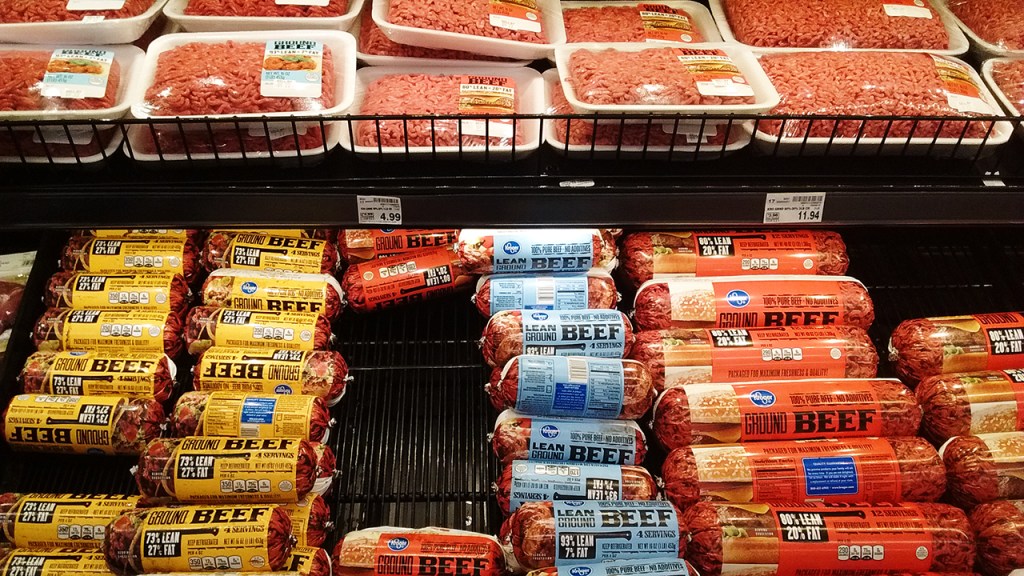
In the US, taxpayers subsidize the cattle industry with billions of dollars of tax money each year. Most of that goes to pay for feed crops, but there is also a huge allocation of public land for the grazing of cows. About half the land in the entire country is just for cattle.

In addition, a significant portion of the climate problem is directly caused by the effects of bovine respiration as well as the clear-cutting of forests for grazing worldwide. It’s like someone is dumping manure on your living room carpet and asking you to pay for it.

The end result is that whether or not you eat meat, you’re paying for it.

Beef is more expensive than we realize. And it’s also significantly less convenient than we give it credit for. Climate refugees, storm-damaged assets, the loss of life and homes… these are directly caused by the one billion cows that humans raise each year.

What would happen if we simply charged a fair price for the beef and milk that people consume?

The industry has done a great job of persuading people that beef is cheap, convenient, easy, luxurious, wholesome and benign. It’s none of those things.

I wonder how long it will take us to realize just how much it costs us.”

We are focusing our laughably meager climate change mitigation efforts on electric cars and renewable energy. Until we address the bull in the room – so to speak – and deal with our filthy, wasteful, poorly managed and corrupt agriculture system, we’re going to get precisely nowhere. It’s long past time that we start paying the true cost of our consumptive lifestyles.

Credit to Seth for this post.

The new normal

Spring “branch-breaker” storms do so much damage to precious trees.

If you grew up on the Front Range, you’re probably familiar with the old adage to “plant out on Mother’s Day.” The idea was, of course, that any chance of a hard frost was past, and delicate warm-weather crops, like tomatoes, cucumbers, peppers and eggplant, would be safe for the summer growing season.

If you’ve lived and gardened in the Denver area over the last twenty years, however, you know the very idea of planting on Mother’s Day is pretty laughable. This year, the holiday occurred as early as it possibly can – on May 8. Between Thursday and Friday last week, the temperatures in some Front Range areas plummeted from the high eighties to the low forties, with heavy, wet snow and overnight lows well below freezing. If you chose to “plant out on Mother’s Day” and your plants weren’t carefully protected or relocated indoors, you’re likely headed back to your friendly local garden center (hi Anne, Dave and team!) to replace your summer vegetables.

Obviously, Denver weather is known to be erratic, and these massive diurnal shifts are one big reason (after overdevelopment, of course) why the Front Range no longer has a commercial fruit industry like we do on the Western Slope. But while Denver was in the grip of a monster late-spring storm, the East Coast was broiling under record high temperatures and excruciating humidity. Locally, our area has seen more than its fair share of severe weather recently, including unseasonal hard freezes that absolutely crushed peach and cherry growers. A certain number of extreme weather events are to be expected, of course, but it is no longer possible to argue that they’re the exception. They’re now the rule.

In less than a decade, Colorado has experienced two “hundred-year weather” events – the devastating 2013 floods and the scorched-earth Marshall Fire this past December. That stunning fire, of course, was precipitated by bone-dry conditions and hurricane-force winds – and followed a few hours later by about ten inches of snow. Too late, obviously, to prevent the loss of a thousand homes; the Marshall Fire quickly enthroned itself as the most expensive “natural disaster” in Colorado’s history. Is it even accurate to refer to these disasters as natural, since they’re entirely our fault?

The point is, it is no longer feasible to expect the weather to act the way it’s always acted. It is no longer possible to change the trajectory that we’re on as a population and a planet; there is absolutely no hope of achieving the 1.5 degree warming limit by 2030 and it’s foolhardy to pretend otherwise. All we can do now is adapt to our rapidly changing climate – stop building in wildland-urban interfaces, create a resilient and regionally-adapted agriculture system and learn how to live with the ‘new normal.’ Hundred-year weather events should be expected every ten years, if not more frequently, and we need to ready ourselves for these, instead of acting shocked and horrified and surprised every time they occur. We cannot continue to behave as we’ve behaved in the past and expect that the weather will accommodate us. Also, we should really, really stop irrigating the desert to raise cattle and lettuce (looking at you, Arizona) and we should outlaw Kentucky bluegrass – actually, lawns in general – in the American West. (We can’t even hide bodies in Lake Mead any longer!) The sooner we accept our harsh new reality and learn to live with it, the better off we’ll all be.

Continue reading

Fight inflation in the kitchen

The total came to nearly $90 – four painfully small canvas totes of groceries that did not include meat, cheese or eggs. Had I been shopping at an ultra-fancy Amazon-owned health-halo organic market, this might have seemed reasonable, or even a bargain. Instead, I was at the (sadly) best option in our poor, rural county: a grim, dark and untidy corporate chain store with exploitative policies, limited fresh produce and extensive displays of cheap soda, chips and cookies. Shopping here is not pleasurable, by any stretch of the imagination; both the atmosphere and the prices leave much to be desired.

Unless you’re named Musk or Bezos, you’ve likely noticed that inflation has started to bite, and to bite hard. In the twelve-month period ending this past March, the U.S. inflation rate was 8.5% – the highest it’s been since late 1981. In the simplest economic terms, inflation means that our money doesn’t go as far as it used to. The huge conflagration of various challenges we’re facing right now – a global pandemic, the pointless war in Ukraine, climate change, housing instability, supply-chain disruptions, insatiable greed – means that we’re all experiencing inflation to varying degrees. The good news is that in almost all cases, you can control how much inflation affects your individual household by adjusting your own behavior. No surprise, then, that one of the easiest places to accomplish this is in the kitchen.

Before we really start whining about grocery prices, however, I want to make it perfectly clear that the average American spends far less on food as a percentage of their household income than do most other developed nations. The best available statistics indicate that we spend about 7% of our budget on food, whereas in the U.K. it’s closer to 9.5%, and around 15% in France, Spain and Italy. On a relative basis, our food is devastatingly cheap here; this is because we have absurd federal farm subsidies and because we’re a net exporter of food, which means we produce a lot. (Our cheap food is obviously both terrible for the environment and our own health, but the system holds!) Unfortunately, we’re very spoiled and therefore accustomed to cheap food, which means that we’re far more sensitive to price increases than other countries. (See also: $90 for four tiny bags of groceries, above.)

If you, too, are starting to feel the sharp stick of inflation in your own food budget, we hereby present some easy ways to keep your food costs down, eat healthier, and reduce environmental impact. It’s a win-win-win!

Continue reading

Farm update: April 25

Hello, friends. It is the busiest time of the year on the farm and we have ten thousand different projects on at the moment. Here are a few things we’ve been up to lately, if you’d like to see.

Tomato starts before splitting.

The sunroom is packed with hundreds of starts, mostly warm-weather crops like tomatoes and peppers. I’ve started seventeen different tomato varieties this year, some new and some tried and true classics, plus thirteen different peppers ranging from mild and sweet to incendiary. After last year’s pepper bounty, I’m committed to expanding our production of the larger bell peppers; I believed that our growing season was too short for the full-size peppers but 2021 certainly proved me wrong. As always, the vast majority of the plants we grow are from saved open-pollinated seed so that we’re protected from the vagaries of the seed market. That said, I tried starting ‘Sungold’ tomatoes again this year; they’re a hybrid but if you’ve ever tasted these incredible gems, you know exactly why people go mad for them. I’ve obviously grown thousands of tomato plants and consider myself a pretty experienced grower, but three years in a row now my purchased ‘Sungold’ seed has failed to germinate. I contacted the seed company – a reputable Front Range outfit – about the poor germination and have yet to receive a response. Frustrating situations like this are exactly why we save our own seed, because we cannot rely upon companies to provide our food.

We will ship you a free kitten.

We live in an exceptionally impoverished county; a direct consequence of that is an absurd population of stray dogs and cats, because people do not spay or neuter their animals. In late March we unfortunately discovered that a feral cat had chosen our hay barn as a warm, protected nursery; now we have one adult cat and six kittens. While we’re happy to have some assistance in controlling the mouse population, we definitively do not keep any household pets so fate will run its course with this lot. An apocryphal quote attributed to Gandhi reads, “The greatness of a nation and its moral progress can be judged by the way its animals are treated.” In this (see also: CAFOs) and in so many other respects, the U.S. is failing entirely.

So pretty! So aggressive! So invasive!

If 2021 was The Year of the Goathead, 2022 looks to be The Year of the Thistle. We’ve written before about cotton thistle (Onopordum acanthium), which is hugely invasive in our area and produces massive, thorny plants that are dangerous to humans and animals. As we work on spring cleaning and tidying around the farm, Thistle Patrol is a key task. If we can dig out the plants by the roots when they’re small, we can prevent them from becoming these treacherous four-foot monsters and of course from spreading seed to produce even more thistles. We travel around with a small shovel at the ready, prepared to vanquish our spiky foe wherever it might be found.

All the little blue tape pieces mark areas that have to be repaired. Sigh.

We are also at work on The World’s Lengthiest and Most Tedious Tiling Project, involving a complicated and not particularly interesting tale of obtuse angles, poorly manufactured countertops, a rickety garage sale tile cutter and many, many other challenges, surprises and obstructions. When (if?) we ever finish this project, it will hopefully look incredible; the road to reach that lofty point, however, still appears long and winding. Also someone in all those DIY YouTube videos should really mention that charcoal grout against white tile shows every chip, imperfection and error. “We didn’t know what we didn’t know” has never seemed so apt; we’ll chalk this one up to hard-won learning.

Will we harvest any fruit this year? Time will tell.

And finally, we’re excited to see blossoms on most of the fruit trees we planted in our first full season here. We of course live in the heart of Colorado’s commercial fruit territory, but the changing climate means that no plant is guaranteed survival any longer. Of late, we’ve endured punishing fifty-mile-per-hour winds plus overnight temperatures in the 20s; the big propane-fueled fans in the surrounding orchards have been on a few times recently in a desperate attempt to save their year’s harvest because these frigid temperatures are devastating for the fragile blossoms. The cherry trees in our area are likely gone for good, thanks to last year’s freeze. Many growers have started culling their delicate peach trees in favor of hardier apples; though peaches sell for far more per pound, the risk of losing the entire crop is also far greater. We are doing our best to adapt to a drier, hotter, windier place and to keep our plants (and ourselves) healthy while doing so.

And with that, we’re back to work! Wishing you a pleasant week ahead.