“In a year that stripped life to bare fundamentals, the natural world has become our shared story. Seasons have offered the rare reminder that the world moves on even as our sense of time blurs.”
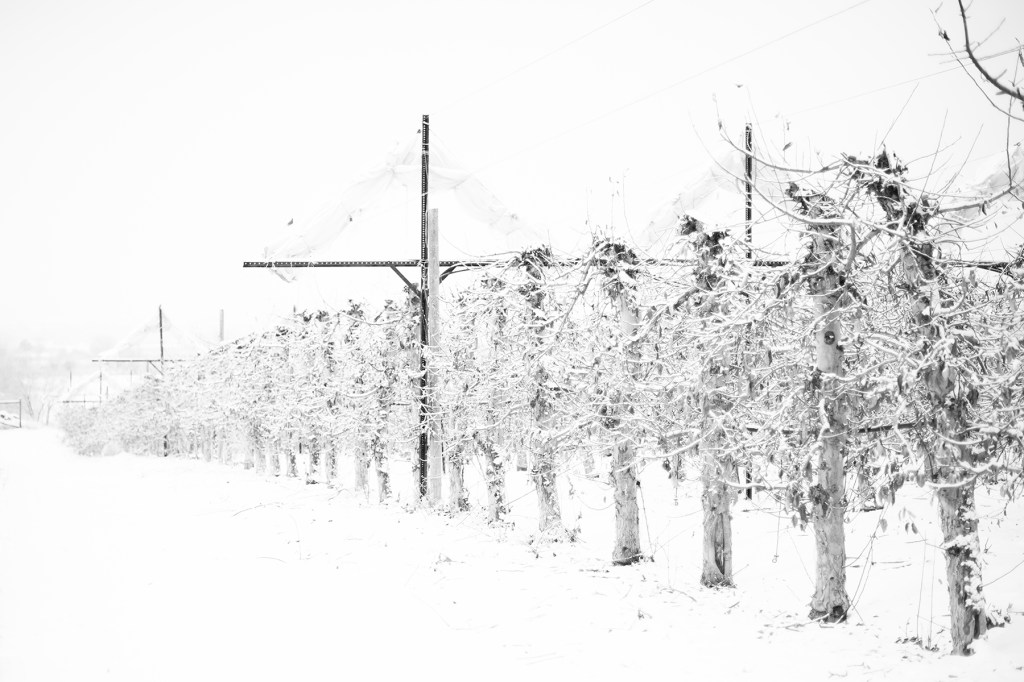
“The undeniable hardship of this winter is a reminder that for much of human history, particularly in colder climates, winter was a season simply to be survived. Winter is a primal time of death and loss, and a time for grief. It reminds us that darkness, not only light, is part of the recurring rhythm of what it means to be human.”
There’s no question that it’s been one hell of a week. Scratch that: it’s been one hell of a year. Over here at Quiet Farm, though, we carry on planting, tidying, baking, canning, caring for our animals and preparing for winter. Here are a few things we’ve been up to recently, if you’d like to see.
Ready for a long winter’s nap.
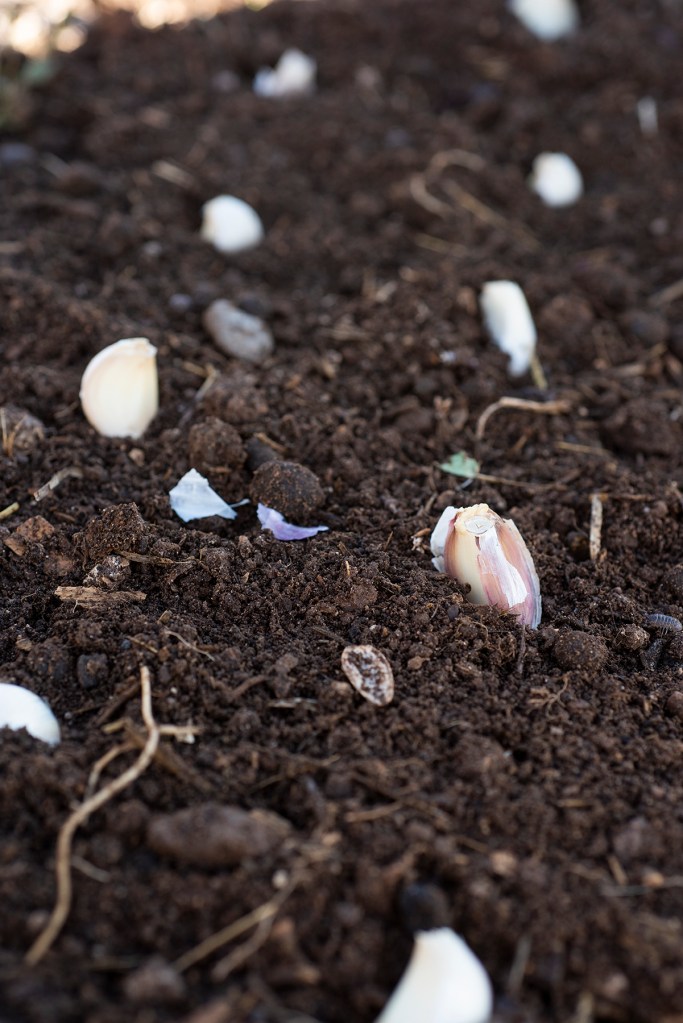
We planted our 2021 garlic crop this week; it’s tucked under a warm, cozy blanket of compost, alpaca manure and straw. Garlic is a unique annual crop in that it stays in the ground for about nine months, but during that time it requires almost no maintenance beyond occasional watering. As usual, we’d separated this year’s garlic harvest and saved the largest cloves for planting; thanks to garden magic, each individual clove grows into a full head. We planted about one hundred and fifty cloves in two new beds, then a friend texted with an offer of extra garlic that she had over-ordered (thanks, Judy!), so another seventy cloves went into an additional row. Every year I run out of garlic before the July harvest, and every year I vow to plant more. Will over two hundred heads be enough for next year? Stay tuned, and vampires beware.
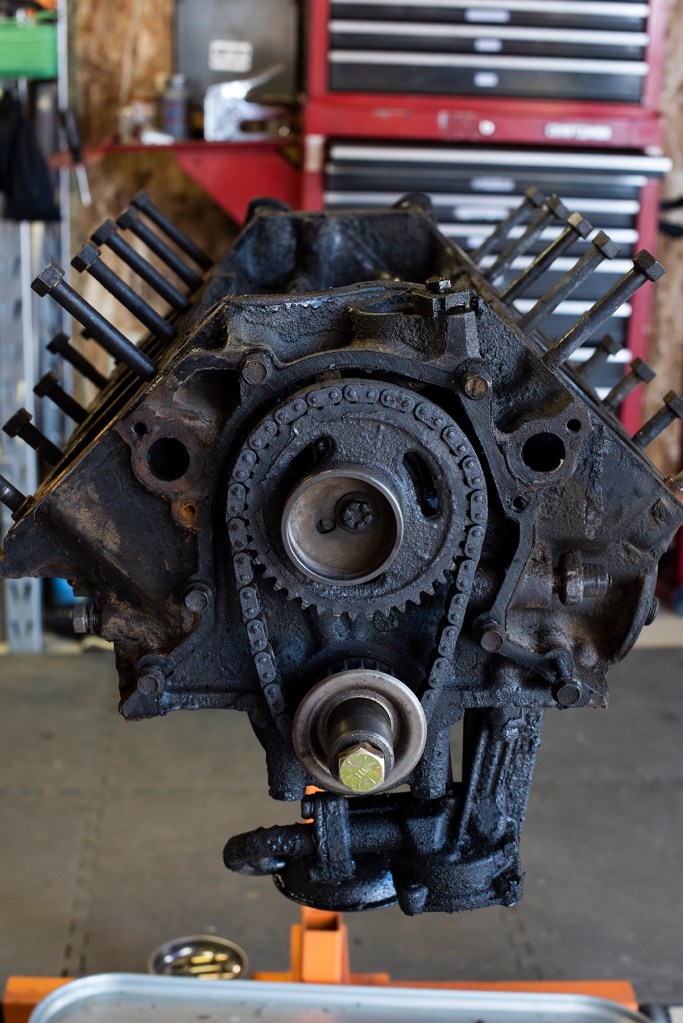
Simple. Elegant. Gorgeous. (Also filthy.)
My winter will hopefully involve lots of sewing and reading, and N will focus his time and energy on this rescued beauty. For all you gearheads out there, this is a classic example of American motor muscle: a Ford 289 small-block V8 manufactured in the summer of 1964; it likely came out of a Mustang or a Galaxie. At the moment, it needs a lot of cleaning and possibly a replacement part or two, but who knows what it could accomplish once restored to its former glory? While electric cars might be all the rage, there is much to be said for the elegant simplicity of a powerful internal combustion engine. (We obviously love beautiful 1960s Americana here; see also the recently-acquired Singer Touch ‘N’ Sew.)
So thrilled with our dry bean harvest!
I may well be more proud of the beans we grew than just about any other crop. While I love growing vegetables, with each passing year (especially when there’s a pandemic and associated food scarcity!) I am more and more committed to growing long-term food storage crops like grains and beans. We planted just one small row of these ‘Peregion’ beans this season, and though I doubt I have more than a few pounds of homegrown beans for the winter, I know that I’ll be expanding on the varieties we grow next season. Dry beans are easy to grow and to store, require very little post-harvest processing and punch well above their weight in terms of nutritional value. Plus, they’re delicious! We hope to grow a lot more beans here at Quiet Farm.
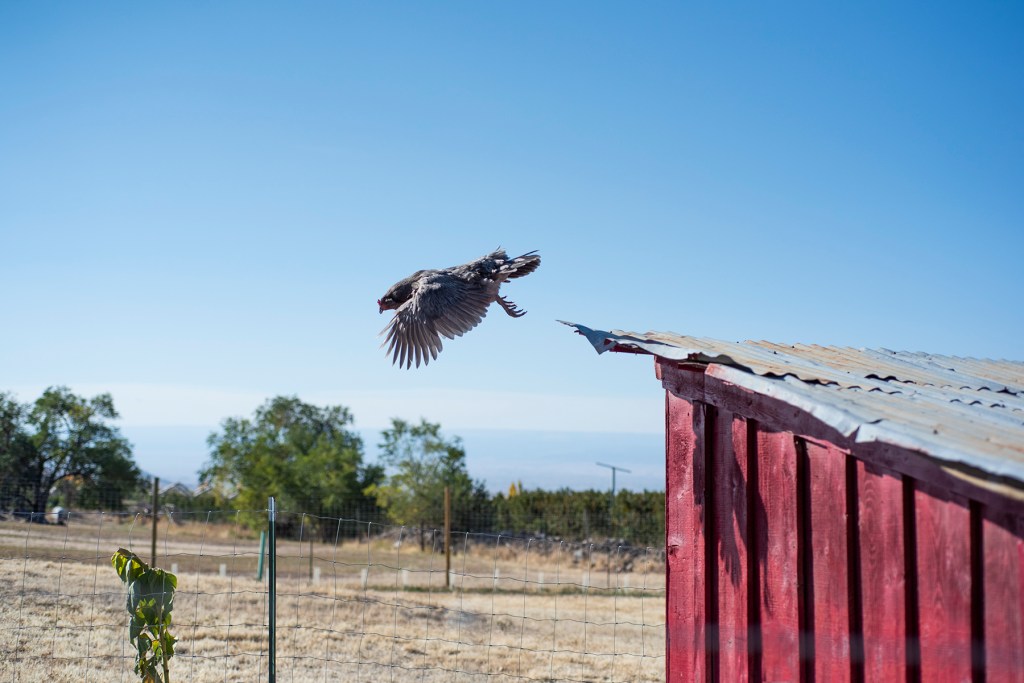
Flying the coop.
Domestic chickens are the closest living relatives of the T.Rex (that’s true) and have similarly tiny brains. Here, one of our genius hens decided to make her way to the top of the chicken house, but was understandably somewhat perplexed as to how she might get down – although she did finally make the leap. Little does she know that the roof offers zero protection from raptors, of which we have many, and actually makes a perfect runway for a hungry hawk searching for a tasty chicken meal. If she continues her high-flying adventures, she’ll learn that lesson the hard way.
This is how we roll.
True confession time, friends: all November and December issues of food and entertaining magazines (Bon Appetit, Food & Wine, Martha Stewart, etc.) received at Quiet Farm usually go straight into the library donation bin without even being opened once. Such is the extent of my loathing for the end-of-year holidays and all the attendant expectations, “must-have foods,” waste and excess! This year, however, a customer requested soft, fluffy dinner rolls, and I wanted to experiment with a few different iterations. Plus, I was completely sold on this caption: “If food could give you a hug, these rolls definitely would.” As we face the end of one of the most difficult years any of us have ever experienced, is there anything we all need more than a giant, warm, comforting hug? I think not. (P.S. The rolls are a bit labor-intensive but excellent, and they work at altitude. Worth your time.)
Wishing everyone a calm, restful and healthy week.
How are things in your world, friends? It’s officially autumn here, with clear bluebird days and crisp, cool nights; the destructive Pine Gulch fire, sparked at the end of July about seventy miles away, is thankfully entirely contained. Our neighboring orchards are nearly all harvested, and our task list is packed with tidying, organizing, preserving, cleaning and stocking up for what we hope is a very snowy winter.
Hay for animal feed has to stay dry at all costs.
The winter feed for our alpacas and llama has been delivered and safely stored in our de facto hay barn. As this is our first year with the animals, we had to guess on quantities and are hoping that we won’t find ourselves out of hay in frigid January with no green pasture on the near horizon – in a situation like that, a hay farmer will be able to charge us whatever he wishes, and rightfully so. Our llama, Kingston, has already figured out that with some crafty contortionist maneuvering he can reach the fresh bales through the corral panels. Bless his tenacity, and his flexible neck.
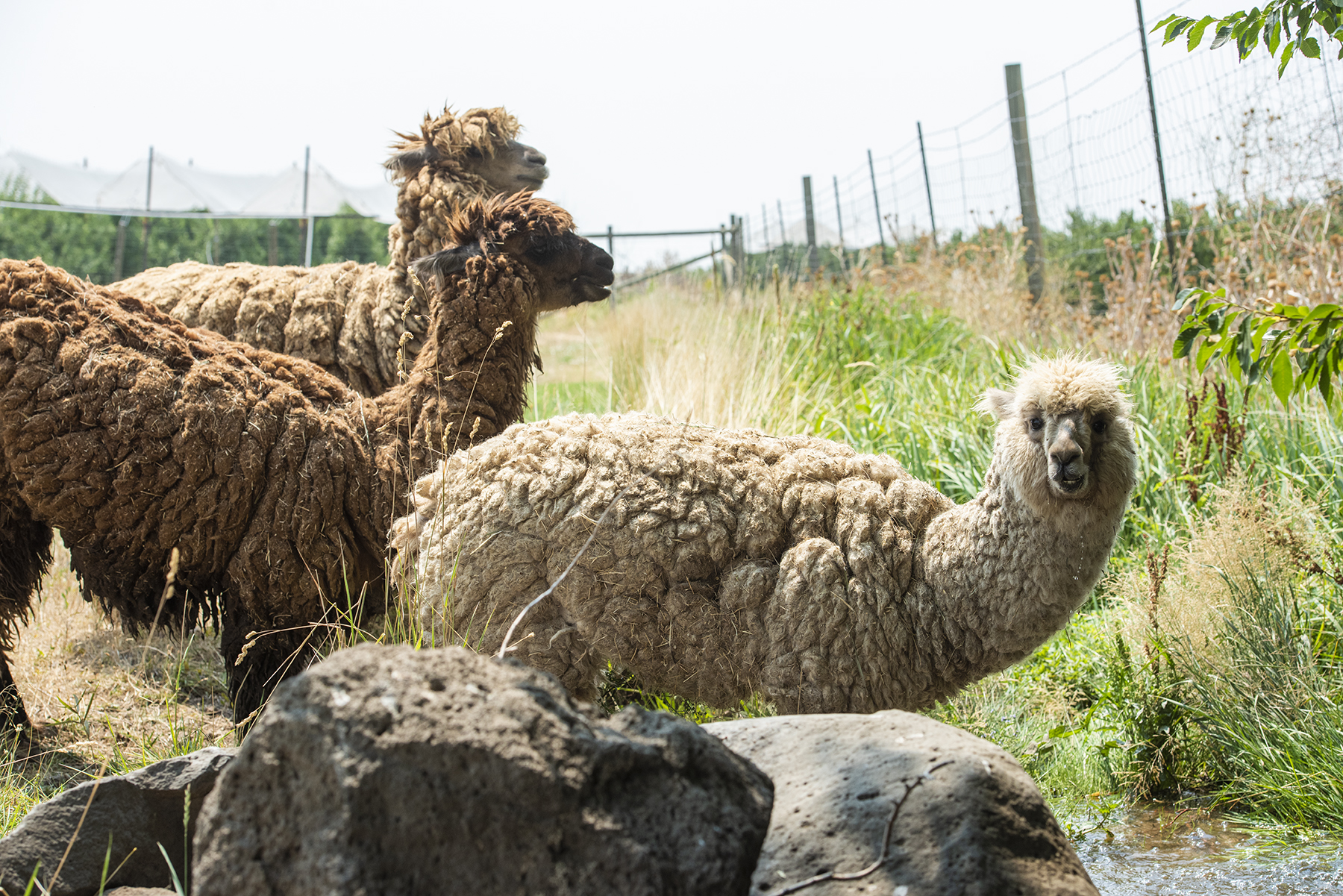
Some of you may recall that we expanded the Quiet Farm team a few weeks ago. We now have five alpacas and one llama on our farm, and they currently spend the majority of their time grazing placidly on our pasture. We’re new to livestock, and are doing as much research as possible, and we thought you might be interested in learning more about our new residents, too.
See you at the old watering hole?
First, what even are these odd creatures, anyway? Llamas (Lama glama) and alpacas (Vicugna pacos) are both members of the camelid family, along with their wild cousins, viçunas and guanacos. (Collectively, this group is known as lamoids.) Camelids actually evolved in North America; some of their ancestors migrated to Africa to become the desert camels we’re familiar with. Other ancestors migrated south to what is now South America and evolved into the llamas and alpacas we associate with indigenous tribes of South America. As bison were essential to the Native Americans, so were llamas and alpacas to the indigenous peoples. These animals provided food, fiber, grease, draft power, fertilizer, fuel, leather and protection.



 Finding Quiet Farm