Farm update: May 20

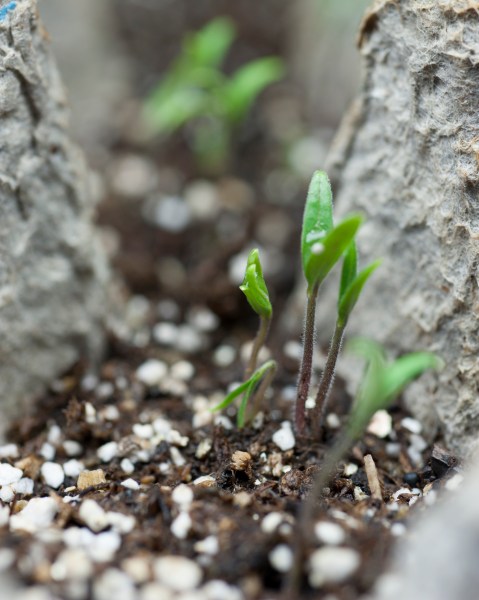
Our average last frost date here at Quiet Farm is May 13; as a rough guideline, this means that it’s generally safe to plant warm-weather crops (tomatoes, peppers and so on) outside after this date. Except that we had about an inch of light, fluffy, powdery snow plus some shockingly low overnight temperatures this past week, and if we’d had all of these plants outside they would have died a chilly death. While some vegetables can handle low temperatures, our summer stars want heat and more heat, so ours are still safely tucked away in the sunroom. What do we learn from this? Always check the forecast, and never trust Colorado weather to do what you expect.

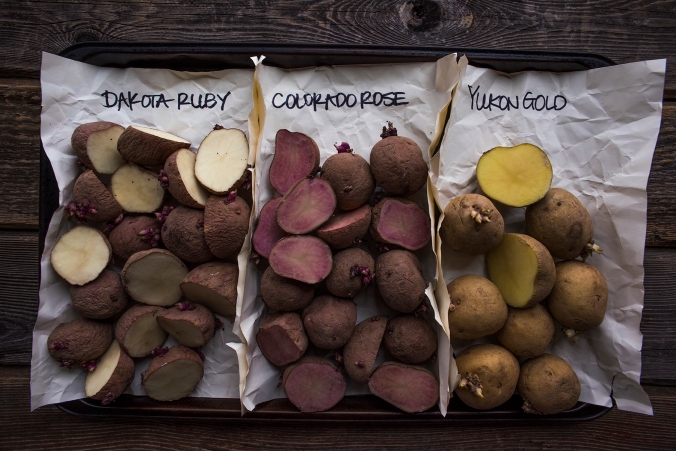
Seed Potatoes 01 sml

These seed potatoes are bred for the Rocky Mountain West.

We’re expecting another week of cool, wet weather, which makes it impossible to pour concrete for our fence posts. But there is always something that can be planted, even if it’s not tomatoes and peppers. Our locally-grown seed potatoes have been planted in “potato towers,” which we constructed from galvanized fencing and layers of newspapers, compost and straw. I planted a little over a pound of each variety; theoretically each pound planted should yield about ten pounds of fresh potatoes in maybe July or August. I’ve never planted potatoes in towers so am excited to see how this experiment turns out! (If you want to plant potatoes, buy certified seed potatoes and don’t plant those from the grocery store – they’ve typically been treated to prevent sprouting and therefore won’t grow.)

Continue reading

Between a rock and…another rock

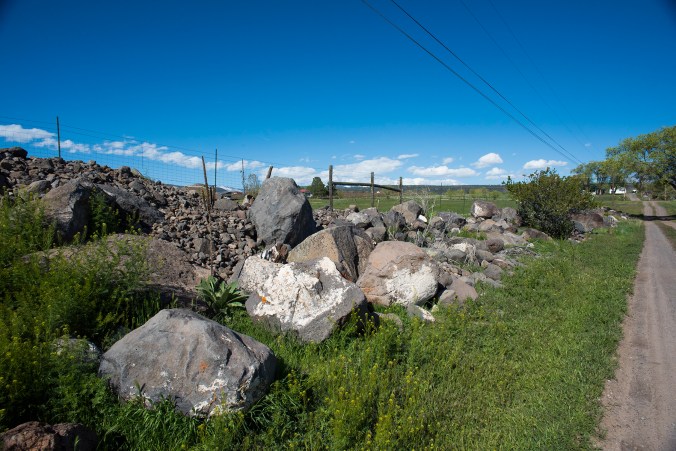
Rocks 02 sml

Look! A photo of large rocks! Very impressive.

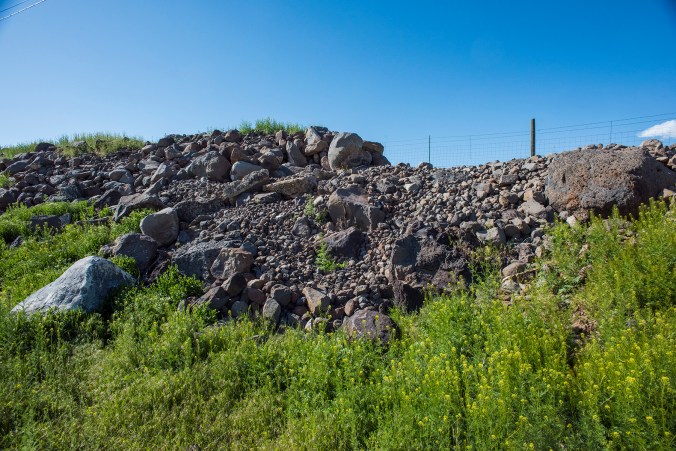
Fitting squarely in the category of Important Life Lessons: if you buy a piece of mostly empty agricultural property that hasn’t exactly been used as a farm, there may be a reason why. In our case, that reason is rocks. Many, many rocks. So many rocks. Big rocks and little rocks and medium rocks. Some tiny pebbles. Some the size of a small car.

Rocks 01 sml

More rocks.

Continue reading

Farm update: May 6

It’s been mostly cool and rainy this week. We’re of course grateful for the moisture and lower temperatures, which might keep our snowpack in place longer, but the weather has literally put a damper on our excavator plans. Never mind, though; there are always plenty of other things to do!

Broad Tailed Hummingbird 02 sml

A male black-chinned hummingbird getting its sugar fix.

One of our most successful ventures recently has been installing hummingbird feeders around our house. We’ve been utterly astounded at the sheer number of hummingbirds that have appeared, including both the black-chinned and broad-tailed varieties. They’ve apparently informed all their friends that the bar is open!

Continue reading

Farm update: April 29

San Juans 00

Spring is truly here and the Quiet Farm project list expands daily! The weather has been unusually warm, so much so that everyone is concerned about our wonderful mesa snowpack melting too quickly and flooding the creeks. This sunny (and windy) week alone, we received deliveries of soil, lumber, fencing and concrete. We hauled railroad ties, hefted 80-pound bags of Quikrete, wheelbarrowed soil, hammered in T-posts and more. Our farm muscles are coming along nicely, and we’re trying hard to remember to apply sunscreen and drink enough water. When people say farming is hard work, they aren’t kidding – especially when you don’t yet own a tractor.

Continue reading

Farm update: April 15

Things are getting busy here at Quiet Farm! The weather is (mostly) conducive to working outside, and we’ve got a list of projects lined up. More trays of seedlings are potted up every day, we’re working hard on finishing the chicken house so we can bring pullets home, and plans for installing our game fence are coming together (I get to drive an excavator!).

Deldee 02 sml

Run, Pony, run. But not right at us, please. It’s scary when you do that.

Temporary Pony is alive and well and running around our pasture at top speed while performing complicated dance moves. Someday soon she’ll leave for her new home, but she’s certainly provided plenty of entertainment (and no small amount of terror) during her time here.

Continue reading

Farm update: April 8

QF Purple Flowers 01 sml

The hills are alive…with weeds! But we call them “wildflowers.”

The snow is finally gone at this elevation, even though plenty can still be seen on the mesa. Our pasture is coming back with a vengeance, and we spend our days walking the land, looking at what plants are coming up and trying to decide whether they’re helpful or harmful to us. Since we bought Quiet Farm at the end of a blistering summer in the midst of a hundred-year drought, pretty much everything was crispy and dormant. We hadn’t yet determined what bushes and trees might survive, and what would need to be removed. We’re giving everything a generous opportunity to stage a spring comeback before we tear it out.

Continue reading

Farm update: April 1

Spring is finally here…with the exception of a small blizzard that blew in Friday evening, of course. The weather right now is capricious – gorgeous one minute, hurricane-like the next. But we haven’t yet spent spring on our farm, so we’re ready for all of it. Here’s what we’re up to these days!

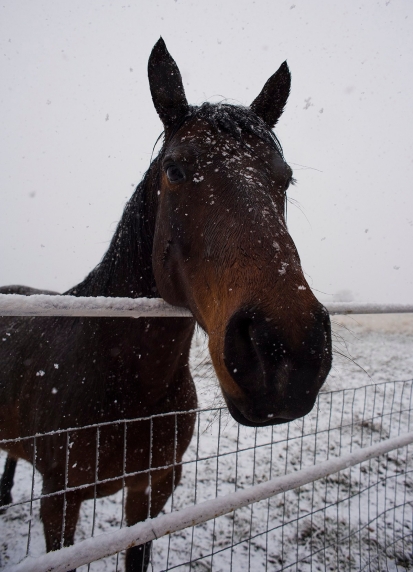
Deldee 01 sml

Why the long face?

Despite this photo, our pastures are greening up rather nicely, so we have a new resident at Quiet Farm. Temporary Pony belongs to our neighbor, and since we have grazing land available and no animals to graze it, Temporary Pony lives at Quiet Farm until she goes to her new home later this spring. She is a lovely, spirited horse who likes to sprint along the fence line, and she also runs straight at you full-bore when you’re out in the field – heartwarming and yet terrifying at the same time. It’s a pleasure to have an actual animal here; it makes our farm feel much more legitimate!

Continue reading

Things that are great, vol. 2

Modern lives contain way too much negativity, a cycle perpetrated by a fear-mongering media looking to sell us stuff we don’t need. In the interest of combatting that mentality, then, we present our second “Things That Are Great” link round-up, highlighting news stories and trends that we think are worth celebrating. (Read our first positive link collection here!)

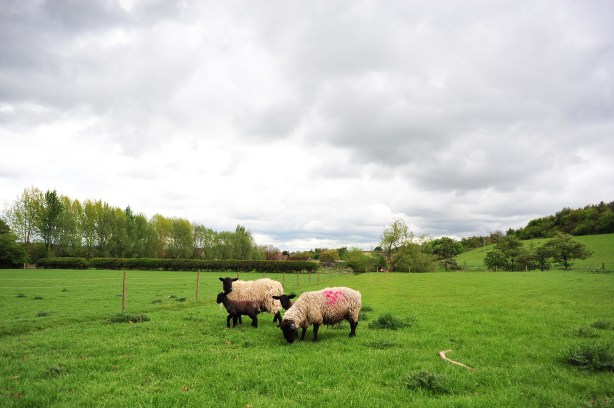
Sheepsies 01 sml

Photo clearly not taken in Colorado.

If you had to guess at the largest irrigated crop in America, you might well assume corn or soy. You’d be wrong; however; according to a 2015 NASA study, lawns represent about 40 million acres in the U.S., or about three times as much land as corn. All this grass comes at a steep price: 9 billion gallons of water per day, plus hundreds of millions of pounds of fertilizers and pesticides and other chemical treatments, all of which eventually end up in our water sources. And yard waste, including grass clippings and leaves, represents the largest single occupant of our landfills, too. All this for a crop we can’t even eat? Ridiculous.

02 February

Thankfully, though, forward-thinking companies are working to change that antiquated attitude. All across the country, edible landscapes are “unlawning” America. Converting pointless, thirsty lawns into healthy, local human food? Yes, please. These edible landscapers often face a lot of resistance from restrictive HOAs, but progress is still being made, albeit slowly. If you’d like to replace your lawn with native plants, check with your local extension agent – they’re often the best source of information for what will grow best and still look nice in your region.

Continue reading

Cooking with dried beans

My love for beans knows no bounds. They’re cheap, filling, easily available, simple to cook, packed with nutrition and utterly delicious. Seriously, what more could you want? There’s a good reason rice and beans are the staple food for well more than half the world’s population.

I’m on a personal mission to encourage people to cook dried beans, rather than canned. Look, I’m a big fan of having a well-stocked pantry, and if storing a couple of cans of black beans or chickpeas in yours means you’re more likely to whip up a quick soup or homemade hummus, then I’m all for it. But for sheer value and flavor, you can’t beat dried beans. They’re way cheaper, they’re not difficult to cook and they really don’t take more time – you just need to plan in advance. There are a lot of fairly strong opinions on how to cook dried beans, so if you already have a way that works well for your household, keep it. I’m here to tell you how I do it and why, but ultimately it doesn’t matter to me how you prepare your dried beans, just that you do.

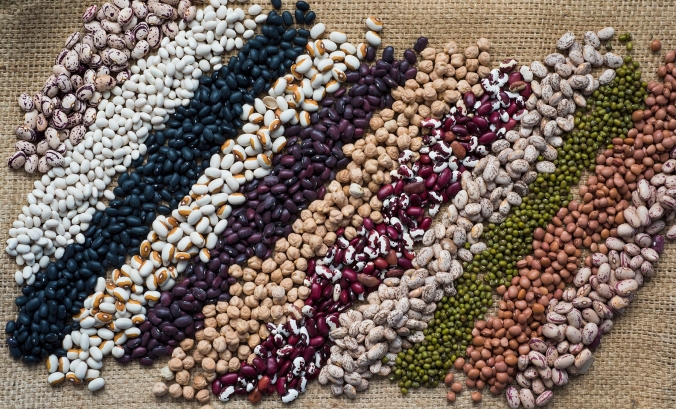
bean stripes 01 sml

Apparently we have quite a few different dried beans in our pantry.

Spoiler alert (and controversial bean-cooking tip alert, too): I cook all of my beans the exact same way, in a slow cooker (also commonly known as a Crock-Pot). And I no longer soak the beans in advance. Plus, I salt them at the beginning. That’s right, friends: I don’t soak my beans. And I salt before they’ve started cooking. I have spent years and years cooking dried beans, and I’ve tried every method: simmering on the stove, pressure cooker and on and on, and I’m personally convinced that the slow cooker, with its incredibly gentle simmer and moist, low-heat environment, is perfect for beans. And I get to skip the soaking step, too. (I don’t have an InstaPot, and I’m not going to buy one, but if you have it and you like it, then use it for beans.)

Continue reading

Cooking with winter squash

I may not love the excesses of the holidays, but I do love cooking this time of year. Ideally the weather is chilly enough to make us crave warm, earthy dishes, rich in the nutrients we need to sustain ourselves through the cold, dark winter. There’s a lot to be said for eating seasonally – not only does it make more sense to eat what’s available right now (or to preserve it for later), but nature magically gives us exactly what our bodies need. In the case of winter squash, that’s a lot.

Squash 01 sml

A large component of our winter storage pantry.

Edible squashes are in the curcubit family and essentially fit into two categories: summer and winter. Summer squashes include the thin-skinned varieties, like commonly available green zucchini and yellow squash. Winter squashes don’t ripen until late summer and early fall, then must be cured for extended storage. Most winter squashes are encased in a hard, protective skin, allowing them to be kept for months without refrigeration. As with other long-keeping vegetables (onions, potatoes, root crops), this comes in handy when there isn’t much else around to eat and you can’t just run to the store.

Continue reading