
A visible mend on a favorite pair of thrifted vintage jeans.
Do you choose a significant word or guiding principle for each year? My word for 2025 is “mend.” I love both the literal and metaphorical meanings of this word, and how it ties in beautifully with my current sewing practice as well as my overarching goal to build and strengthen my community ties. As Austin Kleon wrote recently, “The idea of ‘being local’ is becoming more and more important to me. In times like these I crave the company of humans living near me who care about the same things I do.”
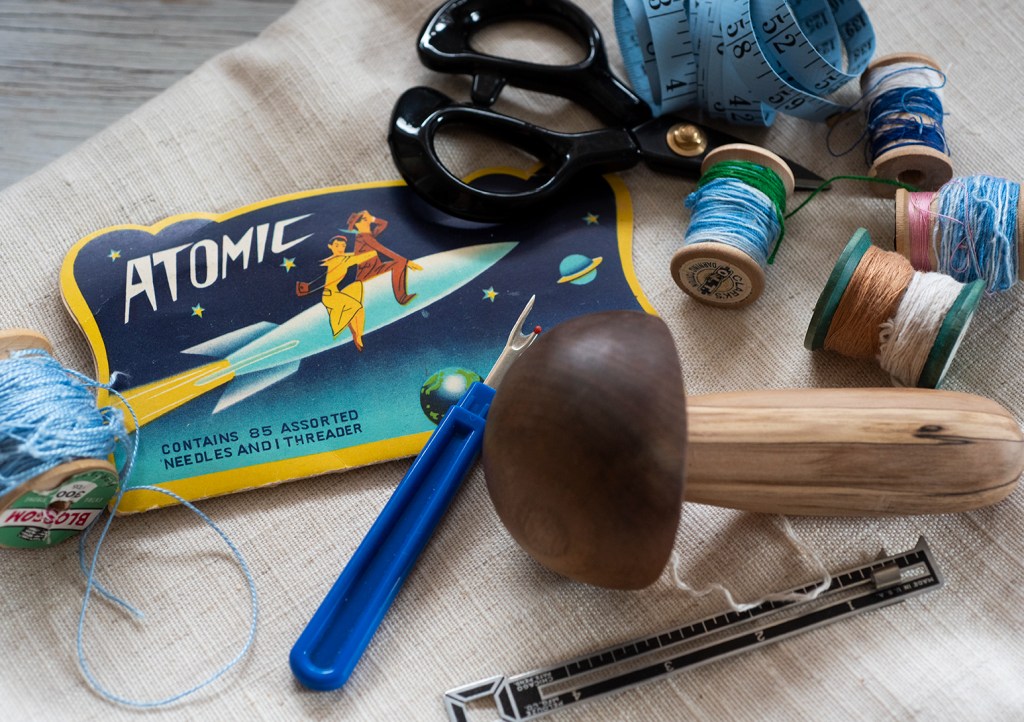
A pleasing selection of mending supplies.
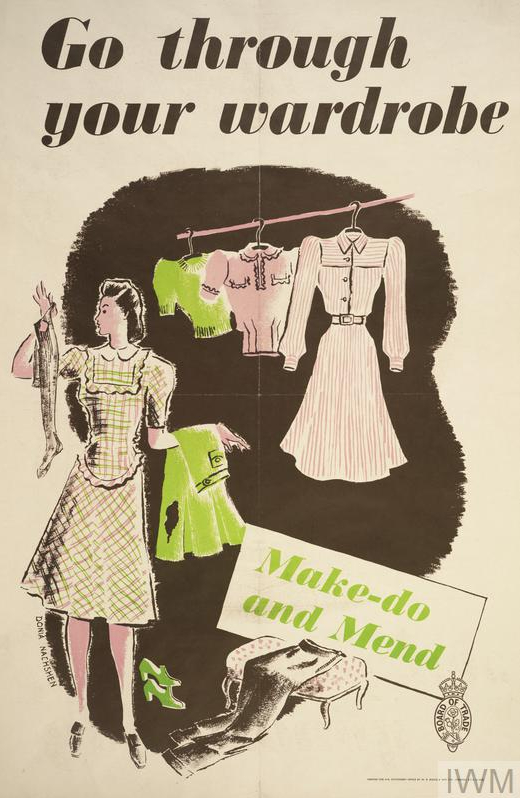
A World War II-era mending poster courtesy of the UK National Archives.
In times of chaos and uncertainty, folks frequently turn to basic human tasks of self-sufficiency (growing and preserving food, repairing clothing and other items) to find some semblance of control. Some of our most inspiring and still-relevant propaganda originated in war years, for obvious reasons. “Keep Calm and Carry On” is perhaps best known, but the UK government also launched “Make Do and Mend,” encouraging resourcefulness and creativity in times of dire need. These thrifty, frugal skills often aren’t very appealing in the age of instant gratification and two-hour drone delivery, but they’re likely to come in handy sooner rather than later.

A rescued vintage quilt that needs a bit of repair.
On the topic of literal mending, there isn’t much to say about our appalling textile production standards that hasn’t already been said, even though we’re totally ignoring all the screaming as usual. By any measure, textile production is utterly horrific for us, for workers, and for the planet. We now have enough clothes in the world to clothe the next eight generations, yet we keep buying more. In the U.S., a truckload of textiles is incinerated every single second, yet we keep buying more. At least ten percent of the staggering amount of microplastics in the ocean is directly attributable to textile production and waste, yet we keep buying more. Fast-fashion companies like H&M, Zara, Shein and Temu have convinced us that we need a new “haul” every week or so; our overconsumption doesn’t make us happier – yet we keep buying more.
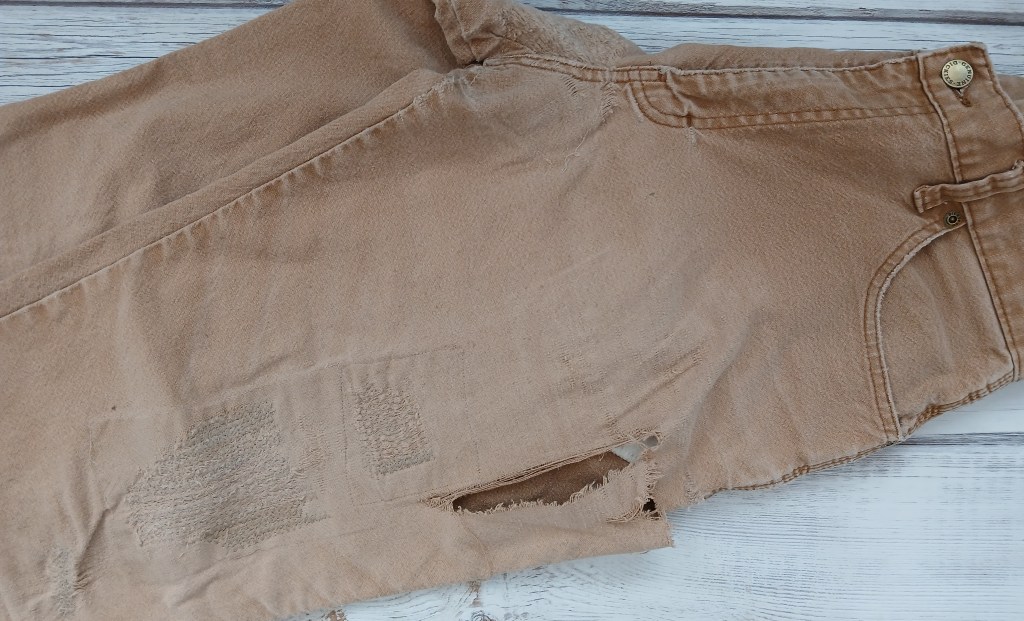
We’re hard on our clothes on the farm. I’m not throwing them out just because they have holes.
How to avoid the spiraling tornado of anxiety and despair? Look around, and figure out what you can do within your own locus of control. Shopping secondhand, buying quality goods rather than cheap junk with built-in obsolescence, and repairing and maintaining your possessions are all great ways to establish some sovereignty over a climate collapse situation that is intensifying by the day. Especially when we’re staring down the barrel of fairly serious financial precarity over the next months and years, the old phrase “use it up, wear it out, make it do, or do without” is starting to sound like solid advice rather than timeworn drivel. Plus, mending is incredibly satisfying! Slow hand stitching is calming and meditative, and for me it quells anxiety like nothing else. Sending emails doesn’t feel like an actual accomplishment, whereas mending does.
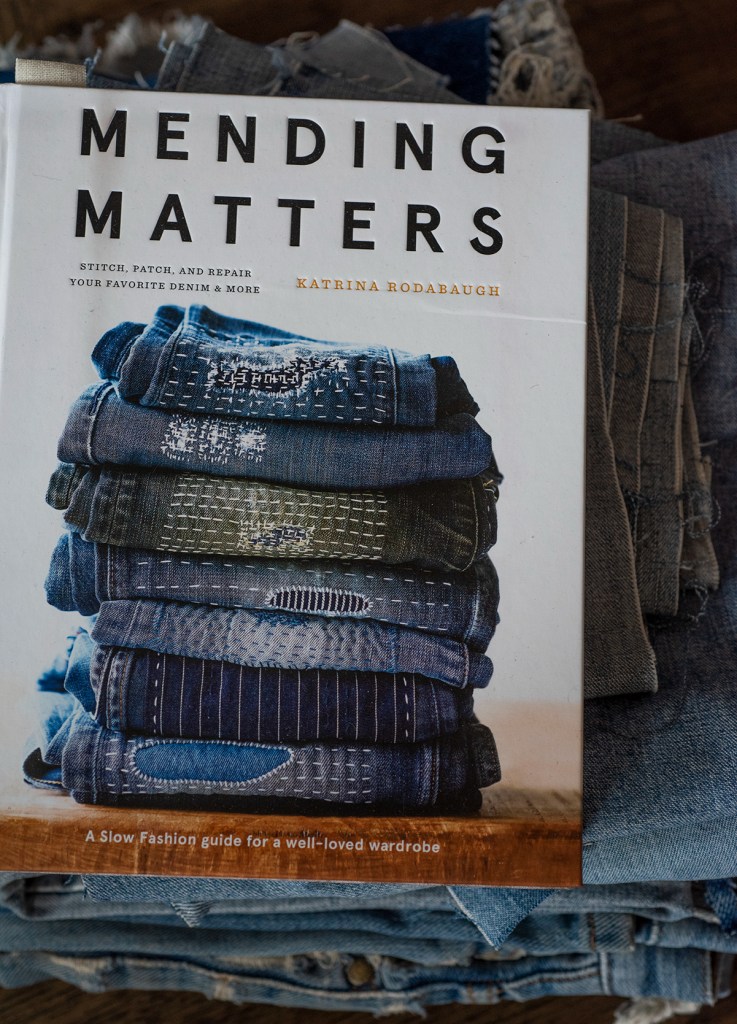
One of my very favorite mending resources.
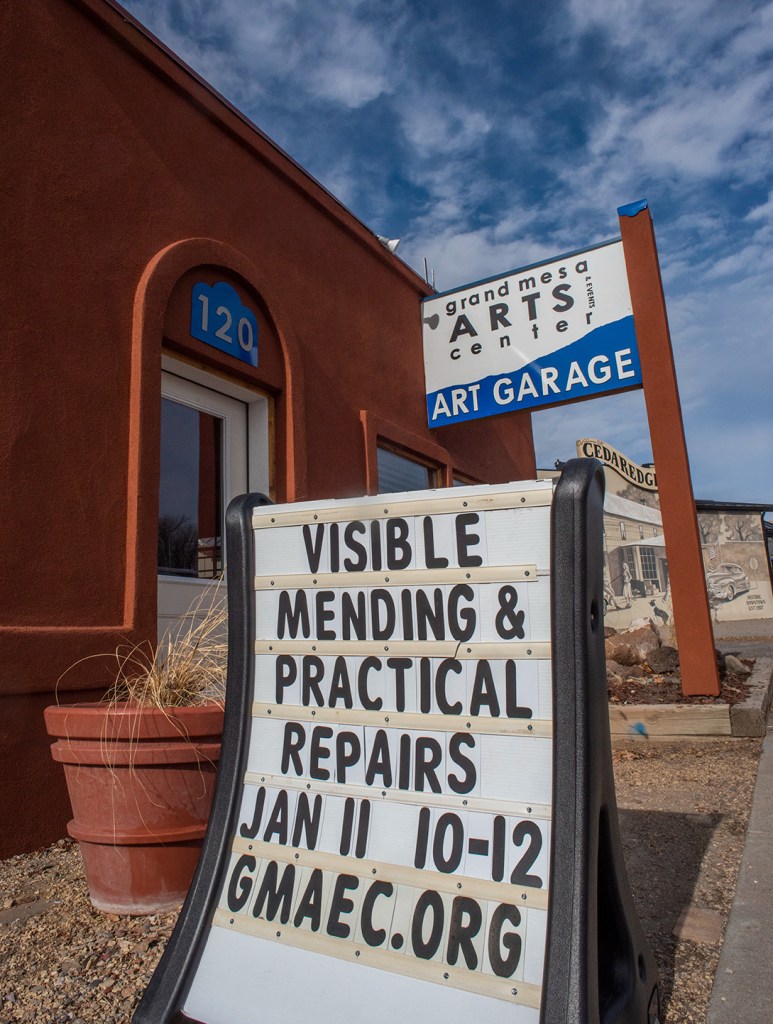
And so I am thrilled to announce that I am teaching a class on Visible Mending and Practical Repairs this Saturday at the Art Garage! We will cover hand sewing and basic mending techniques, with an emphasis on gorgeous Japanese-influenced visible mending which is particularly lovely on aged denim. Learn more about how to care for your textiles, how to shop better, and how to fight fast fashion and overconsumption. If you’re in the area, I would love to see you there!
Remember, our corporate overlords very much want us to continue fighting with each other so that we never realize the collective power we hold when we’re united in rebellion. But the more we can make and grow our own food, and mend and repair our own clothes, our own relationships, our own communities, the less we will need their deeply flawed and wholly self-serving pretend saviorism.
Take good care of yourselves, friends. Mend your clothes. Start some seeds. Greet your neighbors. No one is coming to save us, and we’re all going to need each other out there.
 Finding Quiet Farm