A visible mend on a favorite pair of thrifted vintage jeans.
Do you choose a significant word or guiding principle for each year? My word for 2025 is “mend.” I love both the literal and metaphorical meanings of this word, and how it ties in beautifully with my current sewing practice as well as my overarching goal to build and strengthen my community ties. As Austin Kleon wrote recently, “The idea of ‘being local’ is becoming more and more important to me. In times like these I crave the company of humans living near me who care about the same things I do.”
Hello friends, and how are things with you? We are quickly entering our busiest season on the farm, jumping between planting, irrigation and weeding, and are working hard on keeping ourselves physically and mentally healthy while still accomplishing our tasks. Here are a few recent images from the farm, if you’d like to see.
Plant ID is not tricky with this one.
The lilacs have nearly finished for the year, but the blooms and their scent were spectacular this season. We have primarily the classic pale purple flowers with a few white ones thrown in for good measure. While we have planted lots of things during our time at Quiet Farm, we cannot take any credit for the lilacs as all were planted before we found this place. They are such a welcome addition to our spring and we love their unmistakable scent as we go about our farm tasks. Do you have a favorite spring flower?
Here are a few things we’ve been up to on the farm lately, if you’d like to see:
The original finish is shown on the left side of the table; N’s sanding work is on the right.
As is our habit, we recently rescued a (rather expensive and fancy!) solid wood table and chairs destined for the landfill and N has been hard at work uncovering the set’s beauty. The furniture had not been cared for at all; it’s covered in scratches, water marks and all manner of damage. Most modern furniture is made from cheap plywood or laminate and often cannot be refinished; solid wood, though, is remarkably open to restoration, and we think this will look pretty spectacular with a bit of elbow grease and varnish. The table and chairs both have a great deal of decorative carving; sanding these tiny grooves will prove both tricky and time-consuming. When finished, this dining set will likely highlight the Japanese tradition known as kintsugi, whereas a piece’s imperfections are intentionally emphasized. This furniture was well-made and has years of life left, despite how it was treated, and it will be a pleasure to save the table and chairs and put them to good use.
Freshly harvested ‘Boldor’ golden beets.
Let’s talk beets – a polarizing vegetable, to say the least. Many, many people are quick to say they don’t like beets – I’m reasonably convinced this is because in the U.S. most people’s experience with beets only involves the sad, mushy canned kind, a metallic-tasting vegetable horror show if ever there was one. Fresh beets, on the other hand, are a completely different beast. We typically eat our beets raw, julienned into salads and slaws, but if the oven is already on for bread, I’m likely to throw a few beets in for roasting, too. I like the roasted beets cut into generous chunks and lightly dressed with good olive oil and a splash of tarragon vinegar, then tossed with warm farro or wheatberries, sharp crumbled goat cheese, grilled zucchini and toasted, salted walnuts. If I have extra, I’ll make a quick pickle and keep in the fridge for a burst of bright, punchy flavor in salads. We eat the greens, too, but they can be rather strong so I’ll often tame them by sautéing with olive oil and garlic, or slice very thinly to mix with other, less-assertive greens. Do you grow beets? Do you eat beets? What are your favorite ways to prepare them?
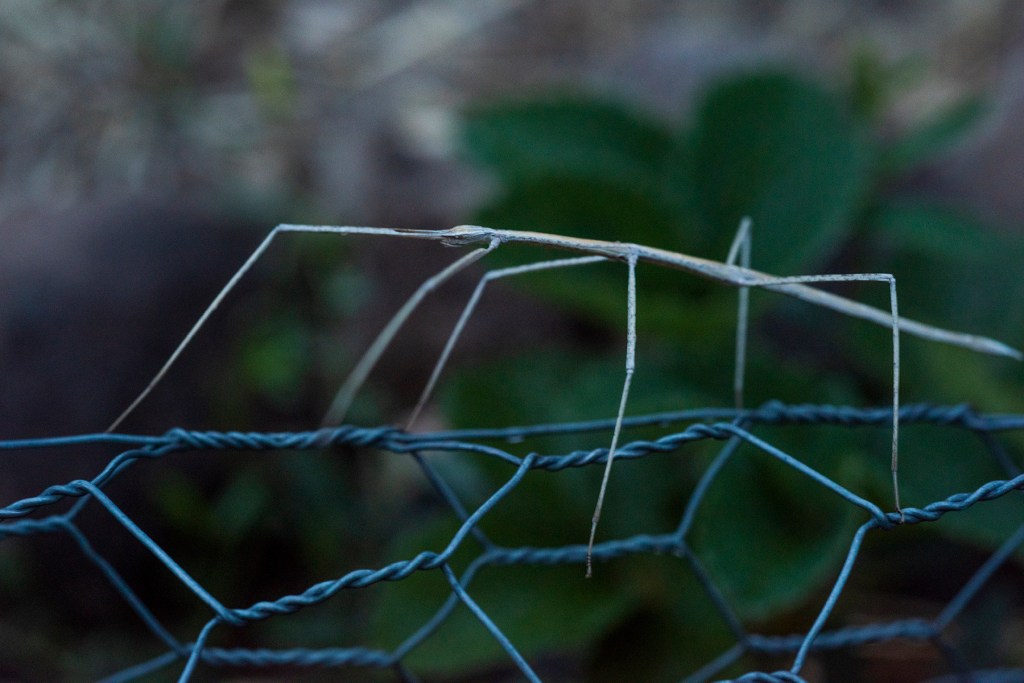
An unusual sighting at Quiet Farm!
We spotted this interesting creature on the chicken wire protecting the strawberry patch a few evenings ago. Stick insects, of which there are more than twenty-five hundred individual species, are members of an order of insects called Phasmatodea – and some can grow more than two feet long! These insects are found on every continent except Antarctica, and are most common in the tropics and sub-tropics. Unsurprisingly, they live their entire lives relatively unnoticed, since camouflage is their primary form of defense; they’re also referred to as ghost insects. As always, we are keen to observe (and encourage) all the varied forms of life we spy here on the farm.
Years of life left in these beauties!
In addition to rescuing furniture, rescuing work boots has also been on the task list recently. We are absurdly hard on both clothes and shoes out here at the farm and almost all of our wearables come from charity thrift stores for this very reason. Good, sturdy shoes are essential for working outside; our land is exceedingly rough and rocky and we are definitely not a “golf course farm” where one can freely and safely run around barefoot. (The goatheads alone will quickly cure you of that misguided idea.) Quality boots are expensive, though, and we can’t replace hundred-dollar boots every few months – nor would we want to. Instead, I search out secondhand boots in decent shape, rarely paying more than two or three dollars a pair. New shoelaces, a heavy-duty needle and thread and generous amounts of Gorilla Glue are typically all that’s required to return costly boots to their former glory. Considering that Americans throw away a million pairs of shoes per day – most of which could easily be repaired, donated or recycled – saving a few pairs of hiking boots seems like the least we can do.
“Raindrops on kale leaves and fleece on alpacas…“
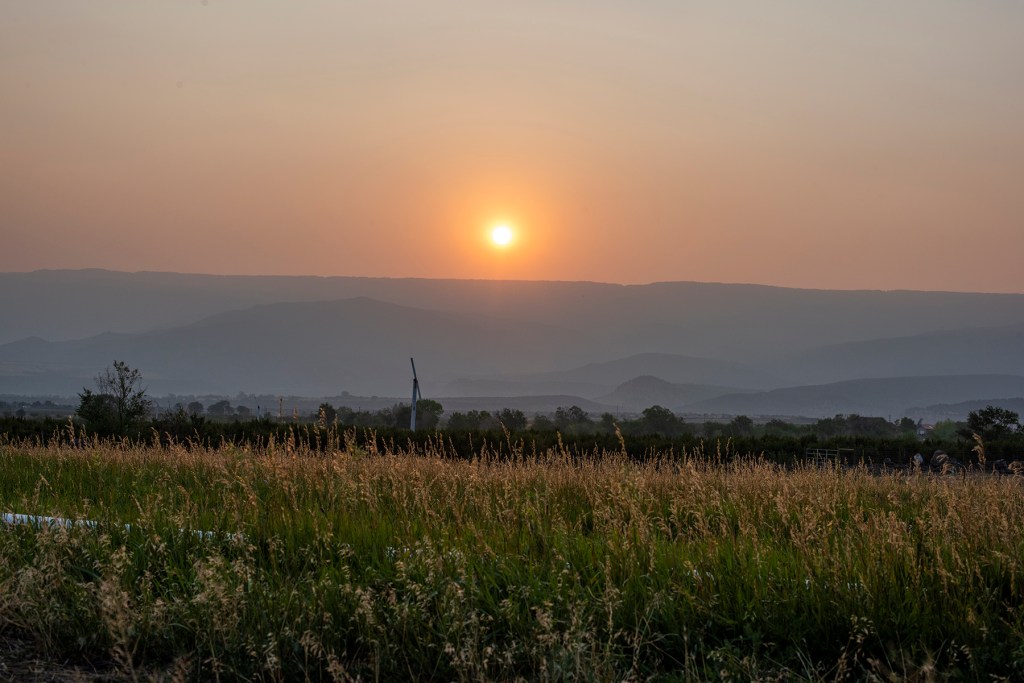
Summer in Colorado used to be my favorite season. Now, it just means five months of hazy skies, severe drought and relentless wildfire smoke. While we were so grateful to have a few days of much-needed rain not long ago, that rain is merely a wistful memory. The smoke is now worse than it’s ever been here; our eyes are stinging and our throats feel like sandpaper. The mountain ranges have completely vanished, we can barely see the orchards that surround our property, and our long bike rides are postponed for the moment. Those rainstorms, while certainly welcome, also caused devastating mudslides at the Grizzly Creek burn scar in Glenwood Canyon, resulting in the indefinite closure of one of the major east-west arteries in the U.S. Maybe now – once these disasters start costing real money and causing real trouble – we can finally take climate change seriously, even though it’s far too late to undo the damage we’ve done? I’m tired of breathing hot, smoky air all the time. I’m tired of the sickly, hazy sunrises and sunsets. I’m tired of wondering if we’ll make it through the growing season with enough water. I miss the clear blue sky Colorado summers of my childhood, and I know they’re not coming back.
This is not remotely what a western Colorado sunset should look like.
Hello there, and how are things in your world? Here at Quiet Farm it’s hot, dry and smoky. The Pack Creek Fire, burning southeast of Moab, Utah – started by an unattended campfire! Thanks, thoughtful and responsible campers! – has filled our blue skies with thick smoke and turned our sunsets into a terrible neon orange ball of scorching flame. We’re forecast to spend the week ahead melting under triple-digit temperatures, and we plan to only be outside for the bare minimum of tasks between noon and six o’clock. This week will be all about survival – ensuring that we, and all of our plants and animals, have plenty of shade and fresh, cool water.
A few activities we’ve been up to recently on the farm:
Look at all those vitamins!
Our harvests lately have been greens, greens and more greens – no complaints, since we eat salad every day. The arugula, kale, spinach and mixed lettuces have all been crisp and delicious this season, but this week’s furnace-like temperatures will put an end to that abundance; as a rule, most lettuces and greens do not care for excessive heat and often turn unpalatably bitter. I’ve harvested just about every leaf out there; as usual, I leave a number of plants to intentionally go to seed for future plantings. I regularly replant salad greens underneath the tomatoes; by the time the greens are up, the tomato plant will shield the tender leaves from the scalding summer sun. We’re also harvesting garlic scapes (the squiggly things on the left side of the photo) to encourage the garlic plant to put all its energy into the underground bulb. Scapes are delicious in pesto, salad dressing or stir-fried. And we’re picking strawberries, too, which are spectacular and have never once made it all the way into the house except for this photo, after which they were promptly devoured.





 Finding Quiet Farm