Farm update: May 11

It’s hot, dry and windy out here, and feels more like late July than early May. We seem to have skipped straight from a parched winter into an equally arid summer, missing the soft green lushness of spring entirely; the peas and radishes survived frost damage only to turn bitter and pithy from sun scald. Last year we had rain almost every single day in May, and this year it’s unlikely we’ll see any. Early reports indicate that the mountain snowpack is melting far too quickly, thanks to this premature summer, and our primary focus these days is on keeping all of our plants irrigated. Here are a few more things we’ve been up to recently.

Irrigation 02 sml

Our gated irrigation pipe at work. 

All of our irrigation water comes from snow on the Grand Mesa. When the snow thaws each spring, the snowmelt makes its way down the mountain through an intricate series of ditches, headgates, creeks and pipes. We’re focused this year on regenerating our pasture, so have started flood-irrigating our land to see what grows. Later this season we’ll remark our pasture (cut channels that direct the water) and hopefully seed it with perennial grasses, too. Eventually we’ll use the land for rotational grazing, likely a grass-fed steer or two. Flood irrigation requires a lot of work – the water has to be “moved” by opening and closing valves and gates along the pipes – but it’s the system we have, so we’re learning how to use it to the land’s advantage.

Continue reading

Farm update: April 27

Hello there. How are things in your world? It’s an odd and unsettled time, to be sure. Here at Quiet Farm we’re keeping our heads down and our hands busy as we navigate the seasonal weather shifts that have us careening from wind to rain to sun to hail and back again, all in the space of a few minutes.

House Finch 01 sml

House finch (Haemorhous mexicanus).

Spring is underway, slowly but surely, and our diverse bird life reflects that. The bald eagle pair we’d been keeping an eye on has vanished, presumably for colder climes; now the gorgeous call of the Western meadowlark (Sturnella neglecta) marks our days. Watching the scrappy magpies fight off aggressive egg-stealing ravens is decent entertainment, too.

Continue reading

Farm update: May 20

Our average last frost date here at Quiet Farm is May 13; as a rough guideline, this means that it’s generally safe to plant warm-weather crops (tomatoes, peppers and so on) outside after this date. Except that we had about an inch of light, fluffy, powdery snow plus some shockingly low overnight temperatures this past week, and if we’d had all of these plants outside they would have died a chilly death. While some vegetables can handle low temperatures, our summer stars want heat and more heat, so ours are still safely tucked away in the sunroom. What do we learn from this? Always check the forecast, and never trust Colorado weather to do what you expect.

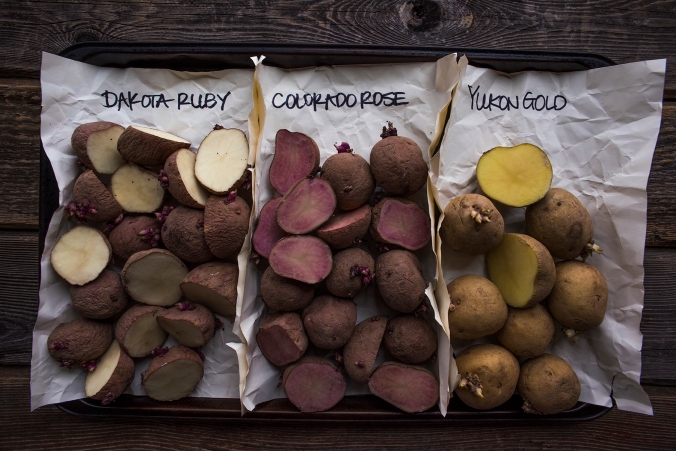
Seed Potatoes 01 sml

These seed potatoes are bred for the Rocky Mountain West.

We’re expecting another week of cool, wet weather, which makes it impossible to pour concrete for our fence posts. But there is always something that can be planted, even if it’s not tomatoes and peppers. Our locally-grown seed potatoes have been planted in “potato towers,” which we constructed from galvanized fencing and layers of newspapers, compost and straw. I planted a little over a pound of each variety; theoretically each pound planted should yield about ten pounds of fresh potatoes in maybe July or August. I’ve never planted potatoes in towers so am excited to see how this experiment turns out! (If you want to plant potatoes, buy certified seed potatoes and don’t plant those from the grocery store – they’ve typically been treated to prevent sprouting and therefore won’t grow.)

Continue reading