A visible mend on a favorite pair of thrifted vintage jeans.
Do you choose a significant word or guiding principle for each year? My word for 2025 is “mend.” I love both the literal and metaphorical meanings of this word, and how it ties in beautifully with my current sewing practice as well as my overarching goal to build and strengthen my community ties. As Austin Kleon wrote recently, “The idea of ‘being local’ is becoming more and more important to me. In times like these I crave the company of humans living near me who care about the same things I do.”
Hello there, and how are things in your world? Here at Quiet Farm it’s hot, dry and smoky. The Pack Creek Fire, burning southeast of Moab, Utah – started by an unattended campfire! Thanks, thoughtful and responsible campers! – has filled our blue skies with thick smoke and turned our sunsets into a terrible neon orange ball of scorching flame. We’re forecast to spend the week ahead melting under triple-digit temperatures, and we plan to only be outside for the bare minimum of tasks between noon and six o’clock. This week will be all about survival – ensuring that we, and all of our plants and animals, have plenty of shade and fresh, cool water.
A few activities we’ve been up to recently on the farm:
Look at all those vitamins!
Our harvests lately have been greens, greens and more greens – no complaints, since we eat salad every day. The arugula, kale, spinach and mixed lettuces have all been crisp and delicious this season, but this week’s furnace-like temperatures will put an end to that abundance; as a rule, most lettuces and greens do not care for excessive heat and often turn unpalatably bitter. I’ve harvested just about every leaf out there; as usual, I leave a number of plants to intentionally go to seed for future plantings. I regularly replant salad greens underneath the tomatoes; by the time the greens are up, the tomato plant will shield the tender leaves from the scalding summer sun. We’re also harvesting garlic scapes (the squiggly things on the left side of the photo) to encourage the garlic plant to put all its energy into the underground bulb. Scapes are delicious in pesto, salad dressing or stir-fried. And we’re picking strawberries, too, which are spectacular and have never once made it all the way into the house except for this photo, after which they were promptly devoured.
Late spring is a busy time of year for small farms and homesteads. The task list seems endless: plant this, thin these, weed that, water those and by the way, the alpacas and chickens still need food, water and clean bedding. The best we can do is simply to make list after list, and tackle those lists one item at a time. One thing we do adjust as we move into our busiest period: our daily routine. If possible, we try to be outside in the morning and inside in the afternoon, because our blustery, changeable winds make working outside even more challenging after two o’clock. This is a lovely ideal, of course, and things don’t always proceed as planned – but all we can do is our very best.
Here are a few things we’ve been up to, if you’d like to see:
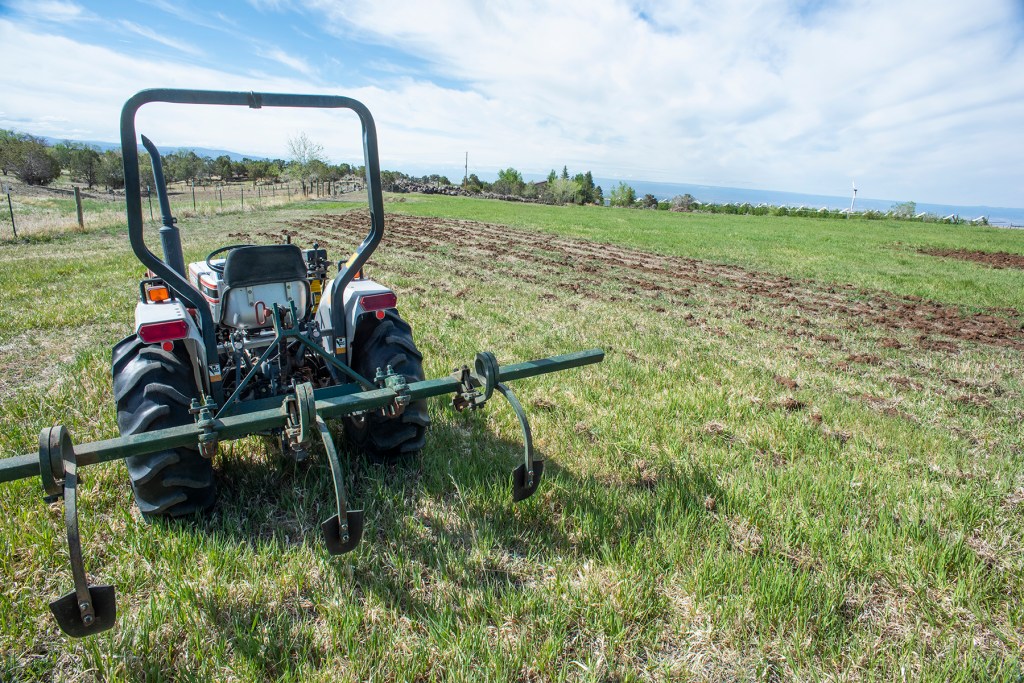
Careful pasture management is helping our land stay green despite the exceptional drought.
Our irrigation season is set to launch next week, though we still haven’t learned our water allotment for this year. In preparation for running water, we purchased a three-row marker to attach to our little tractor. Because we use gated pipe to irrigate our pasture, it’s important to “mark” the fields with channels that direct the water to the correct places. Marking is usually done on a three-year rotation, but our pastures were essentially abandoned for close to seven years, so it’s going to take some time to get the irrigation pinpointed. In addition to marking the fields, we also reconnected all of our gated pipe and replaced damaged gaskets and gates. Most people don’t break down their pipes every year, but we’ve mentioned before that we have a severe rodent problem – and if they build a winter burrow in the pipes, they’ll eat the gates. It’s more work to disassemble and reassemble the pipes, but likely saves us money in the long run.
Hello there, and welcome to March. (March?!? Really? We are completely not prepared for all of our spring tasks yet.)Also, welcome to the nearly one-year anniversary of the pandemic lockdowns. A year of this madness. How is everyone doing out there? The “pandemic wall” is a real thing, make no mistake, and I think a lot of us have hit it. Hard.
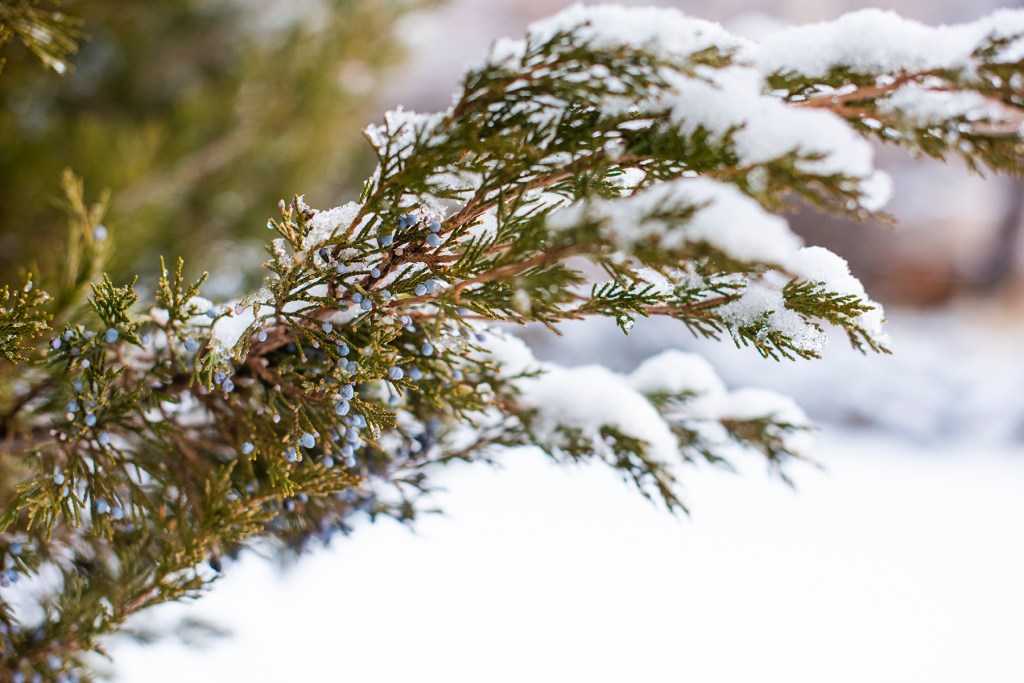
The images in this post might convince you that we’re buried in snow over here at Quiet Farm; sadly, that is not at all true. We have gotten a bit of snow both here and up on the mesa, and of course we’re grateful for every last flake, but it’s still looking as though it’s going to be a painfully dry year. As always, the only thing within our control is how we use the water we do have, so we’ll be focusing our efforts on making sure that not a drop goes to waste.
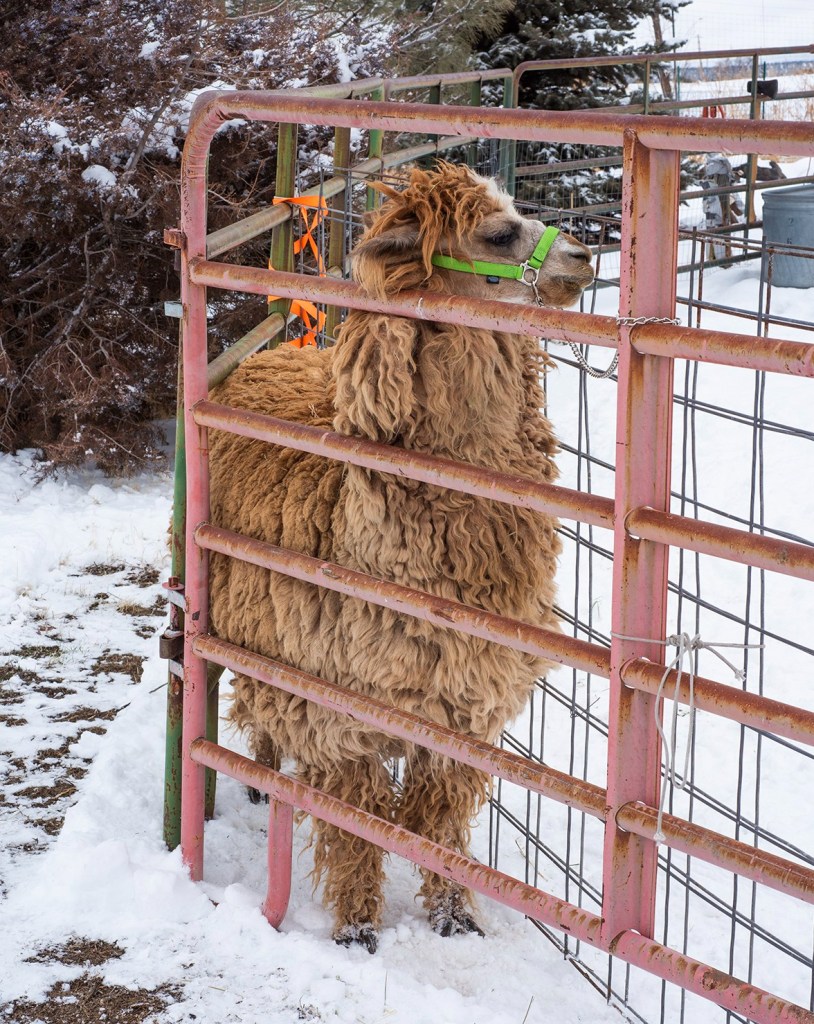
Paris secured in our makeshift crush before the vet’s arrival.
One great accomplishment that we’ve had recently is to successfully geld one of our male alpacas, Paris. His behavior had become increasingly aggressive and since we are not running a breeding program, there is no reason to keep an intact male on the farm. We were able to safely secure him in a “crush,” and our terrific local vet took care of the rest. It takes about sixty days for all the testosterone to leave his system, but his aggressive behavior has definitely lessened since the fateful day. We’re also pleased to announce that we’re on the mobile shearing schedule for the spring, so the alpacas will be getting a tidy cut in late May or early June, which will make them much more comfortable this summer. We are working on halter-training all the animals so that we can handle them in a safe and calm manner – this is much easier said than done, and frequently both humans and alpacas stomp off in frustration and tears. (Okay, maybe not the alpacas. Definitely the humans.)
Our game fence is good for more than just keeping out deer!
I’m also proud to announce that I’ve finished a patchwork quilt I started late last year. I won’t lie: I made approximately ten million mistakes on this quilt and learned so much about what not to do in quilting. I also unknowingly caused a lot of my own problems by designing a somewhat complicated pattern that required an excessive amount of piecework and stop/start stitching. (It’s only my fourth full-size quilt, however, so perhaps I should cut myself a bit of slack. I am very much a novice.) I read an article recently about different crafting hobbies people had taken up during the pandemic; one woman tackled a complicated shawl using fairly advanced knitting techniques. She wrote, “I almost quit a lot of times. But I kept at it, and I was both miserable and joyful at times – it was a good emotional process for me. The challenge was a great distraction from the chaos and stress of the unknown.” That accurately sums up my feelings about making this quilt – and I’m already excited about starting my next one.
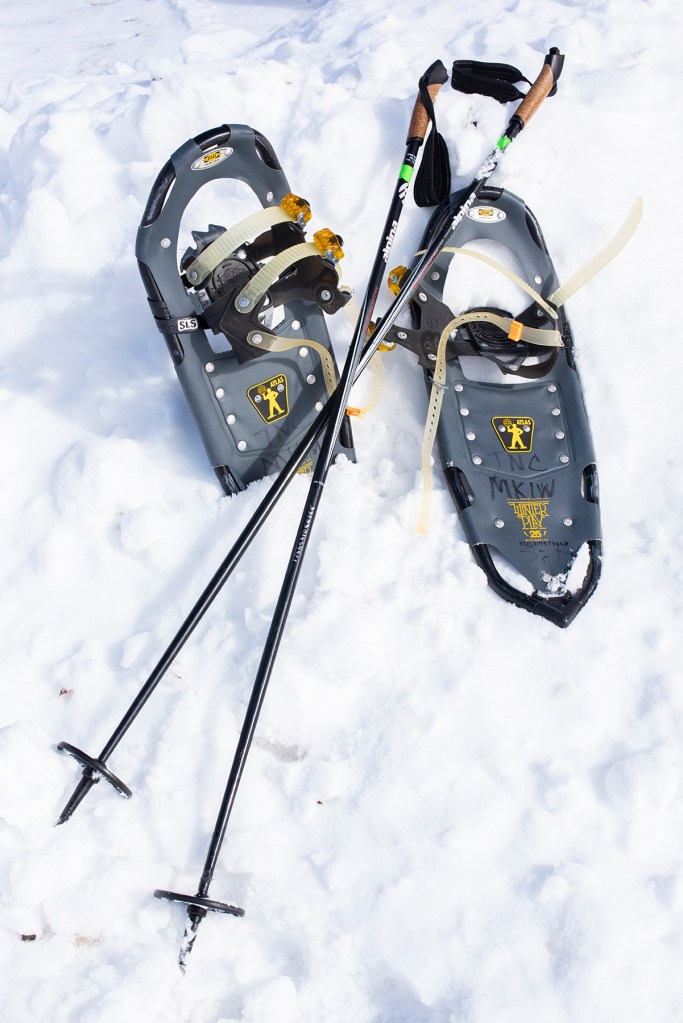
Snowshoeing is a surprisingly challenging workout!
We’ve mentioned on more than one occasion how much we adore our local library system; to make us love them even more, they’ve started loaning snowshoeing equipment! We’re about twenty minutes’ away from some of the best snowshoe/cross-country trails in the West, and borrowing equipment and just running up the mountain for a couple of hours has been a terrific break. (Even better: many of the trails ban loud, obnoxious snowmobiles.) We’re hopeful that we’ll be able to go a few more times before the demands of spring on the farm limit our time away.
This is an ideal afternoon snackwith a strong cup of PG Tips.
There’s been more comfort baking than usual ’round these parts lately. One favorite is a long-ago classic that I’ve resurrected because for once I have a massive bag of spelt flour andplenty of fresh rosemary on hand: this rosemary-chocolate olive oil cake, originally from Kim Boyce’s Good to the Grain. This may not be to everyone’s liking – rosemary isn’t frequently used in desserts – but I love it and don’t find the piney herb flavor overwhelming at all. The cake is tender, delicate and not too sweet, and is a perfect afternoon pick-me-up. I highly recommend a good-quality 70% dark chocolate bar here, cut into rough chunks, plus a generous sprinkling of turbinado sugar on top for extra crunch and texture. (For high-altitude bakers: I reduced the baking powder to 1 tsp. but didn’t make any other changes.) As with most things I bake, more than half of this cake promptly went straight into the freezer as a gift to my future self.
Stay calm and stay sane out there, dear friends. The best thing we can do is just to keep going.
“This pandemic feels like a relay race and if that means that every once in a while, you need to break down and freak out, that’s fine. We can carry the baton for each other while we lose it, gather strength, and then carry on. The world seems out of control, but we can control our kitchens and the good things that come out of them. That’s something.”
-Steve Sando, Rancho Gordo
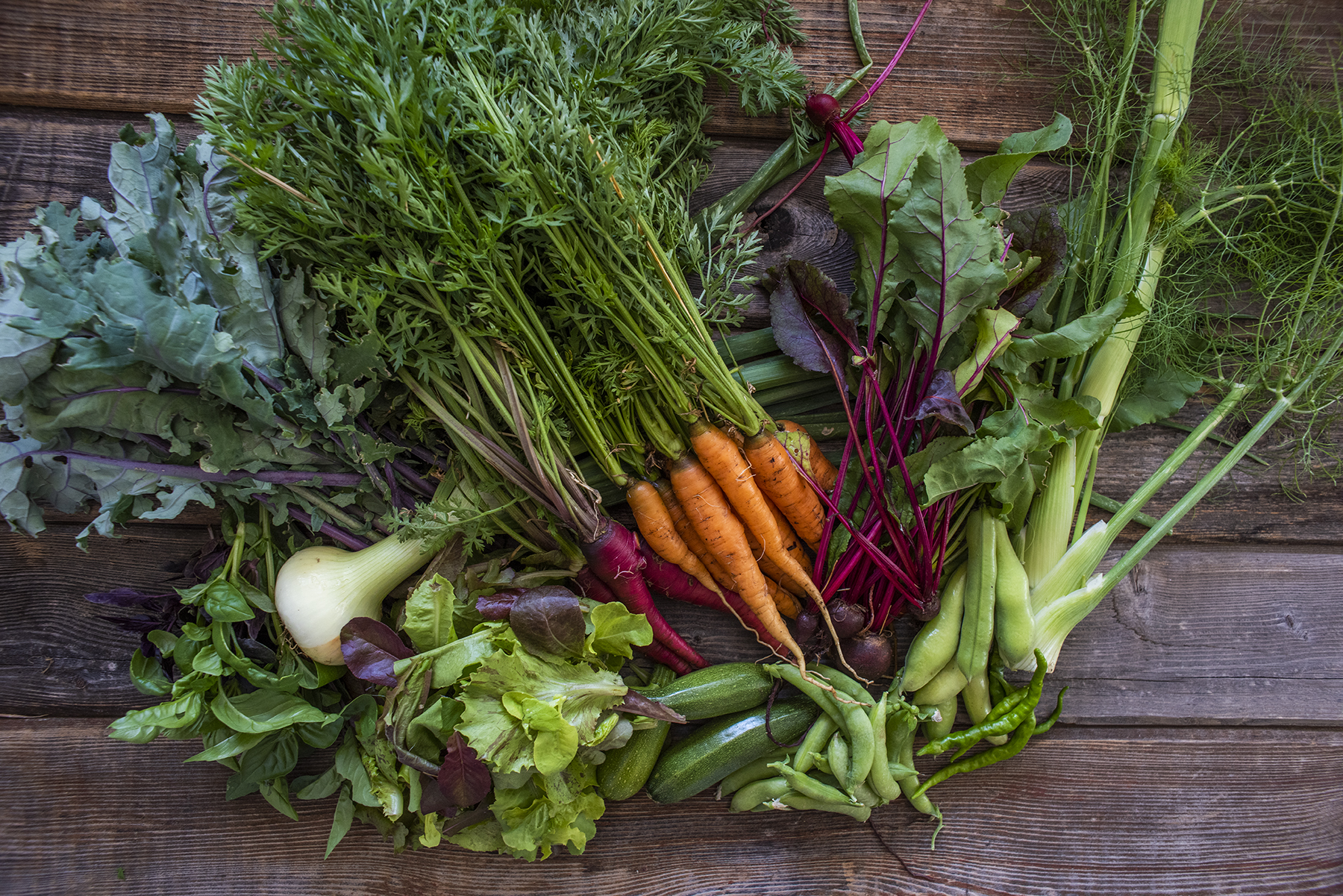
A daily harvest last week.
It’s reaching that point in the season when all of our hard work starts to pay off in abundance. Harvests now happen daily, rather than weekly or every few days, and a small bucket is required. Although the stars of summer – tomatoes and peppers – haven’t really come on yet, we’re swimming in greens, carrots, beets, onions, zucchini, fennel, kale and fresh herbs. It’s not going to be a great year for either winter squash or sweet peppers, much to our disappointment, and we fear that the squirrels have pre-harvested many of our potatoes. But we’re looking forward to cucumbers and fresh beans along with a (hopefully strong) tomato crop.
Greetings! We are currently stuck in that awkward phase between winter and spring. Some days it’s all teasing warmth and perfect blue skies, and some days it’s bleak and grey with icy, biting winds. Most of our snow is gone, though we expect (and hope for) one or two more storms, at least. It’s a changeable season, but spring is definitely in the air and we’re starting to hear more songbirds and see new growth everywhere we look. Here are a few things we’ve been up to recently.
A prairie falcon (Falco mexicanus) in one of our towering cottonwoods.
We still haven’t captured a photo of our shy Northern harrier, seen regularly hunting mice in our pasture on sunny afternoons, but N did snap this lovely photo of a prairie falcon. The prairie falcon is about the size of a peregrine falcon, but with a much different hunting style (low swooping over the ground, rather than rapid dives). Unfortunately for the songbirds we’ve been hearing, much of the prairie falcon’s winter diet is the Western meadowlark, but we hope this one will focus more on our ground squirrel population. As with all falcons, the female is substantially larger than the male.Continue reading →






 Finding Quiet Farm