The FAQ Series: Salt

We’re starting a new thing over here at Finding Quiet Farm: the FAQ Series. This programming will be based on the most common questions I’ve been asked over nearly a decade of teaching cooking classes to thousands of people; hopefully you’ll learn something and improve your own cooking. Let’s kick this show off right with the number-one question I hear: “How can I make my food taste more like restaurant food?”

Salt Crystals 01

The iconic pyramidal crystals of Maldon salt, harvested off the coast of England.

Pose this question to any professional chef, and the answer will be the same: learn how to use salt properly. (Just to quell the suspense, the second most popular question is “What sort of salt should I use?”)
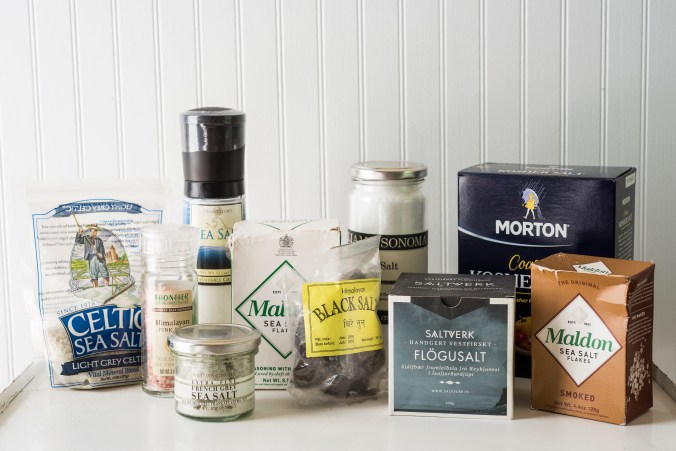
Salt Selection.jpg

I don’t find it at all unreasonable that I have more than ten varieties of salt in my kitchen…except I only use two. You don’t need this many.

Learning how to season food properly – and specifically, how to use salt – is what separates mediocre cooks from amazing cooks. Whether in a restaurant or at home, salt is far and away the single most important component after the raw ingredients themselves – you can get by without almost anything else, but nothing (savory, at least) tastes good unless it’s been properly salted. And most sweet things need a little salt too, for balance. (Looking at you, salted caramel.)

Salt is the only rock we eat, and it’s vital to our health. It’s been prized for thousands of years throughout the world; Roman soldiers used to be paid their monthly wages in salt, hence our word salary. Salad, too, originates from salt since the Romans salted their greens. The Bible carries dozens of references, including salt of the earth and pillar of salt. Someone without esteem is not worth their salt. Simply put, it’s essential to our survival.

Salt Flats

The salt flats in Bonaire.

Salt is actually composed of two minerals, sodium and chloride. It’s produced either through mining deep deposits in the earth, or through solar evaporation. Most standard table salt is heavily processed and includes both added iodine (as a public health measure) and anti-caking agents to keep it free-flowing. Sea salt is, as you might expect, evaporated from seawater; fleur de sel is the crunchy, delicate top layer of sea salt and is typically used as a finishing salt. There are no health benefits to sea salt, despite a marketing campaign designed to make you think otherwise, but chefs don’t like the intensely chemical taste of iodized salt. We also use so much of it that we can’t spend our entire budget on fancy sea salts. We love coarse kosher salt.
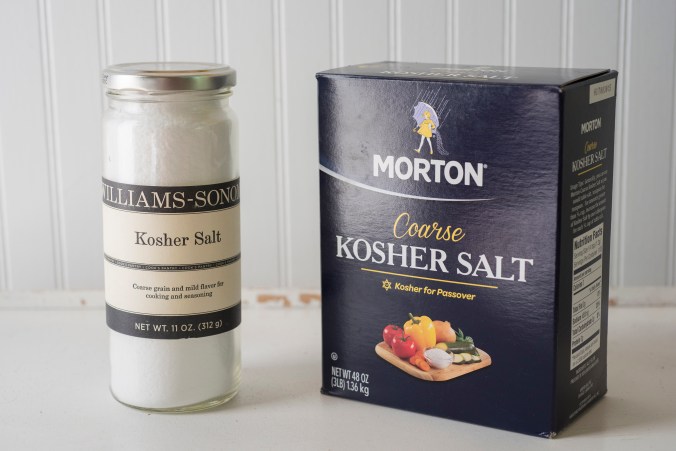
Kosher Salt.jpg

So 11 ounces is less than 48 ounces but the bottle costs $12.95 and the box costs $2.99? I sense a swindle.

The term kosher just means that the crystals are larger and therefore more effective in drawing blood out of meat after it’s been slaughtered, in keeping with kosher tradition. Chefs love it because we use our fingertips to pick it up; most of us have those measurements so carefully calibrated that we’re more accurate than a set of teaspoons. All you need in your kitchen is a box of coarse kosher salt, poured into a small dish and set near the stove, plus a finishing salt like Maldon, whose large pyramidal crystals offer a satisfying crunch and burst of flavor when used properly on top of caramels or fresh ricotta with peaches on crostini or a beautifully seared steak. Don’t ever waste your finishing salt in pasta water or in baking recipes, and don’t ever pay $12.95 for the branded bottle on the left when the box on the right is the exact same thing, contains more than four times as much and costs $2.99.

Salt Dishes.jpg

It’s the only rock we eat…and it’s gorgeous. And delicious. And necessary.

Like our newfound obsession with the mysterious gluten, however, we’ve gotten our relationship with salt all wrong. The American Heart Association and other major medical organizations have shouted for years that Americans consume way too much salt and that it is a leading cause of high blood pressure, diabetes and other lifestyle-related diseases. The Mayo Clinic claims the average American consumes about 3,400 milligrams of salt each day, while the recommendation is 1,500 milligrams or less.

We avoid using salt the few times we do cook at home – that’s the salt we can control – because we’re so scared of it, and as a result our food is bland and tasteless. So we go out, or buy premade foods, because they taste better. Unfortunately, we get the vast majority of our salt (and our sugar) from these processed foods, including the ones we don’t even think about: sliced bread. Salad dressing. Bottled spaghetti sauce. Pastries. And obviously, any fast food will be loaded with salt. A single Egg McMuffin contains over 700 milligrams of salt – good luck staying under that 1,500 milligram mark if you eat fast food. Salt is a flavor enhancer, but more importantly for the processed food industry, it’s a preservative.

Kosher Salt Seasoned

I’ve taught numerous cooking classes where I’ve added salt to a dish and acknowledged gasps of horror at the quantity I’m using. Please, trust me on this: if you are eating most of your meals at home, cooked from fresh, healthy, whole foods and not from boxes and packets, and if you avoid processed foods like bottled salad dressings, take-out pizza, commercial lunch meats and cheap sliced sandwich bread, you don’t need to worry about adding salt when you cook. You’re already way ahead of the game.

Salt Book.jpg

You only need two salts: one for finishing, on the left, and one for everything else, on the right. Oh, and read that book.

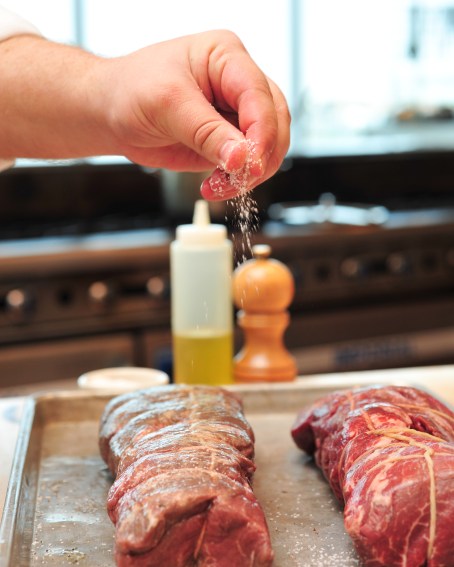
How can you become more proficient about using salt? Taste your food. Taste it before you add salt, and after. Slice a fresh summer tomato and eat it without any salt. Now take another slice, sprinkle it with crunchy Maldon, and taste it again. Cut a steak in half, and cook it exactly the same, but use salt on one portion and not on the other. Your pasta water should taste like the sea, according to Italian grandmothers everywhere, and you should never cook beans or rice or vegetables or grains in unsalted water. Seasoning should be done in layers, as you build a dish, rather than just dumping a bunch of salt on at the end. Taste and taste again. Salt should never make food taste salty, it should make food taste more like itself; it’s designed to enhance food, not to overwhelm it. Restaurant food tastes delicious – and ideally not salty – because those amounts are carefully calibrated.  And because chefs have spent years learning how to season.
CCA-11.jpg

Learning to cook well at home is a process, as I’ve mentioned many times. And learning to season is part of that process, just like learning your own palate. Remember those famous words: “salt to taste.” So go get a box of kosher salt, and start using it. With your fingertips, please.

Salt Crystals 02.jpg


Keep going

Today’s life lesson is simple but essential: keep going. Keep going even when things aren’t working out, when your carefully laid plans have imploded, when you feel like an abject failure at pretty much everything. I’m pretending this is a post about how you should keep cooking even when recipes aren’t turning out right, and it is, but it’s also just a reminder that in life you can either crumple to the ground in a heap, or you can keep going.

Breadsticks

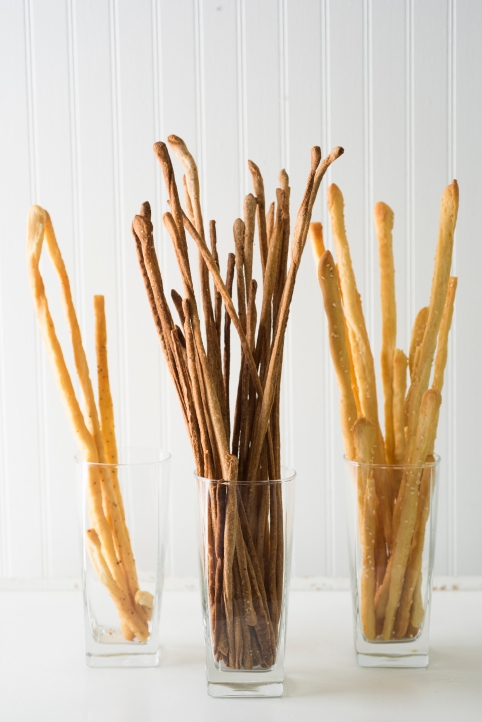
These breadsticks look pretty, but they posed a major risk to dental work.

There exists a perception that professional chefs cook everything perfectly all the time, and I’m here to tell you that this couldn’t be further from the truth. I go through phases where it honestly seems as though nothing in the kitchen works properly. Recipes that should work don’t, recipes that I’ve made hundreds of times without fail suddenly turn out poorly, and nothing tastes right. It would be easy to just storm out of the kitchen.

CCA-94.jpg

This probably boiled over mere seconds after the shot was taken.

Recently, for example, I’ve made three different breadstick recipes with lousy results all three times. I overfed my treasured sourdough starter with whole-wheat flour and increased the acidity so much that it’s like a biological weapon is lurking in my sunroom. In an attempt to use up my pantry stores, I made a Key lime and ginger tart that didn’t set at all, even after six hours in the refrigerator. It tasted delicious, but the presentation was appalling. (There are no photos of this event.)

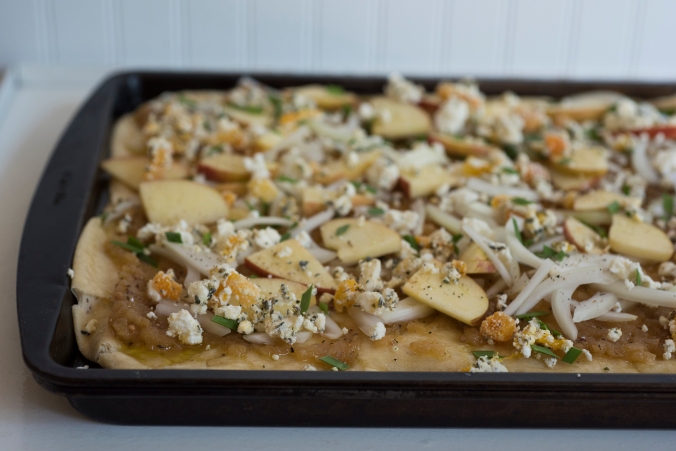
Apple flatbread 1.jpg

Trying to salvage overproofed pizza dough left over from bread class…

But these occasions are precisely the times when you just have to keep going. When you have to work harder to figure out exactly what went wrong, and how you can improve it next time. When you have to acknowledge that not every single thing you cook will be perfect every time, but trust that the learning is in the process. It’s why I recommend keeping a kitchen journal and taking notes on just about every single recipe you make.

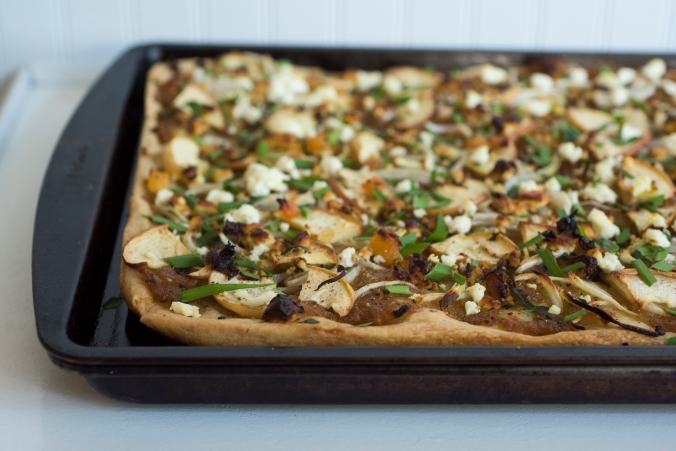
Apple flatbread 2.jpg

…and it actually worked!

We live in an age of immediate gratification. We expect things to happen instantaneously and perfectly, and we no longer know how to fail. This is an especially challenging concept for home cooks, especially people who come to cooking later on in life. Those of us who started cooking young – with this recipe, most likely – remember mistaking a tablespoon for a teaspoon and producing salty, inedible cookies. We laugh about it now and count it as a learning experience. Yet if we made that same mistake as adults, we’d castigate ourselves for our stupidity and perhaps give up on baking altogether, because we didn’t get it right the first time.

CCA-36.jpg

In cooking, as with just about every worthwhile skill, the devil is in the countless hours of practice. No one starts out as a brilliant chef, just as athletes don’t start out as Olympians. When you’re just beginning in the kitchen, you might be disappointed with the results, but it’s imperative that you keep going. You will learn how to season, how to adjust recipes, how to trust your own palate. You will learn how to prepare food that you like and you’ll gain confidence every single time you cook. You will get better. But in order to do that, you have to keep cooking – and that’s tough, especially when perhaps your efforts aren’t received with enthusiasm by your household. (And if that’s the case? Invite your family into the kitchen and make meal preparation a household activity, so that everyone can share in both the effort and the result.)

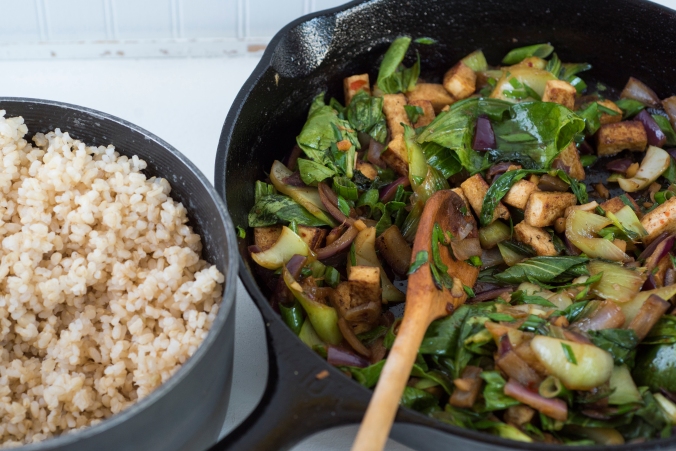
Tofu Bok Choi.jpg

A very simple tofu and bok choy stir-fry with brown rice…and one of my favorite things I’ve cooked recently.

So please, friends, don’t give up. Don’t get weighed down with disappointment over kitchen experiments that aren’t a roaring success. Keep going. Try something new, fail well, make notes about it and get up and do it again. And above all else, please keep cooking.

P.S. I wrote a guest blog on this very topic over at Healthy Baby Fit Mom! Read more here!

P.P.S. Read a brilliant post about the concept of “constructive growth” and being a “tenacious loser” here; thanks to Karen for sending this link!


Work with what you have

We’ve returned home after five months away and are trying desperately to reinsert ourselves back into our normal lives. This is proving to be substantially more difficult than we had anticipated, but thankfully the task of cooking is always there to ground me. My aspirational motto for this summer (and forever, really) is “Work with what you have.” It’s easy to wish that circumstances were different, or that we had an alternate set of tools at our disposal to complete a specific task, but in the kitchen, as in life, sometimes you simply have to work with what you have. And so my task for the summer, at least, is to cook from our existing food supplies rather than buying more.

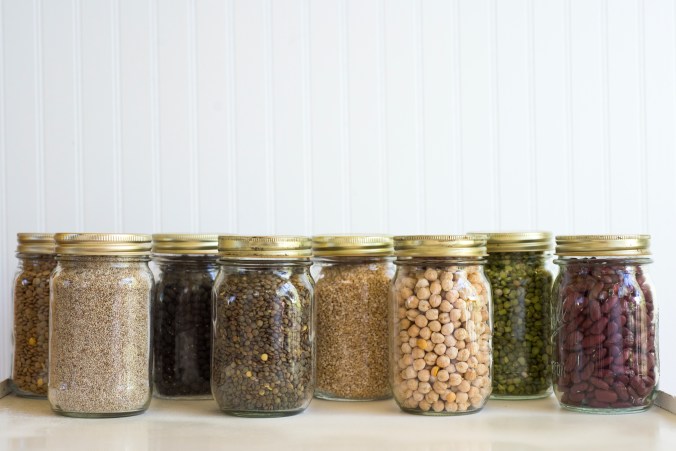
Grains and pulses

Dry beans, grains, seeds and legumes are a pantry staple.

By most estimates, about 40% of all edible food produced in America is thrown out (more, if it’s fresh produce) instead of eaten. This is a statistic that I cite often in my classes; I ask my guests to calculate their own food budget and determine how much money they’re throwing away. I’ve even gone so far as to put actual dollar bills in the trash can (later retrieved, obviously) because for some reason that sludgy green bag of decomposing kale in the bottom of the crisper drawer doesn’t seem to equate to real money to most people. Apparently we care about our food waste problem, but we’re just too busy to do anything about it.

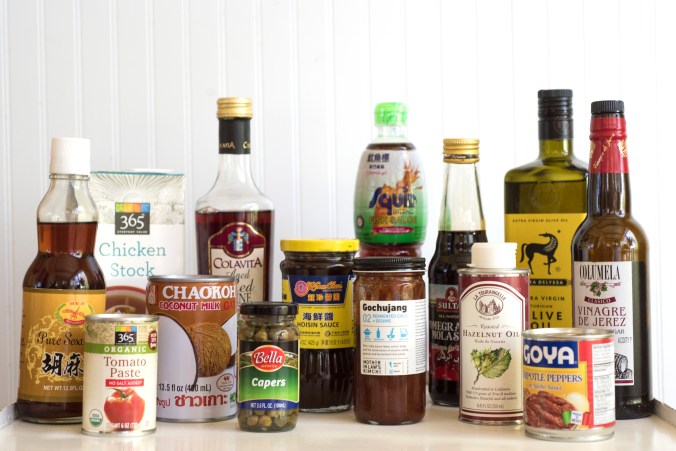
Sauces

How to add flavor and interest to your food.

Americans spend less money on food than any country in the First World. Calories are cheap here and we’re obsessed with aesthetic perfection, plus we have absolutely no idea what all those “best by” and “use by” dates actually mean. (Answer: nothing. There are no regulations. Use your common sense; it’s designed to protect you from food poisoning. Plus, food manufacturers and grocery stores love those misleading labels because the sooner they expire, the sooner you buy more.) That means that not only do we waste food before it even arrives in the grocery store, but we buy more when our fridge and freezer and cupboards are already filled to the brim. Hence, the summer challenge.

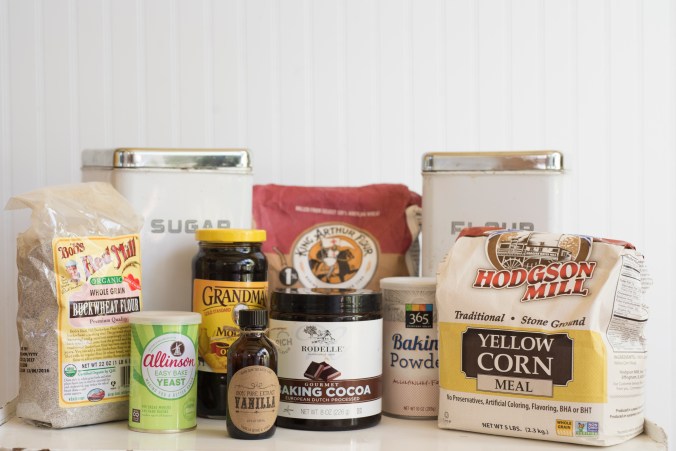
Baking

I bake frequently, so I keep a well-stocked baking pantry.

One of the most important concepts I try to get across in my cooking classes is the idea of cooking without a recipe. I would love not to hand out recipes in class, but am well aware that this would not endear me to my guests. I want people to feel comfortable working towards a basic end goal; i.e. “Tonight I’d like to make a stir-fry,” rather than “Tonight I’m making Mark Bittman’s Beef with Broccoli and I have to stop by the store on the way home to buy beef and broccoli and fourteen other specialty ingredients.” If you look in your fridge and you’ve got a little leftover steak plus some carrots and peppers (because you already used all the broccoli earlier this week), and you know you have rice in your pantry along with Asian basics like soy or hoisin sauce, then you’ve got a meal. Start with what you have, and figure out where you’re going from there.

Spice dishes dark

So much flavor hidden in these little dishes.

In addition to teaching people specific recipes (which I invariably deviate from in class – people hate this) I also teach how to stock your pantry. Oils and vinegars, sauces and condiments, spices and seasonings, grains, pasta, beans and legumes, plus freezer basics like frozen vegetables (which get a bad rap but are in many cases better and cheaper than fresh) all come together to form the basis of some truly amazing meals. I know that people who are new to cooking require the comfort and guidance of a recipe. But I also think that as you grow and develop as a home cook, you should challenge yourself to work with what you have, rather than buying exactly what you need. Oh, and those specialty ingredients you bought for that one recipe you made months ago but never used again? A quick online search for “What should I do with tahini?” goes a long way towards using those up.

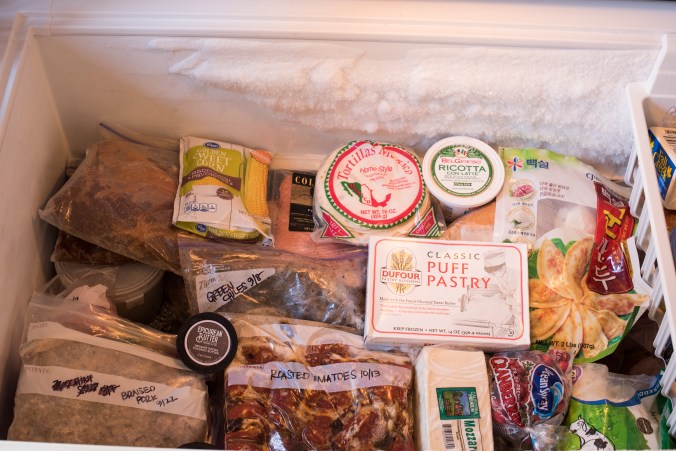
Freezer

Don’t judge. I’m working on it.

So please, friends, try this at home. I’m willing to bet that you have at least two weeks’ worth of food in your house already. Challenge yourself – for a day, a week, even a month – to only cook with what you have. See if you can come up with interesting, delicious and healthy options to use up all that food you’re stockpiling. Learning how to trust yourself and improvise a bit in the kitchen is one of the biggest steps towards becoming a better cook, and I promise you that the reward is worth the effort.

Street food

After the markets, street food vendors are one of the most colorful sights in southeast Asia. From fresh fruits and vegetables to juices, meat and snacks, just about anything you fancy is available from a street stall. Although you might not know exactly what you’re eating, it’s worth watching just for the show.

NJB_2928

A lobster stall in Nha Trang setting up for business.

NJB_2926

Crocodile farming – for both meat and leather – is big business in central Vietnam; the industry is definitely not PETA-approved. This enticement is outside a restaurant in Nha Trang.

NJB_2645

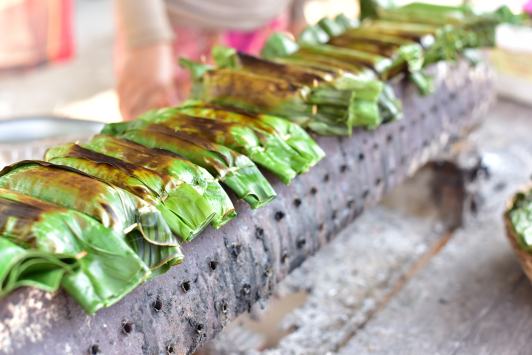
These delicious little packets contain sticky rice stuffed with bananas, eaten as a snack or dessert.

NJB_3735

These lovely women are running a rotee stand. Rotees in Thailand fall somewhere between a crêpe and a pancake and are filled with sweet or savory ingredients.

NJB_3723

Carts are set up along just about every street.

NJB_2923

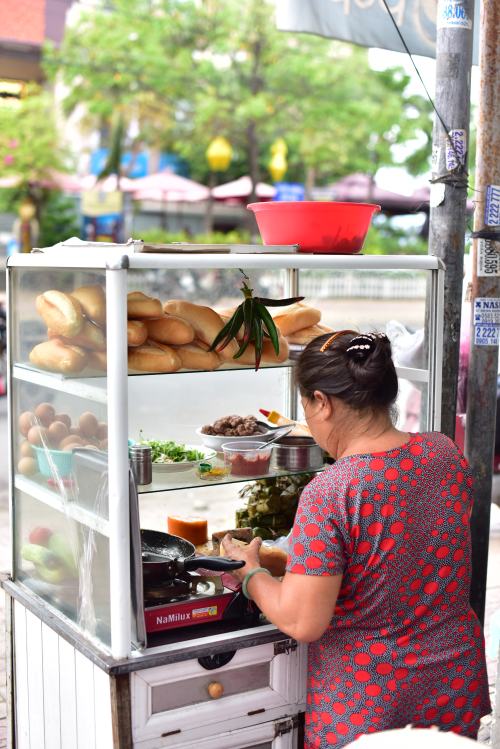
This woman is making Vietnam’s world-famous banh mi sandwich, sold for about 75 cents.

NJB_2911

These tiny bananas (about the length of a finger) are so much more flavorful than the standard Cavendish variety we get at home.

NJB_3173

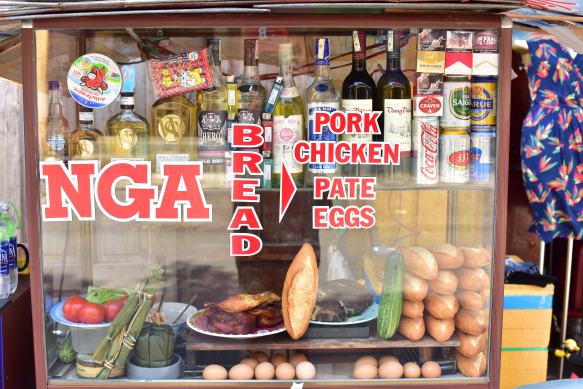
Fancy some whiskey or red wine with your street food meal? You can have it.

NJB_3743

Perhaps you’d like a meatball skewer?

NJB_2496

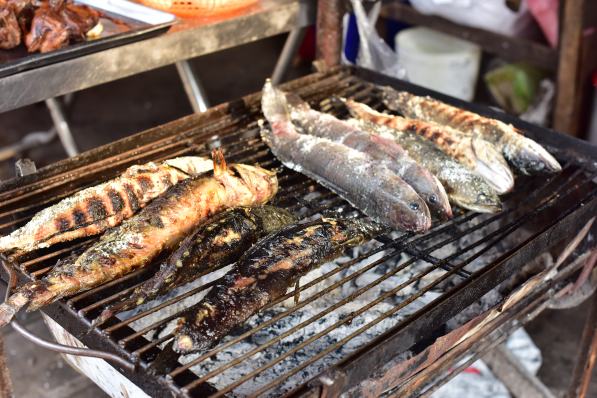
Salted whole fish, ready to eat.

NJB_2486

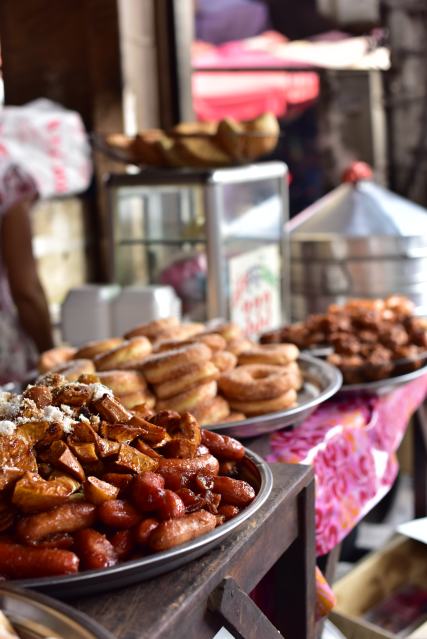
Fried sweet potato, banana and other tasty treats.

NJB_2597

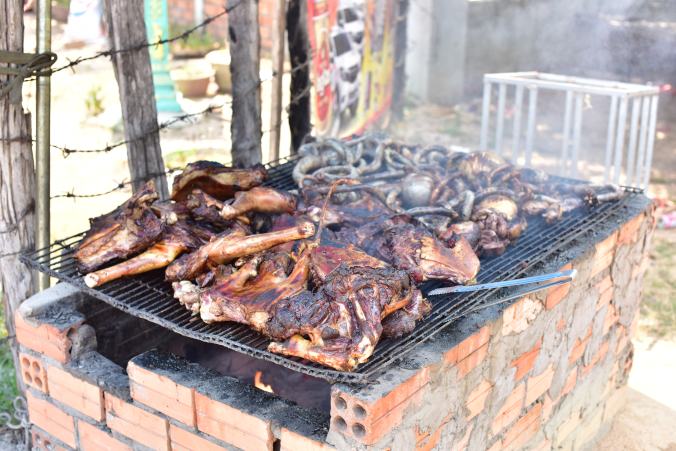
The “special meat” restaurant outside of Siem Reap. Sit, stay…good dog.

NJB_2488

Little sweet cakes, served hot.

NJB_2781

Skewers and more, ready for the grill.

NJB_2755

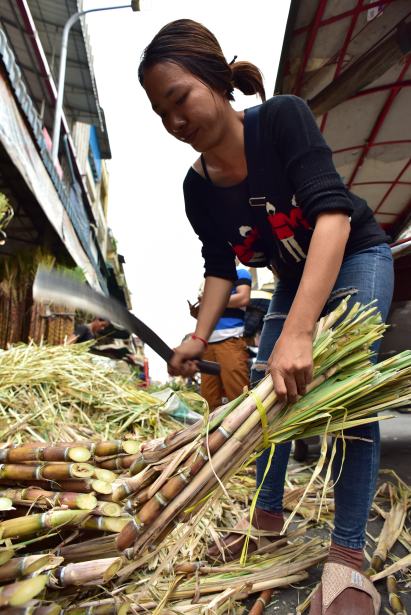
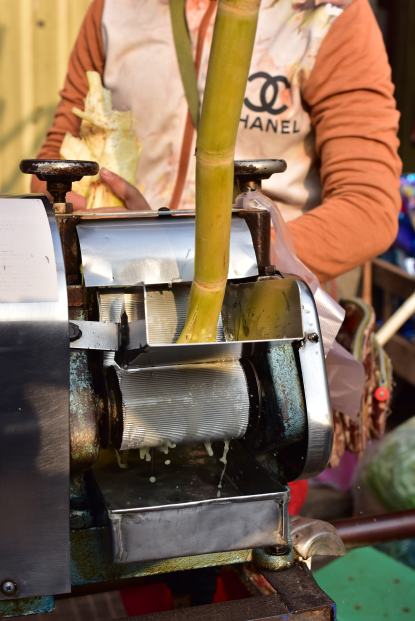
Baling sugarcane on the streets of Phnom Penh.

NJB_2479

The sugarcane is crushed through a press to produce delicious juice, which is flavored with fresh lime and sold in little baggies as a refreshing drink.

NJB_2656

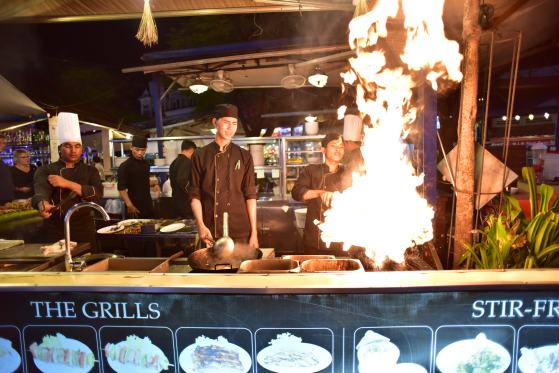
Chefs demonstrate their stir-fry skills at Siem Reap’s night market.

NJB_3740

Honestly, I don’t know. But what colors!


To market, to market

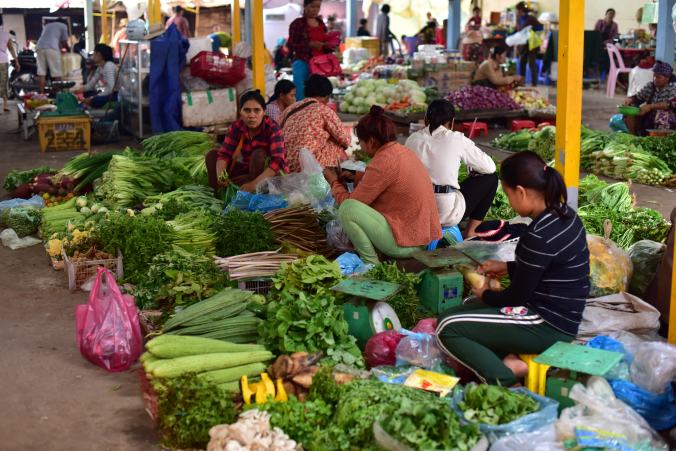
For a chef and a photographer, traditional food markets are a wonderland. We visit markets whenever possible and do our best to capture the scents, sounds and tastes through our words and photos. These markets are often messy, fragrant, hot and noisy, to say the least, but they capture a place and its people the way few other tourist attractions do.

P.S. If you’re in the Denver area, I’m teaching an incredible cooking class on exploring ethnic markets in June at the Botanic Gardens. Learn more here!

NJB_2489.JPG

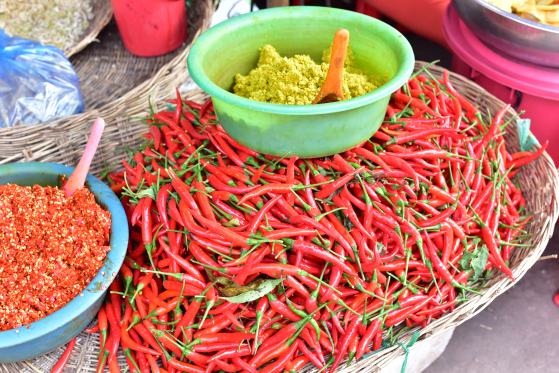
Chile paste, fresh chiles and ground turmeric.

NJB_2513.JPG

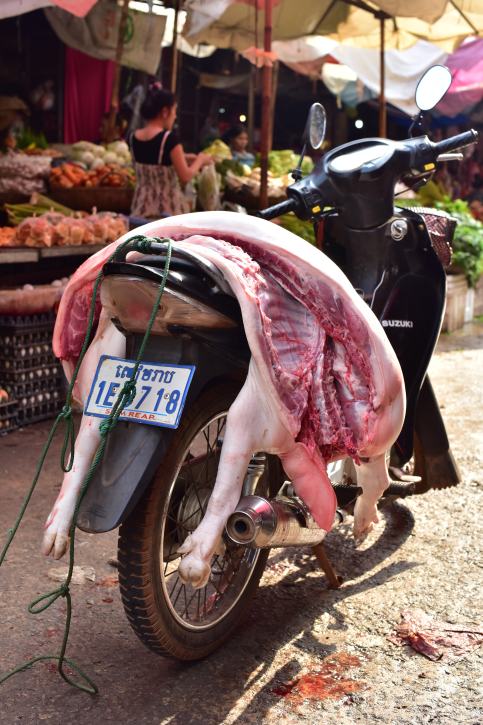
This little piggy went to market…

NJB_3271

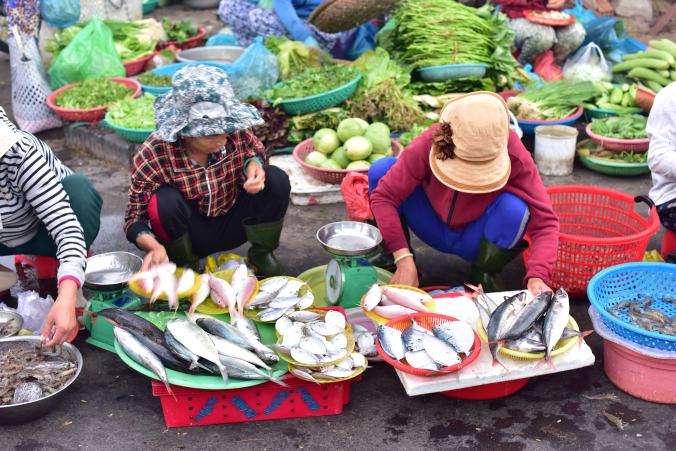
The morning fish market in Hoi An.

NJB_2504.JPG

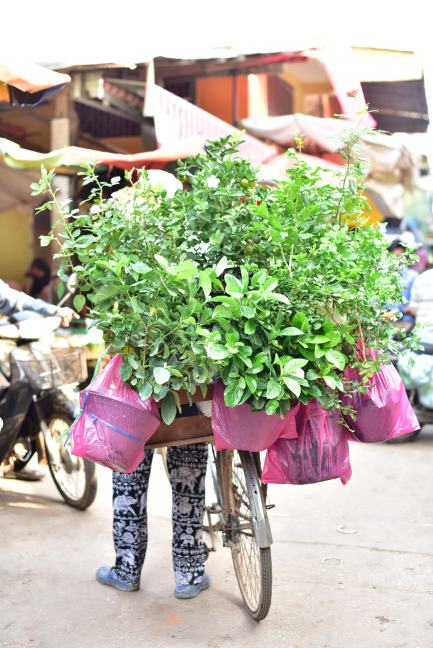
Fresh herbs, delivered by bicycle.

NJB_2491.JPG

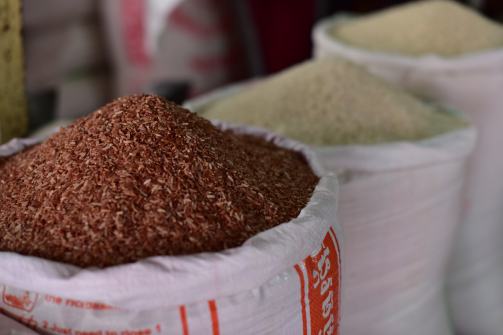
Rice is the staple food for more than two-thirds of the world’s population, unsurprisingly, there is a lot available for purchase here.

NJB_2510.JPG

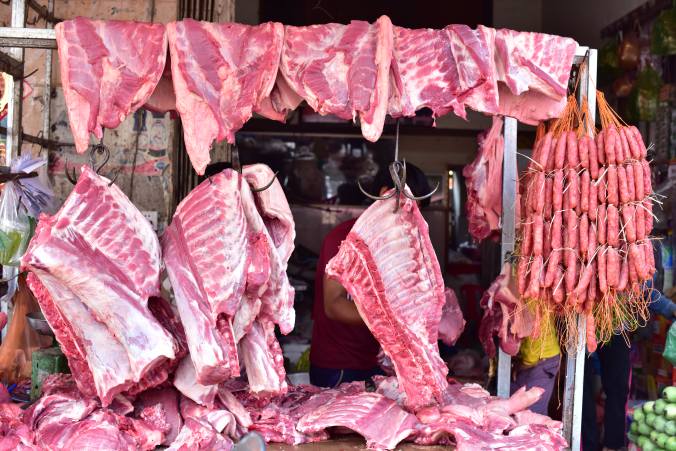
Know where your meat comes from.

NJB_2317.JPG

Siem Reap’s famous Night Market.

NJB_2503

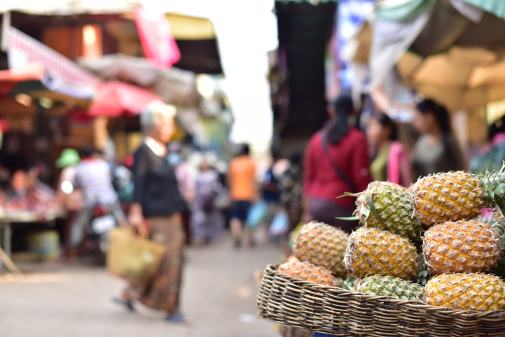
Fresh pineapples are often sold peeled and cut for an easy to-go snack. 

NJB_2472.JPG

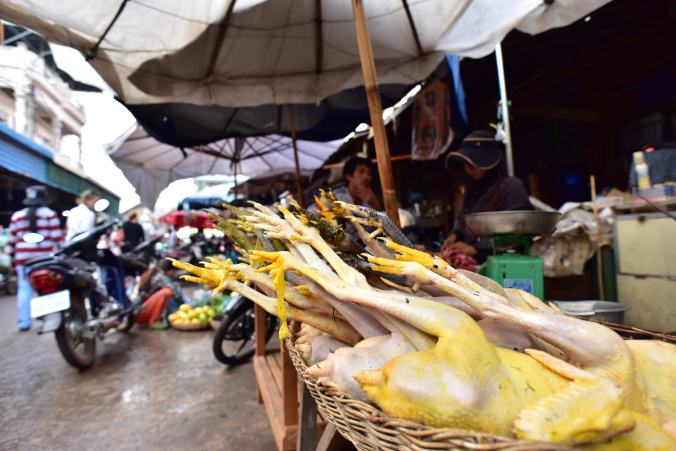
The “blackfoot chicken” is just one of the many poultry options available. Every conceivable type and size of bird is eaten here.

NJB_2763.JPG

Lots of unusual fruit varieties that I’ve never seen before!

NJB_2500.JPG

This is what chefs mean when they talk about “nose-to-tail” cooking.

NJB_2477.JPG

Most markets we’ve seen are conducted primarily on the ground.

NJB_2519.JPG

This is not the gluten-free section.

NJB_2493

Spices ready to blend into fiery curry pastes.

NJB_2306

NJB_2304

Markets in southeast Asia aren’t just for food; Cambodia and Vietnam produce a great deal of the world’s “fast fashion,” typically in abysmal working conditions.

NJB_2507.JPG

Everything you need to garnish pho.

Needless to say, I’m looking forward to cooking again when we get home!


Interlude: Cows love Skittles

Friends, we interrupt our regularly scheduled light and fluffy travel programming to bring you a brief interlude on cows. Cows and Skittles, to be precise. If you are here just for fun travel adventures, please feel free to tune out now – this one is about food politics.

Perhaps some of you noticed a little story that a couple of papers ran recently about a Skittles spill on a Wisconsin highway (although I’m painfully aware that there are one or two more significant American news stories to focus on right now). To summarize, a truckload of red Skittles missing their signature “S” spilled onto the road thanks to a rain-saturated cardboard box. When the local sheriff’s department came out to investigate, they discovered that the candy was on its way to be used as cattle feed. Maybe it’s fake news? Now that so much of what we read contains “alternative facts,” it’s hard to know what to believe. (You can read versions of the article here, here and here, and I’m sure there are plenty more.) Feeding food waste to cattle is apparently common practice in the U.S.

Stone Barns-06

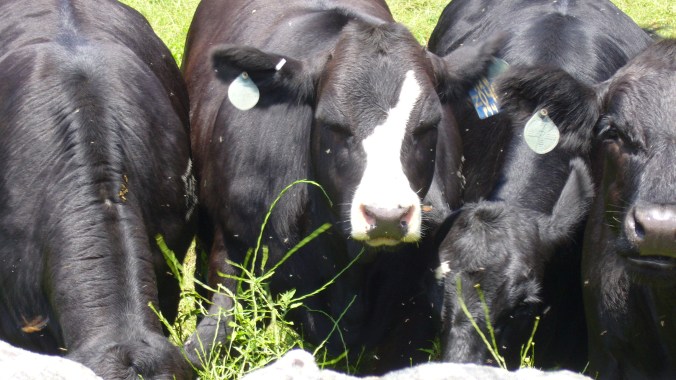
Bessie here actually prefers M&Ms to Skittles, if you want to know the truth.

Back in 2012, the severe drought that swept across the country caused corn prices to skyrocket, and that’s reportedly when the trend of feeding excess food to cattle really accelerated. In some cases, cows were even fed candy that was still wrapped, although a professor of animal nutrition seemed mostly convinced that the wrappers would pass through the cow without issue. I’m in no way a vet or other animal expert, but I imagine that plastic really can’t be good for an animal’s insides – even one as large and tough as a cow.

But wait, you might say. Skittles are mostly just corn syrup, which is just corn, right? And that’s what the cow would be eating if corn prices hadn’t risen so much, so really, what’s the big deal? It’s actually not the Skittles that bother me – it’s all the other stuff we don’t know about. Consider that the only reason we now know that these Skittles were intended for cattle feed is because they spilled. Had they not spilled, we’d still be shoveling our CAFO hamburgers in, none the wiser. This story indicates that a lot of other mysterious food waste goes to our cows, including but not limited to stale baked goods, peanut and almond shells, and orange rinds. Probably harmless, yes, but do these ingredients affect the integrity (what little there is) of the meat? Could a severely peanut-allergic person have a reaction to beef from a cow fed on peanut meal? I have no idea. And I also have no idea what is in our food.

Stone Barns 074

My point is not that the Skittles themselves that are inherently bad (although they are). It’s that you didn’t know they were there. How can anyone make an informed decision about what they eat when they don’t have all the information? How can I implore my cooking students to read the label of every food item they buy when I know full well that label is inherently misleading? I also resent the implication that feeding Skittles to cows saves them from the landfill and is therefore virtuous. In a country that wastes over 40% of all edible food produced, I’m fairly certain that the quantity of Skittles we’re talking about here is negligible enough that the landfill excuse doesn’t hold up – greenwashing at its finest.

Some time ago, a friend who shops very consciously received a recall notice at the bottom of her grocery store receipt indicating that the big-brand chicken she’d purchased weeks earlier had been recalled. Since she deliberately never purchased big-brand chicken, she knew this had to be a mistake – yet when she contacted store management, she received a boilerplate customer service response that didn’t address the issue. Follow-up calls and emails went ignored, leaving her to assume that of course she had purchased that chicken – labeled as organic and packaged under a “clean” name – even while trying so hard not to. Plus, organic and conventional chicken were both part of the same recall, so how can one trust that the organic product really is? And that leaves us here, stumbling around the grocery store in a panic, reading labels frantically and generally feeling like a failure all the time because we no longer have any faith in a system designed to protect us from fraud and mislabeling.

These stories are compelling on many levels, but my takeaway is this: unless we’ve grown, raised and processed food ourselves from start to finish, we no longer can have any faith that we’re buying what we think we’re buying. I know plenty of people who wouldn’t feed their kid Skittles (concerns over Red 40 high on the list) but would certainly offer a lean beef stir-fry with plenty of supposedly organic vegetables and arsenic-free brown rice. Yet these same people, who are working so hard to get it right, are getting it wrong. Again and again, because they cannot trust that they’re buying and consuming what they think they are.

Stone Barns 070

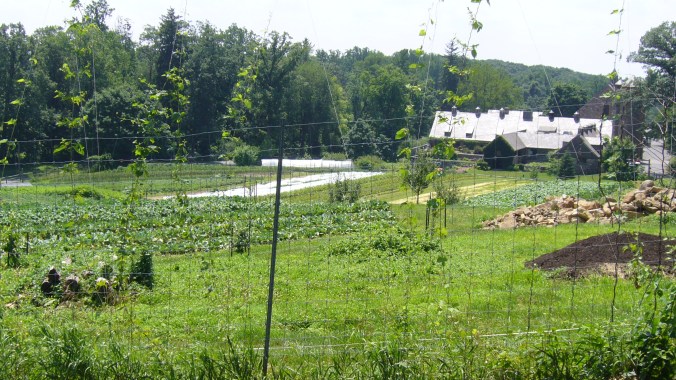
I’d love to end on a positive note, so I’ll leave you with this – if you want to trust your food, grow your own. Start a small garden. (If you’re in the Denver area, support a locally-owned business and go here for everything you need to get growing.) Raise backyard chickens. Get a beehive. Join a CSA. Know what you’re eating and where it came from, and be willing to ask questions. Also: eat less meat, and spend more money on it, and know who raised and processed it. And please, let us know your thoughts on this story. We’d specifically like to hear if you feel confident about label honesty and accuracy (including organic vs. conventional) and what exactly is in the food you buy.

chickens2

Here fishy, fishy

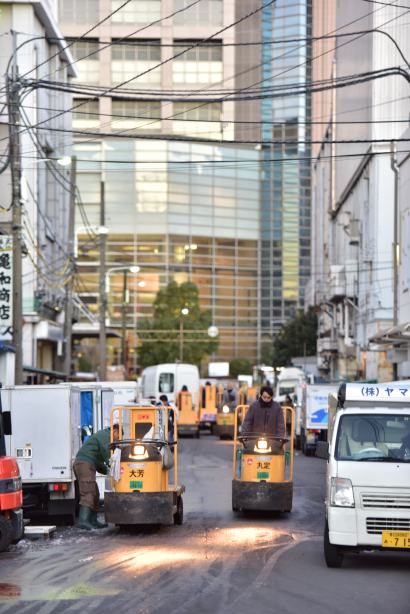
NJB_0713

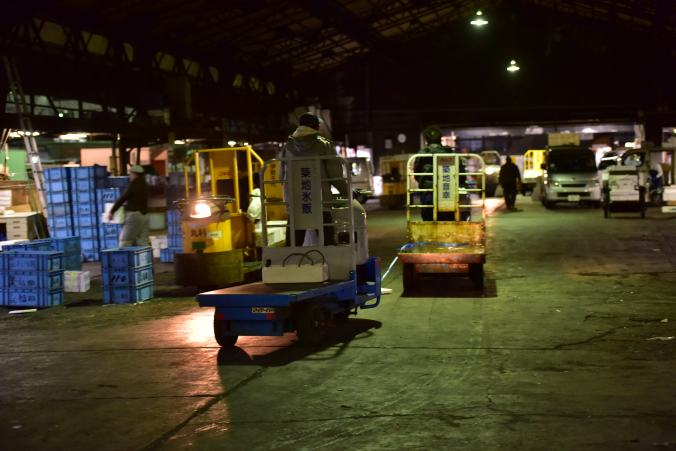
Tsukiji Fish Market is definitely not dressed up to impress tourists.

It’s our last week in Japan and we’re tackling Tokyo, district by district. We woke up at 4AM to jump on the first train out to Tsukiji Fish Market, the largest wholesale seafood market in the world. We opted not to attend the famous tuna auction, mostly because you have to arrive by about 2AM via expensive taxi in order to queue for the limited tickets available to tourists. Even without the tuna auction, though, the market is pretty spectacular.

NJB_0702

Please stay out of the way…these guys move fast.

NJB_0706

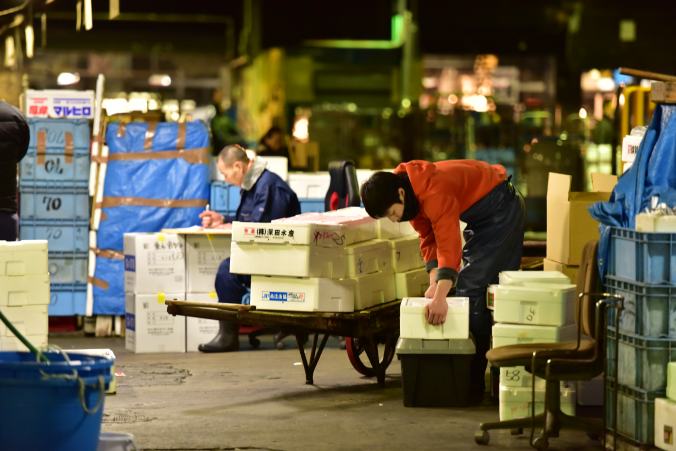
Seafood arrives here from all over the world. Most of the crew starts work between 2 and 3AM each day the market is open.

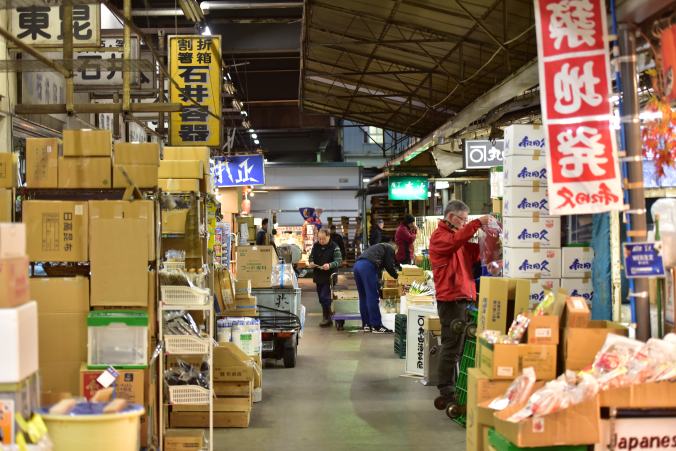
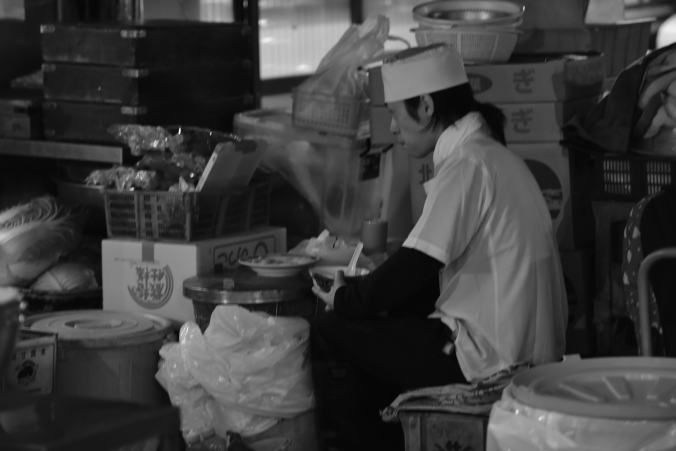
Tsukiji is made up of two markets – the inner market holds all the wholesale vendors and is off-limits to the public except for between about 5 and 6:30AM for those with tickets to the auction. The outer market is entirely open to the public and contains dozens of small restaurants, plus stalls selling kitchen equipment and other goods.

NJB_0690

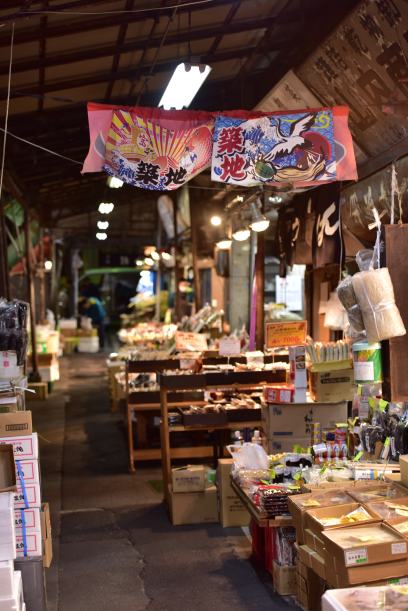
Stalls selling kitchen equipment and other sundries line the outer market.

NJB_0689

Of course you can still smoke here…we’re in Japan.

Make no mistake – this is a working market, and tourists are barely tolerated. The market has closed to tourists entirely on a number of occasions, thanks to safety concerns and complaints from vendors, but is currently open. You’re expected to pay close attention to the carts, forklifts, trucks and other machinery moving at high speed around the market, and basically stay out of the way.

NJB_0721

The grittiness of the fish market contrasts with shiny modern skyscrapers.

Tsukiji Market sits on prime Tokyo real estate just outside Ginza, one of the city’s fanciest shopping districts. Land here is more valuable than anywhere else in the world; as such, the market was scheduled to move in November 2016 in preparation for the 2020 Olympics. This was a highly unpopular decision, as many of these stalls (and their inhabitants!) have been in place for decades. In August 2016, the move was postponed; the reclaimed land where the market is to relocate is reportedly heavily polluted, and corruption allegations have been tossed around. Relocating a market of this size is a massive undertaking and it will be interesting to see if and when it actually occurs.

NJB_0734

NJB_0731

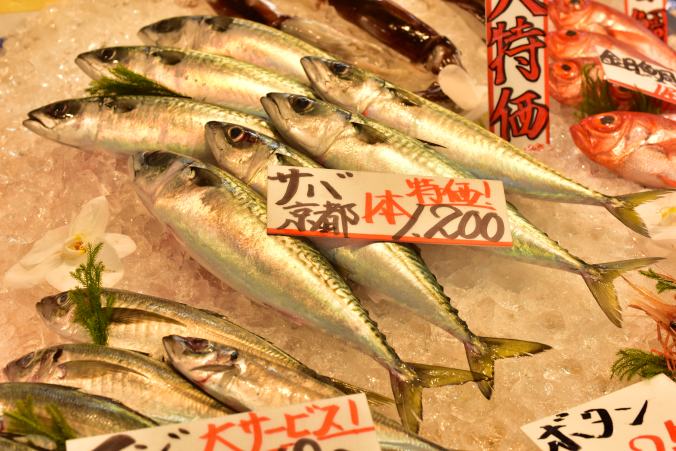
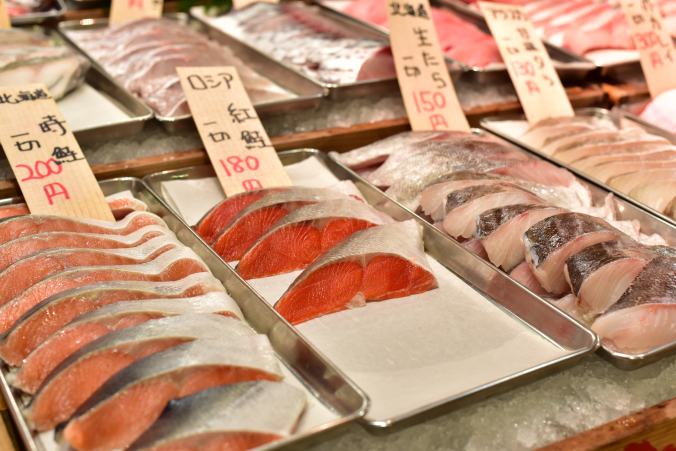
The fish for sale is always presented beautifully, and of course on plenty of fresh ice.

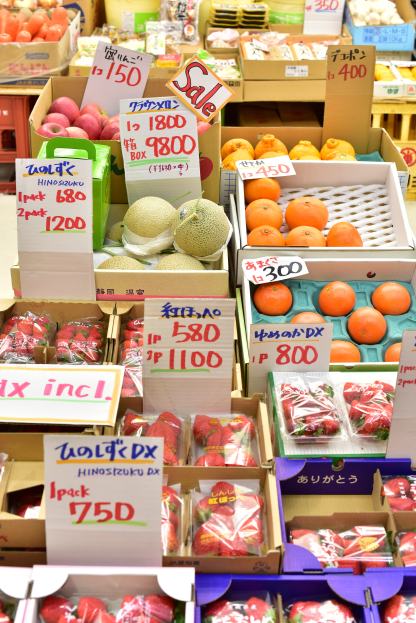
Tsukiji doesn’t just sell fish, though that’s what it’s best known for. There are stands with fruit, vegetables and exotic mushrooms too. Earlier on our trip I commented about the exorbitant cost of fruits and vegetables here; have a close look at the cantaloupes in the photo below – they’re priced at 1800 yen, or about $16 each. And they’re on sale! You can save if you buy the whole box of six for about $87. At a fancy food hall later that day, we saw melons nestled gently into little presentation crates and selling for about $150, and individual strawberries for $5 each. Perfect fruit are a popular gift here.

NJB_0735

Want an orange? They’re between $3 and $4.50 each, depending on the variety.

NJB_0730

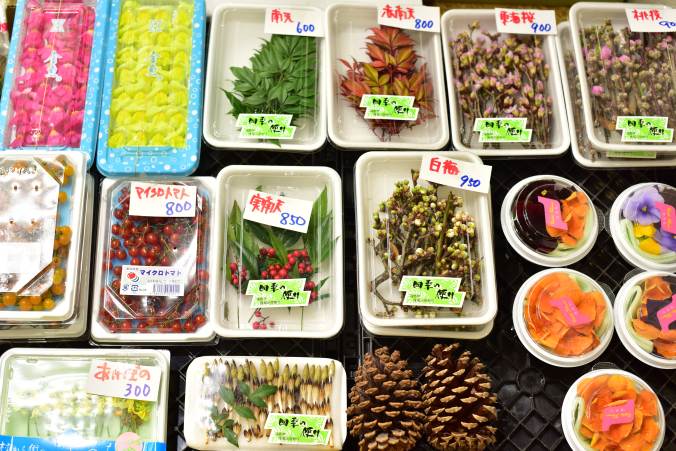
An interesting array of herbs, flowers and other decorative garnishes.

NJB_0736

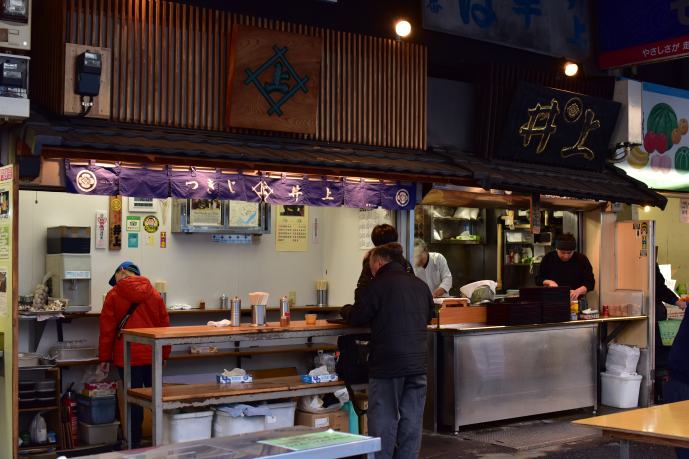
One of the numerous small “restaurants” that line the outer market. You order at the counter on the right from the chef or his assistant, and eat standing at the long table on the left. Dishes are washed in the gutter next to the street, and no, I don’t think the health department is bothered.

NJB_0742

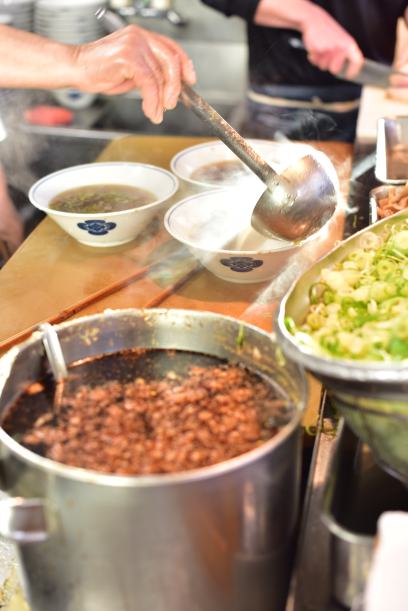
Ramen for breakfast on a chilly winter morning? Yes, please.
NJB_0746

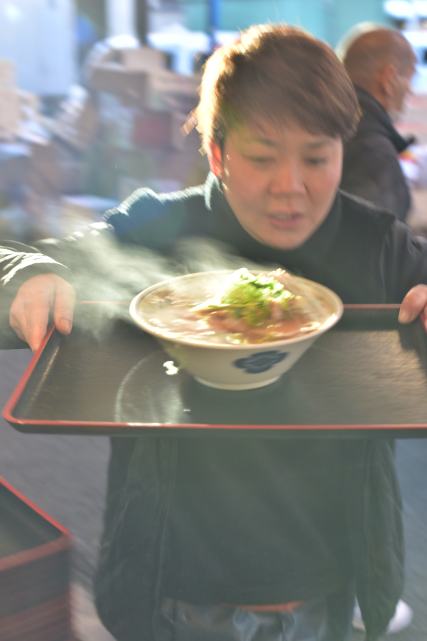
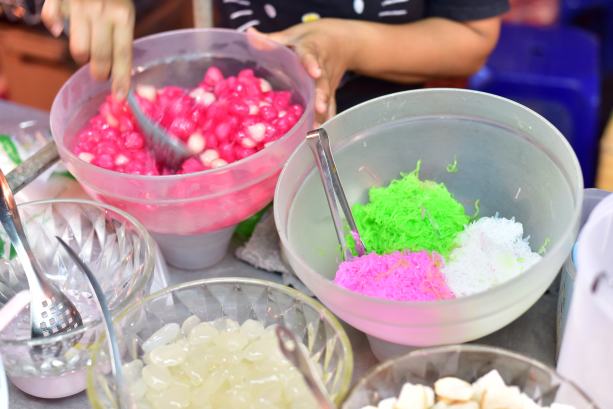
Indeed we ate ramen, not sushi, at the world’s most famous fish market.

NJB_0719

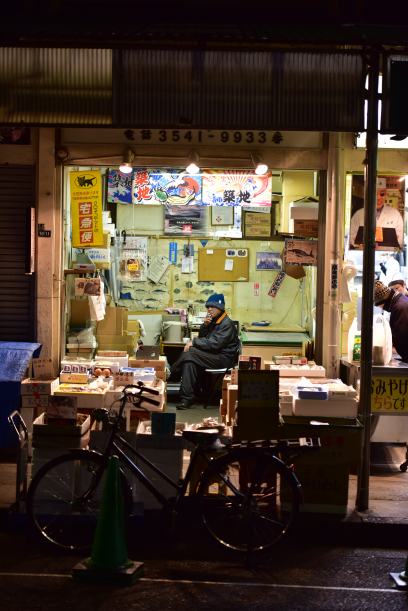
A quiet moment before a busy day.

Commercial fishing is a challenging topic, especially for the Japanese. On one hand, you have cultural traditions formed over countless generations in this island nation. On the other hand, it’s pretty clear that we’re running out of fish. Consider that Tsukiji Market alone handles over 700,000 tons of fish per year. That isn’t even a comprehensible number, but it’s definitely one that won’t continue. Many wholesalers and famous sushi chefs lament that the size and quantity of the tuna has decreased dramatically over the past twenty years; as oceanic pelagics, these fish can’t be farmed as other fish can. By some accounts, over 90% of the world’s fishing stocks are either fished out or nearly so; it’s estimated that at current fishing rates, fish and seafood will be completely gone by 2048.
This isn’t made any easier by the fact that – at least in the U.S. – we’re constantly told to eat more fish to improve our health. The U.S. imports over 90% of its seafood, much of it from highly compromised environments, so while fish may help your heart, eating more of it has an irrevocable environmental and social cost. And how do you even know you’re eating the fish you think you are? Much of it is mislabeled. Like most of our food system, this industry is heavily compromised too.

An issue as complex as the sustainability of modern fishing isn’t going to be solved in one post. But as always, friends, please spend your food dollars wisely and make your fish and seafood choices consciously and carefully.

NJB_0385

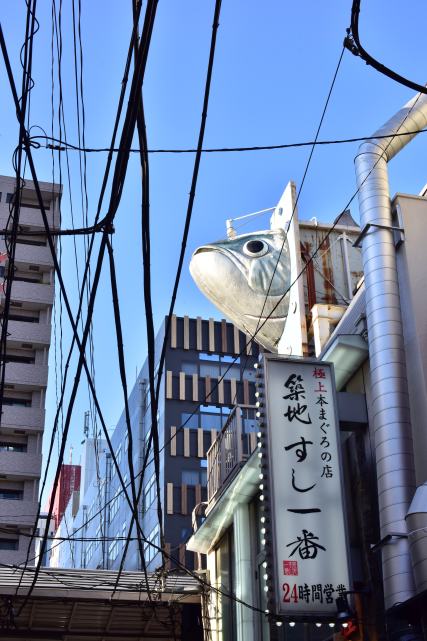
Easy to find the market with landmarks like this!

Minimart Challenge: Japan

So I have THE MOST AMAZING IDEA for a competitive cooking show and it goes a little something like this: cheftestants (yes, I hate that word too) are dropped into a random minimart in a random country and they have a specified amount of time and money to spend in said minimart. After they have made their selections, they are whisked away to an Airbnb where they’re obligated to craft their minimart purchases into something delicious. The challenge, of course, is that the Airbnb kitchen will most definitely NOT be stocked with the high-end equipment they’re accustomed to in their shiny professional kitchens. Instead, it will contain the oddest assortment of dull knives, thrift-store cookware and mismatched plates and cutlery. Good luck, cheftestants!

One of the biggest challenges of extended travel for me is not cooking. I’m well aware that most people would wholeheartedly disagree with this statement, but I cook virtually every single meal when we’re at home, including all of the food packed for N’s work lunches. (The irony, of course, is that I’m regularly asked for restaurant recommendations. We never eat out.) While others might relish a break from cooking, I dread it – because, as I teach in all of my classes, when you cook at home you hold sway over exactly what goes into your food. When we’re traveling, especially for a trip as long as this one, I have to relinquish a great deal of control over what we eat – and that doesn’t come easy. It’s not only that I want to know exactly what we’re eating, but also that as a chef I want the opportunity to cook with unusual ingredients that I might never find at home. And also that cooking sets everything right in my world.

NJB_9588

Sites like Airbnb, however, have made travel so much easier, especially if you want the option of staying in a home with kitchen facilities. We’re currently in an Airbnb in Arashiyama, just outside of Kyoto, and we have access to a reasonably well-stocked common kitchen. (I’ve certainly cooked in worse.) Today was a bit of a rest day for us, and as we didn’t feel like going out to a restaurant we opted for the minimart up the road.

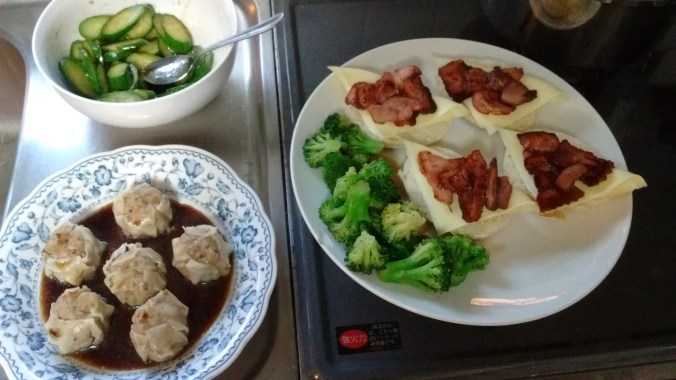
The result: sesame-soy cucumber salad with crunchy rice crackers, steamed shu mai, bacon and cheese sandwiches and crispy broccoli. All procured for about $17, and that included the wine. It took about 15 minutes to put this meal together. Was it the absolute healthiest? No, but it did include two different vegetables and honestly, there was a lot of rather mysterious unidentifiable fried food that we didn’t buy. My loves, the point is this: not every meal you cook at home is going to be perfect. Sometimes, it might even be a hot minimart mess. But – and this is specifically directed to all those busy parents reading this who think they’re not doing a good enough job – it matters. Cooking matters. So keep it up, because you’re doing great. See you on TV, cheftestants.

minimart.02

P.S. I’m sorry for the above photo; N was busy setting up the cribbage board. Let’s just put a copyright rule in place: if the photo is good, N took it. If it’s lousy, it’s mine. Avert your eyes accordingly.