Farm update: July 28

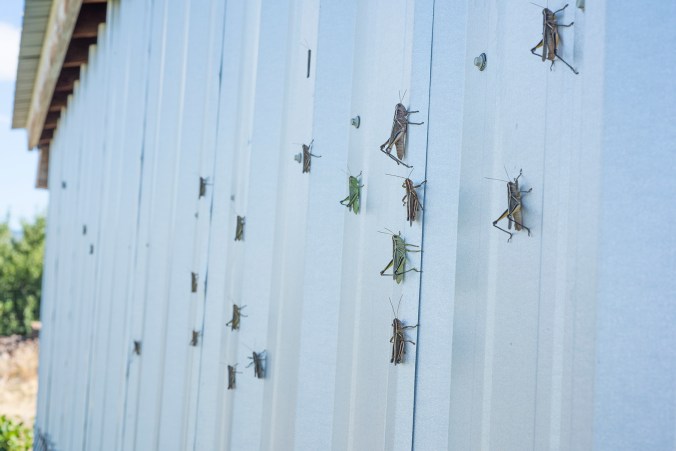
The corral’s warm metal panel is covered with grasshoppers each morning.

Friends, hello. Muted greetings from high summer in the desert, where it is hot, smoky and dry. Let’s not mince words – the world is full of terrible suffering right now, most of it instigated and/or supported by the current regime. It is hard to know how to phrase things appropriately in the face of an entirely intentional famine. We are experiencing our worst farming season in eight years, yet we have easy access to whatever food we might need or want – but children are being purposefully, deliberately starved, and collectively we are obviously fine with this. We are also fine with concentration camps, a militarized police state and taking benefits from poor kids to enrich billionaires. The active cognitive dissonance required to manage one’s daily existence in 2025 frequently leaves me in despair.

A lettuce plant and marigolds, both stripped to the stalks in a few hours.

Here’s one thing I do know – along with cruel, vengeful, power-hungry leaders, grasshoppers (and locusts) can also cause famine. The thousand-year drought in the American Southwest has created ideal conditions for these hardy creatures to thrive, and they are most certainly thriving here. Just about every conversation we’ve had with local friends over the past two months has centered on two topics: grasshoppers and drought. We’ve had no appreciable moisture this year, and the grasshoppers have absolutely annihilated many of our crops. Unless you have the experience of walking amongst our raised beds or our pasture and seeing tens of thousands of insects move at once, unless you’ve been hit in the face and arms repeatedly by these sturdy bugs, unless you’ve seen firsthand the scale of the devastation – you cannot possibly appreciate how bad things are here this year.

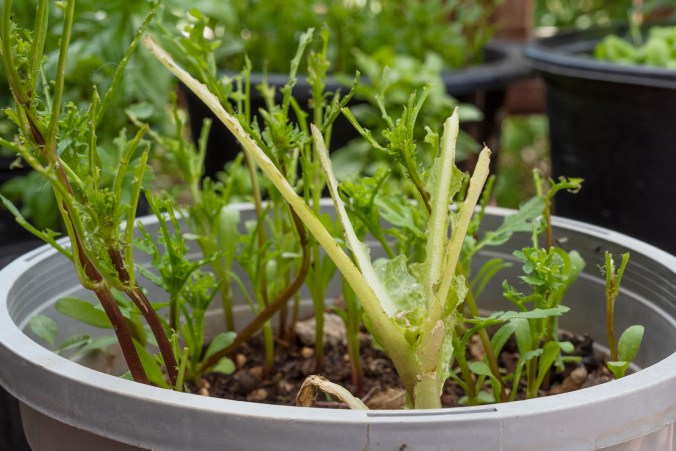
The kale is not thriving.

The brassicas (kale, cabbages, broccoli, bok choy, and so on) have taken the most damage, by far. Entire beds are destroyed in a few hours or days. I am pulling all the broccoli plants this week as they’re so badly eaten that there is virtually no chance they’ll develop proper heads this season, and it’s just painful to look at them every day. Mint, basil, thyme, tarragon – all the soft herbs are gone entirely.

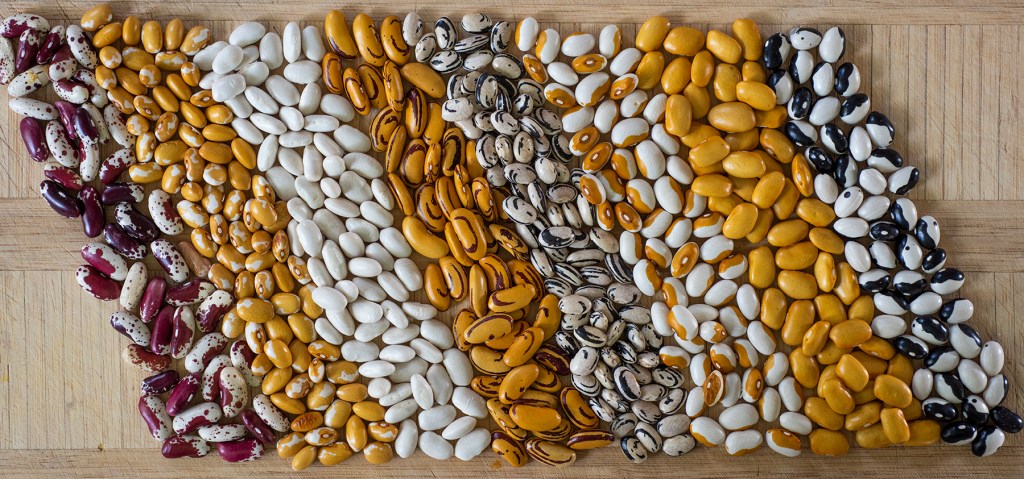
The bean yield will sadly be far lower than expected this year.

As with all crops, the bean plants are at their most vulnerable when they’ve just put on their first true leaves; the grasshoppers love these tender, nutrient-packed starts. The rows are littered with empty stalks that didn’t survive, but we are seeing some resilience from beans that managed to escape that initial onslaught. We’ll likely get some beans, but certainly not the amount we’d planned on.

Dark-spotted blister beetles, a new arrival for us this year.

An enemy, but also an ally. It’s a delicate balance.

Because Nature never makes mistakes, the grasshopper invasion has been followed by dark-spotted blister beetles, who feast upon grasshopper larvae. We’d never seen these before, but they certainly have plenty to eat this year – although they also took out the beet and chard leaves on their way. They love alfalfa, too, and can be toxic to horses if their poison is heavily concentrated in hay bales.

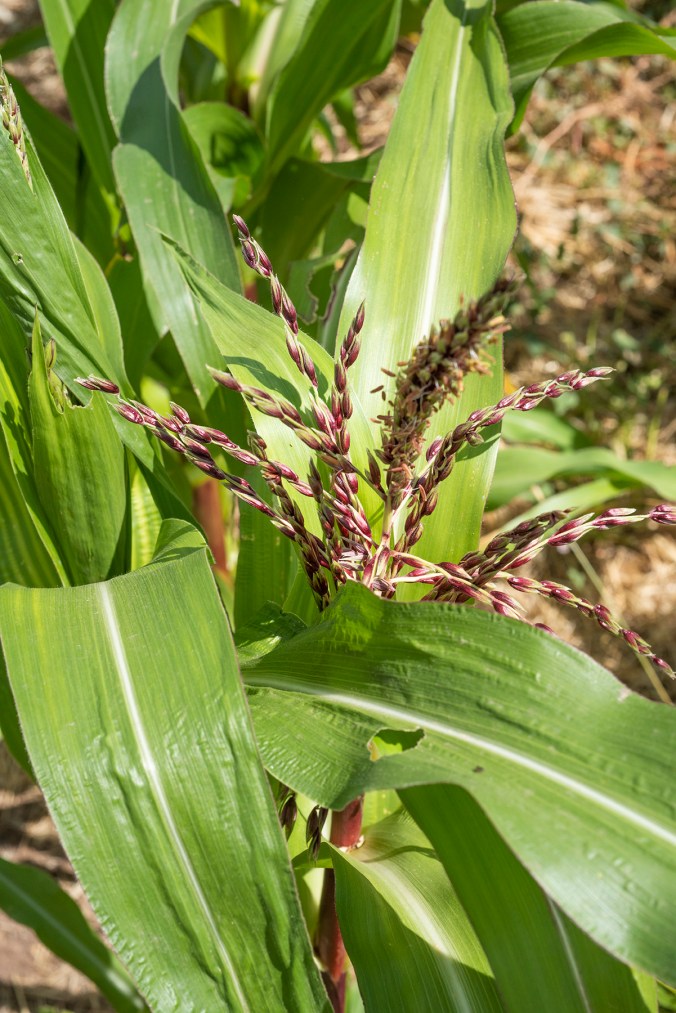
Tassels on Painted Mountain corn; it’s drought-tolerant, cold-tolerant and apparently grasshopper-tolerant.

On the plus side, the grasshoppers have thus far done very little damage to our ‘Painted Mountain’ corn, an heirloom that I am exceptionally proud to grow this year. (You can see a little exploratory leaf-chewing in the photo above, but overall devastation is minimal.) I am so hopeful for this stand of open-pollinated flour corn and will share an update when we harvest.

The tomatoes and peppers have also mostly survived, with the exception of a few replacement transplants that disappeared in hours. I suspect the bitter compounds in well-developed Solanaceae plants aren’t appealing to grasshoppers, though the tiny ones don’t put up much of a fight since they’re likely too little to have developed their defenses. This metaphor is not just relevant in farming, obviously.

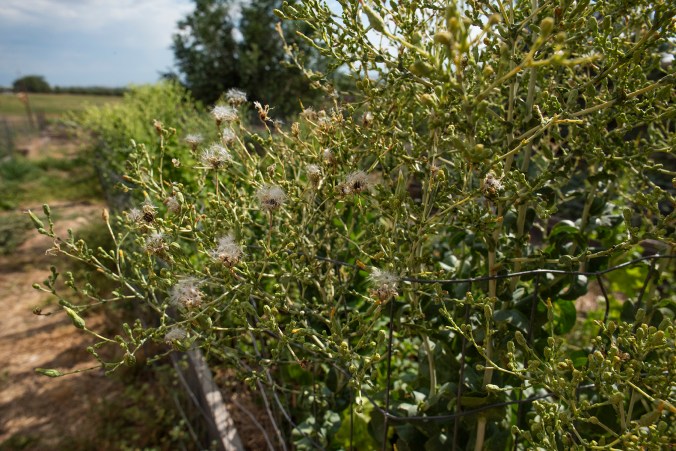
Lettuce plants reproduce by sending out their light seeds on the wind.

And of course the lettuce has gone to seed by now, so it’s time to harvest the little fluffy puffs to collect seeds for future plantings. Saving seeds always reminds me that gardening and farming are ultimately acts of optimism and hope, both of which I am sorely lacking at the moment.

Much as I wish I had a more positive update to share, I am also unwilling to pretend that farming is always easy or fun or rewarding. Sometimes it’s a miserable, exhausting sunbaked slog while watching plants be devoured in a matter of hours. Sometimes it’s replanting precious beans two and three times in the hopes they’ll survive the initial attack. Sometimes it’s bursting into helpless, infuriated tears, because when you’re irrigating, no one can hear you cry. And sometimes it’s taking resigned solace in the famous Zora Neale Hurston quote, “There are years that ask questions and years that answer.” This is a year for questioning, dear friends, and for questioning a lot more than just farming.

Thanks for being here, as ever.

What’s working

“…until we can grieve for our planet we cannot love it—grieving is a sign of spiritual health. But it is not enough to weep for our lost landscapes; we have to put our hands in the earth to make ourselves whole again. Even a wounded world is feeding us. Even a wounded world holds us, giving us moments of wonder and joy. I choose joy over despair. Not because I have my head in the sand, but because joy is what the earth gives me daily and I must return the gift.” -Robin Wall Kimmerer

Right, then. How’s everyone doing out there? Let’s not sugarcoat it – things are seriously grim. But! How about we share what’s working and how we’re maintaining our sanity and finding our joy? I’ll go first.

How to jump in. It’s the most effective thing we can do right now, short of obvious consumer boycotts.

Mending is having a moment!

In the face of devastating wildfires, the Altadena Seed Bank looks to the future. “Even if the entire field burns down, they’ll regrow,” she said. “That underground resilience and connection is such a metaphor for Altadena — those nodes of connection and care are still so strong. Even if they’re invisible, we know we’ll come back.”

“Do not obey in advance.”

Building a community web of support, and calling on that community when in need. (Thank you, Jo Carole!) “The very concept of society rests on the idea of networks of affinity and affection, and the freestanding individual exists largely as an outcast or exile.” -Rebecca Solnit

Vote with your wallet.

Colorful handwritten letters from my cherished penpals.

The Birchbark House series by Louise Erdrich.

Read this.

The sensible, rational, thoughtful voices to listen to right now: Jessica Craven, Heather Cox Richardson, Paul Krugman, Robert Reich. If you have others to suggest, please share in the comments.

Organizing our first community seed and plant swap March 8! See you there?

“I’m simply reminding you that this nation was founded on resistance to arbitrary authority. We built American democracy in the face of what seemed to be impossible odds. And we will never, ever give up that fight.” -Robert Reich

My watchwords right now are calm, clarity and community. Would love to hear how you’re standing strong these days, dear friends.

Seed saving 101

Gardeners! If you’re in a temperate climate like we are (zone 5b), you’ve likely noticed that most, if not all, of your annual flowers and vegetables have either set seed or are well on their way to doing so. We’ve had an exceptionally warm autumn this year; normally by now we’d have seen overnight lows into the mid- and high 30s, but we haven’t yet dropped below 40 degrees. This means that many annuals have simply kept on producing and haven’t yet been triggered to set seed and then die; while day length has of course decreased, temperatures have remained unusually high. This is terrible news for the massive wildfires burning in Utah and Wyoming (we are once again coughing under smoky, hazy skies) but great news for those of us focused on saving seeds, since our window of opportunity is still open – for at least another week or two here.

Continue reading

High summer book reviews

With the intense heat and the wildfire smoke, we’ve been spending more time than normal indoors lately. This is terrible news for our climate, but good news for our reading lists! This round-up is heavily weighted towards non-fiction (with a clear attention economy/stolen focus bent!), but I have a couple of dark suspense novels lined up (Lisa Jewell’s None of This Is True and Lucy Foley’s The Paris Apartment) to carry me through these dog days and into (hopefully) cooler temperatures. (You can check out a few previous book review posts here, here and here.)

The Anxious Generation, Jonathan Haidt

Jonathan Haidt’s new book, subtitled How the Great Rewiring of Childhood is Causing an Epidemic of Mental Illness, has gotten a ton of both positive and negative press recently. The book’s essential thesis is that we’ve moved from a play-based childhood to a phone-based childhood, much to society’s detriment. Parents overprotect their children in the real world – no playing outside in the front yard on your own because you might be kidnapped! – whilst at the same time handing them a smartphone with unrestricted access to all of the horrors humans can dream up. He also argues that social media in particular has contributed to (caused?) most of the dramatic increases in depression, anxiety, eating disorders, suicidal ideation and more mental health issues seen in pre-teens and teenagers in the Anglosphere.

Continue reading

Tomatoes not to buy

Definitely a non-GMO tomato harvest.

Hello there, friends. This is a brief but vital public service announcement coming to you from small farmers and seed savers everywhere.

We’ve just passed the Ides of March and are rapidly approaching the spring equinox. As such, in most of the northern hemisphere it is time to start tomato seeds. You might have missed the grand pronouncement – the current news cycle being what it is – but last fall, the first GMO tomato seeds for home garden use were approved by the USDA, and the seeds were released for purchase early this year.

Allow us to be perfectly clear – this is a major shift in GMO technology and marketing, as this tomato represents the very first GMO food crop to be released as seeds for home gardeners. All other GMO crops (primarily canola, corn, cotton, soy and sugar beet) are only available to commercial growers and heavily protected. This tomato was developed in the U.K., where GMOs are illegal to grow (as in Europe). It can only be sold in the U.S. because we steadfastly refuse to regulate GMOs. This tomato is aimed squarely at American home gardeners and will likely show up in stores and farmers’ markets this year.

Press releases for this tomato tout its higher anthocyanin content. If you want higher anthocyanins in your homegrown tomatoes, grow any of the ‘Indigo’ tomato family bred by Jim Myers out of Oregon State University. ‘Indigo Rose,’ ‘Indigo Apple,’ ‘Indigo Cherry’ and more were bred through traditional multi-generational breeding techniques to display deep purplish-black coloration and high anthocyanin content. This is how new tomato varieties should be developed – not by splicing in snapdragon genes.

Respectfully and with great seriousness, we ask you not to purchase these tomato seeds and not to purchase these tomato plants, and if your local garden center or big-box store is selling these, to politely explain your opposition to these plants. The company’s goal here is clearly to reduce American gardeners’ opposition to GMO seeds in the home garden, bringing more and more to market. GMO seeds are not open-pollinated and cannot be saved nor shared. While GMOs may have no impact on human or environmental health (very much still up for debate), they certainly have a significant impact on seed sovereignty and therefore food sovereignty. Seeds, especially food crops, are to be saved and shared, not developed in a lab in a country where they can’t even be sold and then patented and flogged to the ignorant American gardener. Don’t buy these tomatoes.

Questions? Send ’em our way. This is a topic we are happy to discuss at length.

Wishing you all an abundant growing season, wherever you might be in the world.

The 2023 bean harvest

Well, hello there. It’s nice to be here again. We’ve taken a break from posting, but we certainly haven’t taken a break from farming. On the contrary, we have expanded our growing area and our crops. This year, we grew hundreds of pounds of organic vegetables, but we’re most proud of our dry bean harvest – twenty varieties! Read on to learn more about what we grew.

Clockwise from top left: Hopi Yellow, Vaquero, Bolita, Dragon’s Tongue.

Hopi Yellow: A classic yellow bean, larger than Buckeye. Perfectly at home in any soup or stew, this is a bean that will enhance any recipe yet never steal the spotlight. Excellent productivity.

Vaquero: Also called Orca or Yin-Yang (for obvious reasons), these small, dense beans cook up beautifully and produce a rich, inky pot liquor. A stunning bean and surprisingly productive for an heirloom.

Bolita: A lovely, delicate little bean in the pinto family, but smaller and sweeter in flavor. Bolitas are native to southwestern Colorado and New Mexico and figure prominently in the Indigenous cuisine of the region.

Dragon’s Tongue: These pale lavender wax beans grow inside pretty dark purple-striped pods and are most commonly eaten as a fresh green bean, though the attractive pod stripes unfortunately disappear when they’re cooked.

Clockwise from top left: Aztec White, Rio Zape, Jacob’s Cattle, Tiger’s Eye.

Aztec White: One of our very favorite varieties, Aztec White is our top producer and a bean we will likely always grow. These beans are perfect for a white chili or a lush, garlicky dip for crudités.

Rio Zape: We’re proud to grow this spectacular purple and black bean that inspired the creation of the legendary Rancho Gordo. An impressive member of the pinto family, this bean offers deep, dark flavor with coffee and chocolate notes.

Jacob’s Cattle: Like most beans in the kidney family, Jacob’s Cattle’s is dense, meaty and full-flavored. It holds its shape and stands up to strong seasoning, so it makes an excellent chili bean.

Tiger’s Eye: These stunning beans are honestly almost too beautiful to eat. Almost! Tiger’s Eye ripen early due to their thin pods; their correspondingly thin skin nearly disappears in cooking, but they’ll hold their own in any chili or soup.

Clockwise from top left: Hutterite, Cranberry, Palomino, Midnight Black.

Hutterite: Possibly brought to the northern Midwest by Ukrainians in the 1850s, or maybe selected from China Yellow by settlers – like many beans its origin story is a bit murky. This bean is creamy, productive and mild, perfect for any gentle, warming soup or stew.

Cranberry: This comes from a huge bean family; it is likely native to Colombia but is now bred around the world. It’s also called Borlotti, Wren’s Egg and more. Cranberry beans are soft and thin-skinned and they produce a luxurious pot liquor, perfect for pasta e fagioli.

Palomino: This bean is a golden variation of Anasazi, but we choose not to use that disputed name and so have branded it Palomino. Like other yellow beans, it is creamy, mild and versatile.

Midnight Black: A true black turtle bean with traditional flavor and an inky broth, this bean originates from Rancho Gordo’s seedstock. Fresh black beans, cooked from dry, will completely change hearts and minds on using canned black beans.

Clockwise from top left: Forelle, Mayocoba, Peregion, Yellow Eye.

Forelle: Officially known as Forelle fliederfarben, which translates to ‘lilac trout’ in German, these round, purple beans with black stripes are absolutely gorgeous. This variety produced abundantly, always a surprise for heirloom beans.

Mayocoba: Native to either Peru or Mexico, these are creamy, pale yellow, thin-skinned beans with a soft, buttery texture. They make excellent refried beans.

Peregion: These come out of the Pacific Northwest and have a gorgeous zebra coloration. One of the few beans where the striping is still (faintly) visible after cooking, Peregion are productive and delicious.

Yellow Eye: These beans are both rich and mild, more a supporting character than an outright star. They are an old New England variety and the bean of choice for classic Boston baked beans.

Clockwise from top left: Garbanzo, Buckeye, Marcella, Red Cranberry.

Garbanzo: Also called chickpea or ceci bean, this legume is most commonly used in hummus and other Middle Eastern dishes. Garbanzos are not native to North America like most other beans here and are low-yielding and tricky to grow – but the unusual, fronded plants are fun to see in the field.

Buckeye: Rancho Gordo says, “A small, dense yet velvety bean that holds its shape and provides a rich bean broth. Easily one of the staff’s favorite beans. Buckeye is incredibly creamy, almost more like a classic black turtle bean than anything else. It’s dense without being intense, if that makes sense.” Can’t top that description.

Marcella: A long white cannellini-style bean, named by Rancho Gordo in honor of the great Marcella Hazan. Thin-skinned and creamy; ideal for brothy Italian-style soups and rich, flavorsome dips and spreads.

Red Cranberry: An old variety, likely grown by Indigenous tribes in the northeast U.S. Gorgeous rich red color and much rounder than the more common striped/speckled cranberry bean above. Listed in Slow Food’s Ark of Taste.

We could go on and on about dry beans (and have, previously), but let’s sum it up like this: they’re native to our region and therefore exceptionally drought-tolerant. They’re an incredibly nutritious source of plant-based protein and beneficial fiber. They require almost no care, and they are not plagued by pests, viruses or disease so require no inputs, at least in our microclimate. They keep well. And they actually give more than they take, replenishing the soil with each season’s growth. Beans are an absolute powerhouse in every category, and they’re a great addition to Quiet Farm. We’re deeply proud of our 2023 harvest, and are already evaluating what varieties we’ll grow next year.

More than ever, we know that small, regenerative farms are the only sure way out of this increasingly catastrophic environmental mess we find ourselves in. We encourage you to support small farms in whatever way makes the most sense for you and your household.

As always, thanks for being here. We’ll be back again soon!

The season in review

It’s surprisingly cold now, in late November, although dry and clear. As always, we’d love for some of the snow blanketing other parts of the country (hello, six feet in Buffalo!) to bestow its generosity upon us here, but nothing shows in the forecast as yet. Days are crisp and blue, and nights definitely require extra quilts. The sunroom is still full of cardboard trays of slowly ripening tomatoes and peppers; this unheated room works perfectly for cold storage and allows these vegetables to ripen slowly with sunlight but without so much warmth that they’d rot. Certainly something is sacrificed in terms of flavor when crops aren’t allowed to ripen outside, but we have a reasonably short growing season here so we have to work with what we have – and it’s a lovely treat to enjoy our own fresh tomato salads well into winter.

Those cardboard trays are slowly transforming into rustic, delicate ristras and canning jars of salsa and sauce; seeds are mostly dried and packed away. The winter squash bounty hasn’t been tapped into yet; that will carry us through the coldest months and into fragile spring with warming soups and curries. New planting rows for next year have been plowed and filled with compost. The plants we pulled out have been mowed into bits to break down into compost over winter; the beds have been mulched with spent straw and next year’s garlic has been planted. In all ways, our season is gradually winding down and we’re more than ready to tuck ourselves in for a couple of months of much-needed rest.

We’re still reviewing our season, cataloguing our successes and noting what changes and improvements we plan to make for next year. This year certainly had its challenges, but it definitely offered wins, too! Read on for more about the 2022 growing season.

Continue reading

The bean harvest

Our eight bean varieties from the 2022 harvest.

Here we are, dear friends, and yet again I’m singing songs of love and devotion to beans – specifically our own 2022 harvest! My total and complete adoration of dried beans is no secret. Not only are beans one of the most inexpensive yet nutritious whole foods available, but as nitrogen-fixing legumes they actually improve soil. They grow well in our tricky high-plains desert environment, they don’t require much water and they’re very low-maintenance. There can hardly be a better edible crop to grow! Plus, as the world gradually starts to realize that a meat-centric diet for nine billion people simply won’t work, beans (and other nutritious legumes and pulses) will become ever more important as plant-based proteins. We’d like to get ahead of that curve and start cultivating more edible legumes on our farm, for both our own health and our soils, so this year we planted a test crop.

Continue reading

Seed saving + free class!

Mid-October and still no hard freeze here yet…not even a frost. We had such a late start to our growing season this year that I can’t really complain about the extended warmth, but it’s time to wrap things up. The forecast for this coming weekend shows that we might be in for a big downward shift in temperatures, and we are ready. But! Before then, there is much to do, including harvesting everything and collecting all our seeds for future planting.

And to that end, I am teaching a free class on seed saving at our local library on October 22. We’ll talk about how easy yet how important seed saving is, and you’ll learn how you can benefit our local foodshed’s seed sovereignty as well as help the library’s seed bank! The class is free but advance registration is required; more information here, if you’d like to attend. No matter where in the world you are, please consider saving and sharing your seeds!

Farm update: April 25

Hello, friends. It is the busiest time of the year on the farm and we have ten thousand different projects on at the moment. Here are a few things we’ve been up to lately, if you’d like to see.

Tomato starts before splitting.

The sunroom is packed with hundreds of starts, mostly warm-weather crops like tomatoes and peppers. I’ve started seventeen different tomato varieties this year, some new and some tried and true classics, plus thirteen different peppers ranging from mild and sweet to incendiary. After last year’s pepper bounty, I’m committed to expanding our production of the larger bell peppers; I believed that our growing season was too short for the full-size peppers but 2021 certainly proved me wrong. As always, the vast majority of the plants we grow are from saved open-pollinated seed so that we’re protected from the vagaries of the seed market. That said, I tried starting ‘Sungold’ tomatoes again this year; they’re a hybrid but if you’ve ever tasted these incredible gems, you know exactly why people go mad for them. I’ve obviously grown thousands of tomato plants and consider myself a pretty experienced grower, but three years in a row now my purchased ‘Sungold’ seed has failed to germinate. I contacted the seed company – a reputable Front Range outfit – about the poor germination and have yet to receive a response. Frustrating situations like this are exactly why we save our own seed, because we cannot rely upon companies to provide our food.

We will ship you a free kitten.

We live in an exceptionally impoverished county; a direct consequence of that is an absurd population of stray dogs and cats, because people do not spay or neuter their animals. In late March we unfortunately discovered that a feral cat had chosen our hay barn as a warm, protected nursery; now we have one adult cat and six kittens. While we’re happy to have some assistance in controlling the mouse population, we definitively do not keep any household pets so fate will run its course with this lot. An apocryphal quote attributed to Gandhi reads, “The greatness of a nation and its moral progress can be judged by the way its animals are treated.” In this (see also: CAFOs) and in so many other respects, the U.S. is failing entirely.

So pretty! So aggressive! So invasive!

If 2021 was The Year of the Goathead, 2022 looks to be The Year of the Thistle. We’ve written before about cotton thistle (Onopordum acanthium), which is hugely invasive in our area and produces massive, thorny plants that are dangerous to humans and animals. As we work on spring cleaning and tidying around the farm, Thistle Patrol is a key task. If we can dig out the plants by the roots when they’re small, we can prevent them from becoming these treacherous four-foot monsters and of course from spreading seed to produce even more thistles. We travel around with a small shovel at the ready, prepared to vanquish our spiky foe wherever it might be found.

All the little blue tape pieces mark areas that have to be repaired. Sigh.

We are also at work on The World’s Lengthiest and Most Tedious Tiling Project, involving a complicated and not particularly interesting tale of obtuse angles, poorly manufactured countertops, a rickety garage sale tile cutter and many, many other challenges, surprises and obstructions. When (if?) we ever finish this project, it will hopefully look incredible; the road to reach that lofty point, however, still appears long and winding. Also someone in all those DIY YouTube videos should really mention that charcoal grout against white tile shows every chip, imperfection and error. “We didn’t know what we didn’t know” has never seemed so apt; we’ll chalk this one up to hard-won learning.

Will we harvest any fruit this year? Time will tell.

And finally, we’re excited to see blossoms on most of the fruit trees we planted in our first full season here. We of course live in the heart of Colorado’s commercial fruit territory, but the changing climate means that no plant is guaranteed survival any longer. Of late, we’ve endured punishing fifty-mile-per-hour winds plus overnight temperatures in the 20s; the big propane-fueled fans in the surrounding orchards have been on a few times recently in a desperate attempt to save their year’s harvest because these frigid temperatures are devastating for the fragile blossoms. The cherry trees in our area are likely gone for good, thanks to last year’s freeze. Many growers have started culling their delicate peach trees in favor of hardier apples; though peaches sell for far more per pound, the risk of losing the entire crop is also far greater. We are doing our best to adapt to a drier, hotter, windier place and to keep our plants (and ourselves) healthy while doing so.

And with that, we’re back to work! Wishing you a pleasant week ahead.