Farm update: July 28

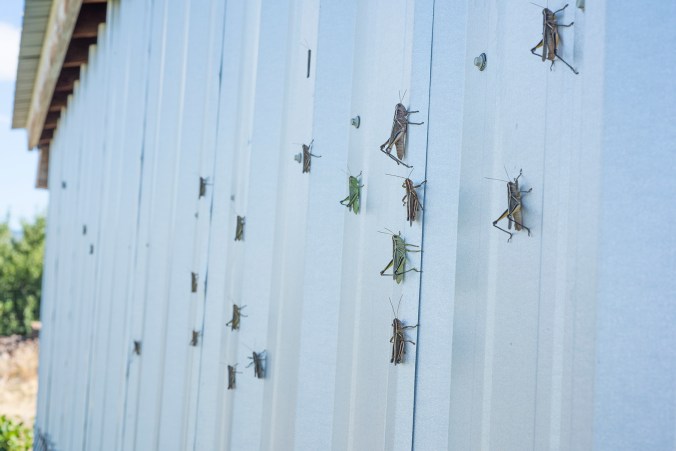
The corral’s warm metal panel is covered with grasshoppers each morning.

Friends, hello. Muted greetings from high summer in the desert, where it is hot, smoky and dry. Let’s not mince words – the world is full of terrible suffering right now, most of it instigated and/or supported by the current regime. It is hard to know how to phrase things appropriately in the face of an entirely intentional famine. We are experiencing our worst farming season in eight years, yet we have easy access to whatever food we might need or want – but children are being purposefully, deliberately starved, and collectively we are obviously fine with this. We are also fine with concentration camps, a militarized police state and taking benefits from poor kids to enrich billionaires. The active cognitive dissonance required to manage one’s daily existence in 2025 frequently leaves me in despair.

A lettuce plant and marigolds, both stripped to the stalks in a few hours.

Here’s one thing I do know – along with cruel, vengeful, power-hungry leaders, grasshoppers (and locusts) can also cause famine. The thousand-year drought in the American Southwest has created ideal conditions for these hardy creatures to thrive, and they are most certainly thriving here. Just about every conversation we’ve had with local friends over the past two months has centered on two topics: grasshoppers and drought. We’ve had no appreciable moisture this year, and the grasshoppers have absolutely annihilated many of our crops. Unless you have the experience of walking amongst our raised beds or our pasture and seeing tens of thousands of insects move at once, unless you’ve been hit in the face and arms repeatedly by these sturdy bugs, unless you’ve seen firsthand the scale of the devastation – you cannot possibly appreciate how bad things are here this year.

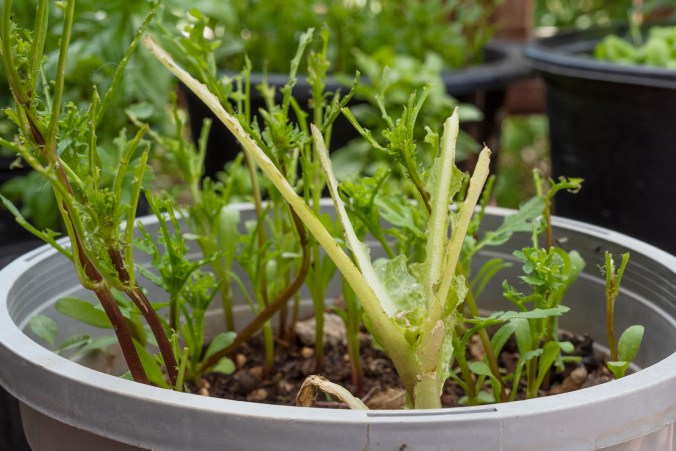
The kale is not thriving.

The brassicas (kale, cabbages, broccoli, bok choy, and so on) have taken the most damage, by far. Entire beds are destroyed in a few hours or days. I am pulling all the broccoli plants this week as they’re so badly eaten that there is virtually no chance they’ll develop proper heads this season, and it’s just painful to look at them every day. Mint, basil, thyme, tarragon – all the soft herbs are gone entirely.

The bean yield will sadly be far lower than expected this year.

As with all crops, the bean plants are at their most vulnerable when they’ve just put on their first true leaves; the grasshoppers love these tender, nutrient-packed starts. The rows are littered with empty stalks that didn’t survive, but we are seeing some resilience from beans that managed to escape that initial onslaught. We’ll likely get some beans, but certainly not the amount we’d planned on.

Dark-spotted blister beetles, a new arrival for us this year.

An enemy, but also an ally. It’s a delicate balance.

Because Nature never makes mistakes, the grasshopper invasion has been followed by dark-spotted blister beetles, who feast upon grasshopper larvae. We’d never seen these before, but they certainly have plenty to eat this year – although they also took out the beet and chard leaves on their way. They love alfalfa, too, and can be toxic to horses if their poison is heavily concentrated in hay bales.

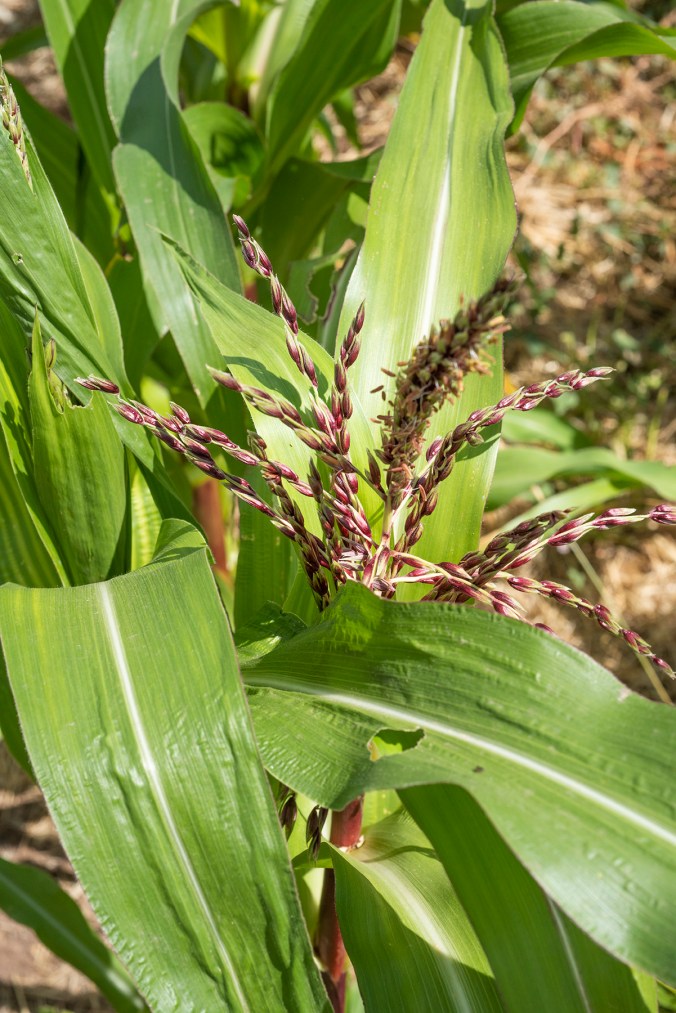
Tassels on Painted Mountain corn; it’s drought-tolerant, cold-tolerant and apparently grasshopper-tolerant.

On the plus side, the grasshoppers have thus far done very little damage to our ‘Painted Mountain’ corn, an heirloom that I am exceptionally proud to grow this year. (You can see a little exploratory leaf-chewing in the photo above, but overall devastation is minimal.) I am so hopeful for this stand of open-pollinated flour corn and will share an update when we harvest.

The tomatoes and peppers have also mostly survived, with the exception of a few replacement transplants that disappeared in hours. I suspect the bitter compounds in well-developed Solanaceae plants aren’t appealing to grasshoppers, though the tiny ones don’t put up much of a fight since they’re likely too little to have developed their defenses. This metaphor is not just relevant in farming, obviously.

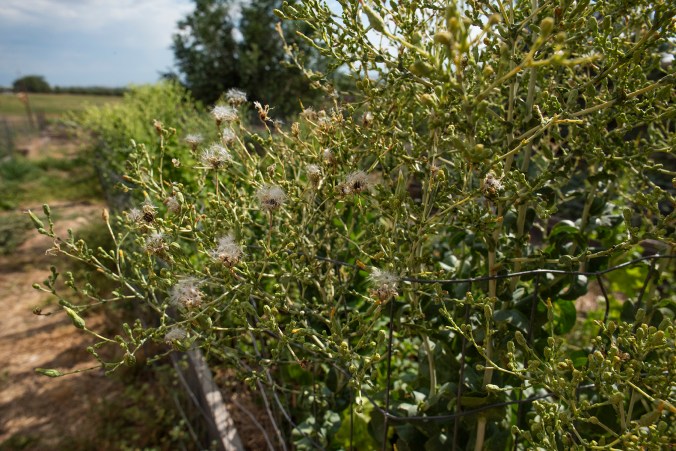
Lettuce plants reproduce by sending out their light seeds on the wind.

And of course the lettuce has gone to seed by now, so it’s time to harvest the little fluffy puffs to collect seeds for future plantings. Saving seeds always reminds me that gardening and farming are ultimately acts of optimism and hope, both of which I am sorely lacking at the moment.

Much as I wish I had a more positive update to share, I am also unwilling to pretend that farming is always easy or fun or rewarding. Sometimes it’s a miserable, exhausting sunbaked slog while watching plants be devoured in a matter of hours. Sometimes it’s replanting precious beans two and three times in the hopes they’ll survive the initial attack. Sometimes it’s bursting into helpless, infuriated tears, because when you’re irrigating, no one can hear you cry. And sometimes it’s taking resigned solace in the famous Zora Neale Hurston quote, “There are years that ask questions and years that answer.” This is a year for questioning, dear friends, and for questioning a lot more than just farming.

Thanks for being here, as ever.

Preservation classes!

Hi! Would you like to learn how to can and preserve your own food? Come take a fun preservation class with me! I teach small-group classes (never more than eight guests) in our dedicated studio space. We learn a lot! We eat delicious food! We build community and self-reliance!

Peaches / Saturday, August 16 / 9AM-11AM / Showcasing our area’s legendary local peaches! Learn the basics of water-bath canning, plus how to dry and freeze peaches. Opening a jar of home-canned peaches in frigid January is a beacon of warm sunlight!

Jams & Chutneys / Saturday, August 30 / 9AM-11AM / You need homemade jam to enjoy with your homemade sourdough! Learn the basics of water-bath canning, plus how to make delicious homemade jams, chutneys and condiments.

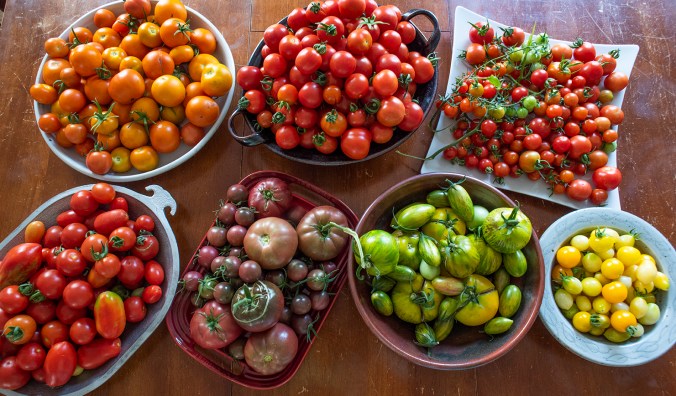
Tomatoes / Saturday, September 13 / 10AM-12PM / Preserved tomatoes are an incredibly versatile addition to your home pantry. Learn the basics of water-bath canning, plus how to dry and freeze tomatoes. This class showcases our farm’s heirloom tomatoes (grasshopper-permitting)!

Salsas & Hot Sauces / Saturday, September 27 / 10AM-12PM / What to do with all those peppers? Learn the basics of water-bath canning, plus how to make delicious mild and spicy condiments like salsa, hot sauce and chile powder. Featuring our farm’s unique peppers and heirloom tomatoes!

Apples / Saturday, October 11 / 10AM-12PM / Keep the Applefest vibes rolling and enjoy more local apples! Learn the basics of water-bath canning for applesauce and apple pie filling, plus how to dry and freeze apples.

Fermentation, Vinegar & Kombucha / Saturday, October 25 / 10AM-12PM / Learn the basics of fermentation, and make your own incredible homemade vinegars and kombuchas! Sauerkraut and pickles, too!

If you would like more information on these or any other cooking classes or events, please send me a message!

Planting tomatoes

When it comes to home gardens, there is no contest – tomatoes are far and away the most popular vegetable (botanically a fruit) to plant. And it’s no surprise; while we can purchase tomatoes year-round, they’re uniformly cold, flavorless, mealy orbs only vaguely reminiscent of “tomato.” But a homegrown tomato in late summer, sliced thickly and drizzled with good olive oil, flaky salt and cracked pepper? There is simply nothing better, and the grocery store versions do not hold a candle. Home growers and small farmers know this.

Continue reading

Farm update: May 12

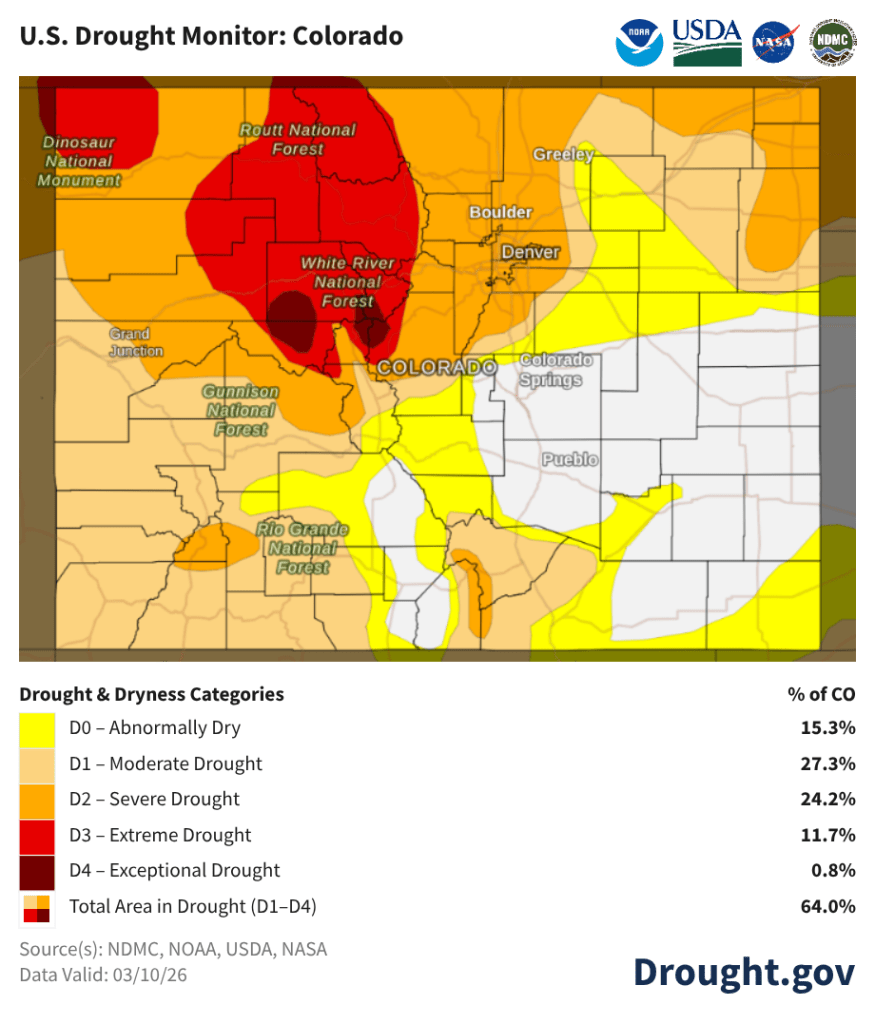
It’s mid-May here on the Western Slope and we’ve had virtually no appreciable moisture for months. Grand Mesa snowpack is critically low. Accordingly, even though water allocations haven’t yet been set, we are planning for an exceptionally limited irrigation season, as are other farmers in our region.

What else is happening on the farm these days?

This photo of gated pipe in our pasture is from back in 2018 – our pasture looks nothing like this now.

Our gated pipe is always broken down and stored for winter, and we’ve returned that pipe to its position along the ridgeline. We made some needed repairs, but it will likely be at least four to six weeks before we get water so we won’t know our pass/fail result until that first irrigation run.

Continue reading

The art of mending

A visible mend on a favorite pair of thrifted vintage jeans.

Do you choose a significant word or guiding principle for each year? My word for 2025 is “mend.” I love both the literal and metaphorical meanings of this word, and how it ties in beautifully with my current sewing practice as well as my overarching goal to build and strengthen my community ties. As Austin Kleon wrote recently, “The idea of ‘being local’ is becoming more and more important to me. In times like these I crave the company of humans living near me who care about the same things I do.”

Continue reading

The 2024 bean harvest

Part of our display at a recent harvest festival.

Hello friends. Mid-November and we’ve only just finished harvesting the last of our dry beans. We grew over thirty cultivars this year, some roaring successes and some total crop failures (Ayocote Blanco). As ever, we learn from each year’s experience and know better what to grow and what not to grow in coming seasons.

Below we’ve listed all the new cultivars we grew this season, and we also grew almost every cultivar from 2023. We won’t describe those again in this post, but you can read about that harvest here. (Note that the bean we referred to as ‘Palomino’ in 2023 is also called ‘Southwest Gold’ and ‘Zuni Gold,’ depending on the company.)

Continue reading

Seed saving 101

Gardeners! If you’re in a temperate climate like we are (zone 5b), you’ve likely noticed that most, if not all, of your annual flowers and vegetables have either set seed or are well on their way to doing so. We’ve had an exceptionally warm autumn this year; normally by now we’d have seen overnight lows into the mid- and high 30s, but we haven’t yet dropped below 40 degrees. This means that many annuals have simply kept on producing and haven’t yet been triggered to set seed and then die; while day length has of course decreased, temperatures have remained unusually high. This is terrible news for the massive wildfires burning in Utah and Wyoming (we are once again coughing under smoky, hazy skies) but great news for those of us focused on saving seeds, since our window of opportunity is still open – for at least another week or two here.

Continue reading

Farm update: September 16

We are on the cusp of autumn here on the Western Slope and the weather is truly spectacular; any Colorado resident will tell you that September here is like nowhere else. Most days remain warm and bluebird sunny, but the overnight lows routinely drop into the mid-40s, and our morning and evening chores require an extra layer. A hard freeze is in our near future – three to four weeks, at most – and this year I won’t be too sad about letting the crops go. It has been a tough season of learning, and we need time to rest and regroup.

Continue reading