Why cooking matters, vol. 1

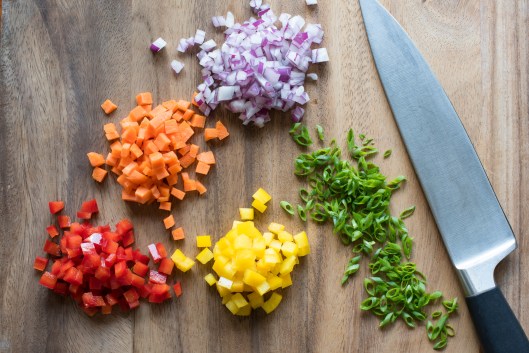
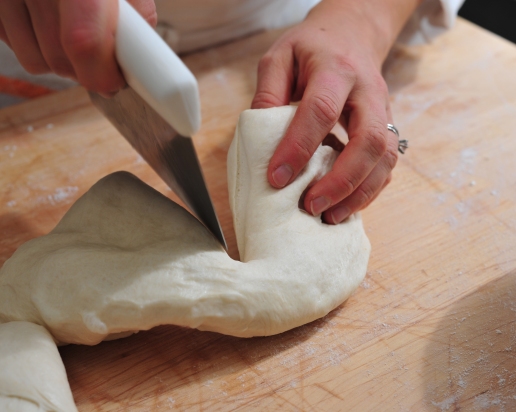
Knife Skills.jpg

Some months ago, I was setting up for one of my corporate Lunch & Learns. A staff member poked her head in “to see what smelled so good!” When I explained that I was there to teach a class on healthy cooking at home, I could literally see her shut down. “I don’t cook,” she said emphatically – derisively, in my (perhaps biased) opinion. I interpreted her comment to mean that no sane person would waste their time cooking when they didn’t have to.

And it’s true – no one, at least in the U.S., actually has to cook ever again. Between traditional restaurants, fast-casual, delivery, $8 green juices and four million different meal replacement energy bars, why would anyone cook at home? You could use that time to catch a Pokemon or update your status or watch Game of Thrones.

CCA-118.jpg

And yet, I believe that learning to cook is a necessary life skill, like writing a resume, or sewing a button, or changing a tire. Except that we’re no longer passing this skill on – cooking is now something done for us, rather than by us. We are now in an unprecedented era – one in which today’s children are expected to have a lower life expectancy than their parents. This has never before occurred in an industrialized nation, and I’d be the first to argue that our movement towards eating the majority of our food in restaurants plays a huge role. But despite our looming health crisis, somehow cooking at home has lost its luster and I cannot understand why. Maybe that’s easy for a professional chef to say, but cooking at home is so much easier than most people think it is.

We live in an age of instant gratification, where food or booze or cheap Chinese-made goods are available within minutes. Cooking – and cooking well – isn’t. People who attend my classes often ask how they can learn to cook better. My answer, while boring, is invariably the same: in order to cook well, you have to cook regularly. You have to get it wrong in order to know when you’ve gotten it right. Needless to say, no one likes this answer.

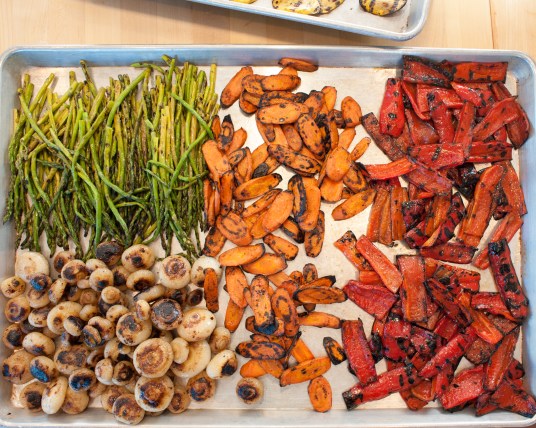
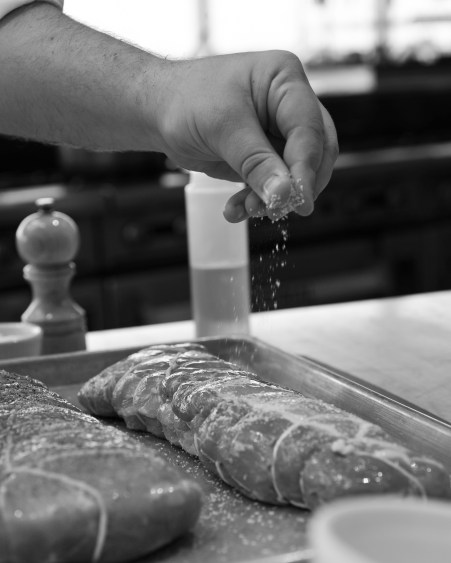
While there might be a million cooking apps, there is no app to teach you how to season properly. How to cook meat to your preferred doneness. How to roast vegetables until they have those delicious caramelized crackly edges. How to know when a cake is done. These are things that can only be learned with practice. Repeated practice. Tasting, tasting and more tasting. And yes, you will make mistakes. And some of the things you cook won’t be amazing. But the learning curve isn’t steep, and you’ll improve quickly. Soon, your food will be better than most restaurants. Trust me on that, but mostly trust yourself and trust your palate.

CCA-05 2.jpg

Here we are, at the beginning of the new year – a time when many of us resolve to get healthy. If you’ve made a commitment to living a healthier lifestyle this year and beyond, and if you don’t cook, I ask you politely – please try. There is simply no one thing you can do that is better for your physical health, your financial health and the planet’s health than cooking at home. Start small; commit to cooking one or two meals at home each week. Plan your meals. Devote a couple of hours on a Sunday afternoon to preparing batches of food for the week ahead. Pack repurposed leftovers for your work lunches. Minimize your food waste by making delicious soups and stir-fries and frittatas. And please, if I can be of more assistance in encouraging you to cook at home, contact me – I have a wealth of helpful tips that I’ll gladly share.

I leave you with this manifesto from Amanda Hesser and Merrill Stubbs of Food52, a site that passionately encourages home cooks.

Because, if you cook:

Your family will eat dinner together.
You will naturally have a more sustainable household.
You’ll set a lifelong example for your children.
You’ll understand what goes into food and will eat more healthily.
You’ll make your home an important place in your life.
You’ll make others happy.
People will remember you.

Wishing you the joy of learning to cook in 2017!

How not to plan a round-the-world trip

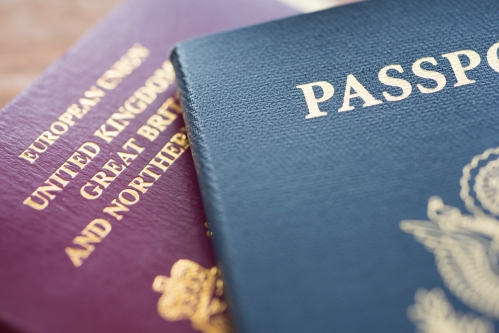
Passport 01.jpg

Today, friends, I bring you helpful tips on how NOT to plan a round-the-world sabbatical (or really any overseas trip). We are seven days out from our departure, and I am only just at this moment starting to feel somewhat calm about the to-do checklist that seems to become longer with every passing moment.

Let’s say – hypothetically, of course – that your little company’s primary client breaks up with you unexpectedly and you wait for your husband to come home from work and you petulantly say “Shall we just go traveling around the world in January for five months instead of the existing plans that we’ve been working on for years like proper grown-ups?” And he says yes because he’s thrilled to start traveling again even though he knows he’s always supposed to talk you out of your ridiculous ideas. And then you realize that you’re leaving IN EIGHT WEEKS and little things like visas and immunizations and closing up your house and your businesses and property taxes and mobile phone service and every other tiny adult detail starts to weigh rather heavily. So my first tip is to give yourself plenty of time to plan your trip. It takes longer than you think.

While talking with friends and family about our upcoming travel, I realized again and again that many people in this country simply aren’t aware of the requirements for traveling abroad. This may be because many Americans don’t travel internationally, or if they do, it’s as part of an organized package tour or cruise trip. And in those cases, a lot of the details are taken care of for you. If you’re an American citizen and you decide that you want to travel to a country other than Canada or Mexico, you need a valid passport. (In 2012, only about one-third of us had a passport – but that was apparently more than double the number in 2000. In comparison, some statistics show that over 80% of U.K. citizens have a passport.)

It’s also imperative that you find out that country’s visa requirements before you go, and the best place to do that is here. You will learn quickly that the requirements vary from country to country, and the amount of time you want to stay plays a big role too. Many countries (including most of western Europe, where Americans do frequently travel) have visa waiver programs with the U.S., and others offer electronic travel authorizations that can be easily obtained online. In certain cases, though, you need to send off your passport to an embassy or consulate so an adhesive visa can be attached. While many of the countries we’re visiting on our sabbatical don’t have visa requirements that apply to us, applying for our Indian visas has been one of the biggest challenges in planning this trip in a short timeframe. We did seriously discuss our options if our passports weren’t returned in time for our flight to Tokyo; thankfully, both passports are now safely back in our possession.

Our situation is also further complicated by the fact that I travel on a U.S. passport and N travels on a U.K. passport, so we had to handle each separately. You can learn a lot about geopolitical history simply by researching visa requirements. To wit: my Indian visa is valid for ten years and multiple entries, while N’s is single-entry and only good for six months. On the contrary, he doesn’t even need a visa to visit Vietnam for fewer than fifteen days, while I had to send my passport off again. Complex and intricate governmental relationships have a lot to do with the ease (or difficulty) of international travel for ordinary citizens.

The point is, start your research early. There are a lot of companies out there that will offer to apply for visas for you; this always comes with higher costs and some may not even be legal. If you want to travel overseas, know the country’s entry and exit requirements well in advance of your trip. “I didn’t know” or “…but I’m American!” are not valid excuses at any international border crossing.

And while we’re discussing starting your research early, you also need to know about any necessary immunizations. These might be required by the country for entry, or they might just be sensible to keep you healthy while traveling. Again, don’t wait until the last minute – certain immunizations might be a series of shots taken at timed intervals, and others only take effect after a period of time. Online resources now make this research so easy that I truly have no idea how I planned all of my solo travel when I was in my early twenties and we didn’t have this magical thing known as the “interweb.” N and I have traveled enough that we only needed typhoid shots prior to this journey, so that process was reasonably simple.

So! Visas, immunizations and now for a little on staying healthy while traveling. I’ll confess that at home, I’m not at all a fan of antibacterial everything, because I genuinely believe it damages our incredibly delicate and complex microbiome. That said, when I travel I am scrupulous about cleanliness – as much as I can be. I wash my hands whenever I can, use alcohol-based sanitizer and avoid ice in beverages.
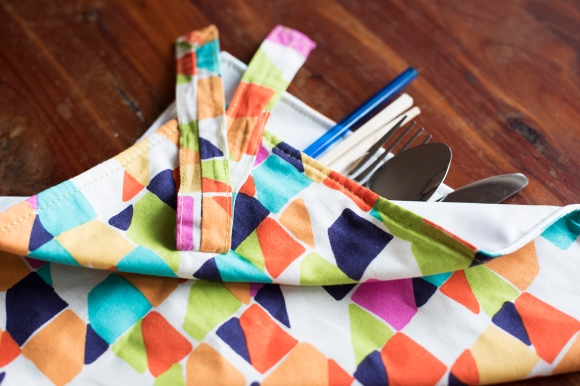
Travel Plate sml

I refuse, however, to travel scared. I eat street food whenever possible, travel on chicken buses and stay in local homes rather than antiseptic hotels. I can minimize risk, though, while still traveling with an open mind – hence the meal pouch above. Because I am mad crafty when I’m not cooking, I designed and sewed these travel squares as both a placemat and a cutlery holder. We’ll eat local food with our own (clean-ish) utensils, and we’ll have a reasonably hygienic eating surface that we can wipe clean and sanitize when no other option is available. These are primarily designed for our lengthy train trip in India, when vendors will hopefully offer snacks and drinks along the way. So much of staying healthy on the road is about paying attention: where are the locals eating? Is food that’s supposed to be hot actually served hot? Are there flies on the meat? I aim, as always, to be practical without being paranoid.

Clean tap water is something we take for granted most places here in the U.S. but is one of the primary causes of travelers’ maladies overseas, so we’re also bringing a SteriPen. I’m adventurous but not stupid, and I’d love to make it through our five months without either of us getting dangerously sick – purifying all of our drinking water goes a long way towards that goal. A little tummy trouble is to be expected when traveling, but we’d certainly like to avoid anything major.

But wait – ignore the potential for cholera and dysentery! We haven’t even talked about all the diseases you can contract just from the mosquitoes! We’re bringing plenty of DEET-based repellent, and we’ll treat our clothes and our mosquito nets with permethrin before we depart New Zealand for southeast Asia. While I’m not enthusiastic about poisons as strong as DEET, I’d gargle with the stuff if it kept me from getting dengue fever. I’d think differently if I were traveling with small children, the very elderly, or anyone with a compromised immune system, but for two healthy adults I firmly believe that the benefits of heavy-duty mosquito repellent outweigh the risks, especially when journeying through Third World tropics.

After all this scary stuff, the message I want to leave you with is this: if you’re thinking about traveling anywhere outside the U.S., just go. The above isn’t designed to terrify you, just to remind you to be sensible and to do your research before your trip. So many Americans don’t travel for so many reasons and while I know we have amazing things to see and do in this beautiful country, I believe that we also have to get out in order to appreciate just how good things are here. So go. Wherever you’ve always wanted to travel, go. You can make it work, whether it’s about finances, or time off, or just plain fear. I promise you, travel will change your life for the better – and you’ll value what we have here even more. Just go.


NJB_9559.JPG


Opting out

Stone Barns-01.jpg

The entrance to Stone Barns, Pocantico Hills, New York.

N and I live in a modest home in a modest suburban neighborhood where most of the houses date from the early to mid-1960s. (Photo above: not our house.) It’s our first house together, the first place we’ve really had space, since we spent the early years of our relationship living on dive boats and private yachts and in cheap short-term yachtie housing all over the world.

I love our house. I am more attached to our house than one should be, but it represents so much of who we are, individually and as a partnership. I love its built-in bookshelves and the odd thrift-store art and the wood stove that N hates that I use so much because he’s convinced I’m going to set the entire house on fire.

Unfortunately, our house that I love so much is surrounded by other houses. And in the other houses live people. People with dogs.

Stone Barns 011.jpg

Every house around us has at least one dog; our neighbor to the east has five (five? really?) Chihuahuas. And these dogs bark. All the time. Day in and day out. And at night, too. The neighbors are at work, or at home with the TV on, or somewhere else, and it doesn’t matter to them that the dogs are barking. They don’t hear it, or they do and they don’t care. Either way, the dogs in our neighborhood have made living here hard, especially because of how much we love our house. Animal Control has no teeth and we’ve had the police called on us for harassing our neighbors when we rang their doorbell at 1AM because their dogs were out and wouldn’t stop barking.

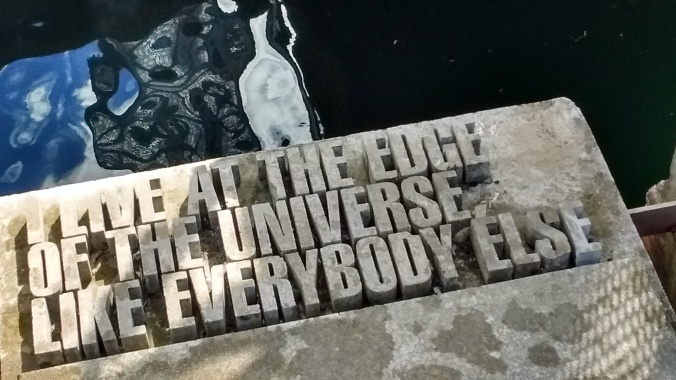
And so we are opting out. We are opting out of a constant aural assault where listening to other people’s pets and music and television in public (and private) places is becoming commonplace. We are opting out of a society that expects us to buy cheaply-made things with built-in obsolescence to be happy. We are opting out of a “consume rather than produce” mentality.  We are opting out of a desperately compromised food and health-care system designed to keep us all just a little bit sick, because there is no money to be made off healthy people and certainly no money to be made off dead people.

Some years ago, while listening to the dogs’ unending cacophony, N said that all he wanted was to live someplace quiet. And so was the name Quiet Farm born, and the title of this blog, too. (N’s suggestion for the blog title was Buckingham Shrugged. Go here if that allusion requires explanation.) We are on a quest to find our own piece of land where we can live peacefully and quietly, raising, growing and processing our own food and hopefully teaching others to do the same.

Stone Barns 067.jpg

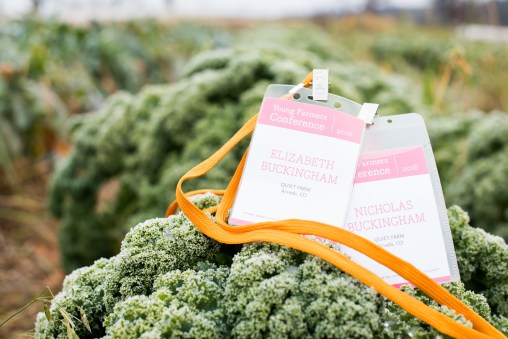
We spent last week here, at the country’s pre-eminent sustainable farming conference. The average age of farmers in the U.S. is nearly 60, and many of those farmers have no succession plan in place. Current estimates suggest that we lose nearly 40 acres of farmland an hour (AN HOUR!), most to urban development and sprawl. This conference, which is only open by lottery and which we’ve waited for three years to attend, is designed for people like us – those who are opting out.

Stone Barns-09.jpg

This event is like a college semester packed into three days. We attended classes on beekeeping and poultry processing and biodynamic farming and liability insurance and finding farmland and animal necropsy. We listened to inspiring talks from Dan Barber and Mark Bittman, and we ate amazing food. Oh, and I got to cook in the kitchen of the best restaurant in the U.S. so that wasn’t a big deal for me at all.

And while we definitely skewed older than the average attendee (damn you, Millennials – you’re drowning in debt so where are you getting the money to farm?) we also reinforced our bone-deep knowledge that this is where we’re supposed to be. This is our tribe, this is our religion. Finding Quiet Farm is the most significant journey we’ve embarked on yet. Thanks for joining us.

Stone Barns-13.jpg


Our daily bread

Let’s quit with the pre-trip stress for a moment, shall we? And let’s instead discuss one of my favorite kitchen activities: bread making.

Bread.jpg

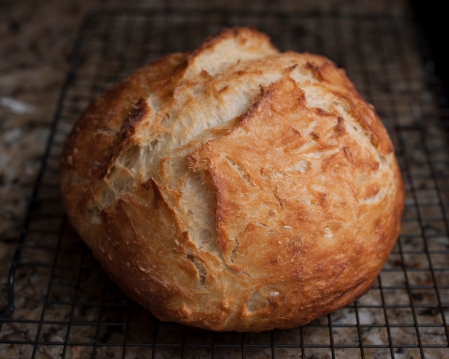
I know, I know. We’re not allowed to eat bread any more. Because we’re all gluten-free and Paleo and watching our carbs and good Lord I am tired of hearing about why we’re not allowed to enjoy one of the world’s great pleasures: homemade bread. Did you know every single one of the world’s known cultures has had some form of bread? How about all the ways it’s used in common parlance? As money, as sustenance, as the body of Christ. It is that important. And to just reject however many thousands of years of anthropological food history because we’ve suddenly decided that one single mysterious non-ingredient makes us sick? No. Our entire modern food system is making us sick. But that’s not bread’s fault.

Bread 01

Let me be clear – I am in no way talking about soft, squishy supermarket bread. Bread should not remain fresh at room temperature for weeks. That is a violation of everything that “fresh bread” stands for, plus a rejection of flavorful peasant cuisine based on stale bread. Panzanella, pappa al pomodoro, fattoush…how do you make these when the bread stays fresh forever? I’m talking about homemade bread: flour, yeast, water, salt. At its heart, nothing more than those four, although of course the permutations are innumerable.

Bread 02

I’ve taught hundreds of cooking classes on every culinary topic imaginable, and I’ll freely admit that my homemade bread classes are my favorite. This is mainly because the effort is so much worth the reward – and people are always amazed that they can actually make delicious bread at home, especially at altitude.

Bread 05

And so, with no additional fanfare, allow me to introduce you to the magical world of bread baking at home. Start here. Then make this one. Move on to this. I’ve made all of these dozens of times, and they work perfectly – even in Denver. (If you’re above 6,500 feet, refer to this.) And when you really fall down the rabbit hole of homemade bread, try this. And for reference? Read this, this and this.

Please, bake a loaf of homemade bread at least once. For the pleasure of working with your hands. For understanding how four simple ingredients create true alchemy. For the aroma alone. It’s not nearly as difficult as you think it is. Then eat it warm, with good butter or olive oil. Or eat it plain, with nothing at all to interfere. Then make it into croutons or crostini or a lovely winter soup. And while you’re eating it, remember that civilizations were built on this. For good reason.

Wishing you a winter filled with homemade bread.


Things to do

So. Here we are, six weeks out from our round-the-world departure, and I’m starting to feel more than a little overwhelmed about the list of things to do. We’ve both traveled pretty extensively but it seems to me that traveling in my twenties was substantially easier than this time round. Is it because I have a house? A partner? Plants and a freezer and chickens and bees and a garden? Yes, yes, and yes to all that. Plus a business that requires a great deal of my focus and energy, even while I prepare to let it go dormant for a time. And I’m older, and wearier, for certain. And yet…every time I find myself in a state of absolute panic, I start thinking about that open road ahead of us in January. I think about getting on the plane in Denver – carrying, of course, a copy of the Sunday New York Times because I’m only allowed that special luxurious pleasure when I travel – and I think about all of the adventures we’re about to have that I don’t even know about yet. And that makes my list of immunizations, shopping, visas, storage, bank accounts, arranging and rearranging worth it. It will absolutely be worth it.

PTP#1

It all starts here

IMG_20170218_192138881_HDR.jpg

On January 8, 2017, we depart Denver for a five-month round-the-world sabbatical. By then we will have quit our jobs, put our businesses on pause, given away our chickens, mulched the gardens and closed down our house. We start in Japan, move south to New Zealand, come back up to southeast Asia, head to India for a five-week train trip, then finish with a month in England. The decision to take this trip was somewhat impulsive. There is so much to be done, and we’re in the thick of it right now.