Friends, there has been so much reading lately. Or, as my young niece wrote recently in the collaborative story we’re working on via postal mail, “a lot a lot a lot!” There have very definitely been hits and misses – see what you think! And put your own favorites and not-favorites in the comments!

Can’t Even: How Millennials Became the Burnout Generation, Anne Helen Petersen
I’ve started reading just about everything of Anne Helen Petersen’s that I can find; I really like her deft, pointed takes on culture both high and low. And even though I’m not a Millennial and don’t subscribe to the current obsession with generational labeling and associated squabbling, I very much enjoyed Can’t Even. Millennials are an embarrassingly easy target; it’s so effortless to criticize them for their avocado toast and their oat-milk lattes and their “Millennial pink” fixation. Also, though? They were definitely sold a bill of goods. They’re the first American generation who will have it markedly worse than both their parents and grandparents, not only in terms of overall life expectancy, but in terms of financial solvency, health span, climate change impact and many other significant socioeconomic markers. (Sidebar: The NYT recently ran a piece on how companies are desperately trying to convince workers to return to the office with “Instagrammable furniture;” Petersen wrote a scathing response clarifying that Millennials don’t actually really want hot-pink furniture, they want the opportunity to get out of debt and buy a house and even consider the option of retirement – which most of them don’t have right now.) Maybe those of us older than Millennials might want to stop criticizing their lack of work ethic and realize that we haven’t given them much to work for. This book drove home the phrase popularized during the height of the pandemic: “We’re all in the same ocean, but we’re definitely not in the same boat.” Some of us are sipping Champagne cocktails on the polished teak deck, and some of us are bailing a leaky rowboat. Context matters.
Enchantment: Awakening Wonder in an Anxious Age, Katherine May
I loved Katherine May’s previous book, Wintering, and I loved Enchantment as well. May writes beautifully about this awkward, uncertain time we’ve found ourselves in over the past few years, living through the pandemic and its aftermath. She writes of how we’re struggling to find our center, find our rhythm again, to break free of our doomscrolling habits where we’re all just constantly unsure and anxious and exhausted and watching and waiting for something – but what, we don’t know. An answer, perhaps? An explanation for the ever-expanding chaos of our world? May’s careful response is to actively search for enchantment in her everyday life, in swimming and hiking and gardening and watching the seasons change – anything that forces us to put down our devices for just a minute and breathe again. The writing in Enchantment is shimmery and ethereal, but the message – that enchantment can be found everywhere, if we just make an effort to really see – is what remains. Highly recommended.
The Vegan, Andrew Lipstein
Two weeks later and I’m still not certain of my feelings about The Vegan. Compelling, without question, but was it worth my time? Would I recommend it to others? I’m still debating that but leaning towards no. The Vegan is ostensibly about what it means to be a “good person;” it follows Herschel, a wealthy quant fund trader who has developed market-altering technology and who also plays a vicious prank that results in a calamitous outcome. No one in the book is remotely likable – not that that’s a prerequisite for an interesting book! – but ultimately I’m not clear on what the overall point was. Herschel is obnoxiously self-absorbed and definitely doesn’t learn anything; we can’t say he’s a better (or worse) person by the end of the story than he was at the beginning, so the hero’s quest ultimately has no teeth and therefore no meaning. I did like the sly commentary on the tacky sheen of new money, but The Vegan overall obviously left me unsettled and uncertain. I think it was trying too hard. If you’ve read it, please share your thoughts!
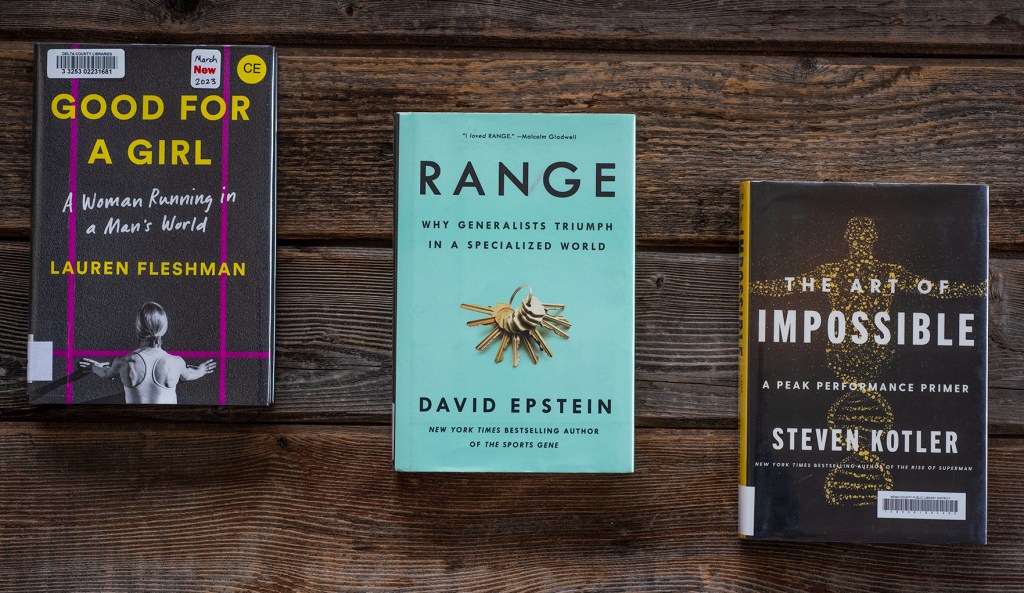
Good for a Girl, Lauren Fleshman
I’m not a competitive athlete, nor have I played one on TV, but I am intensely interested in the world of competitive athletics, the how and why of people who achieve something that most of us cannot even conceive of. Fleshman is one of the most successful American runners in history, both in college and at the pro level, and this book is in many ways a basic memoir that traces her journey from working-class girl who just loved to run to the rarefied air of the professional athlete. She is brutally honest about her own shortcomings – the gut-wrenching story about writing an email to Olympic team members begging for a courtesy spot on the team after she didn’t qualify is worth the price of admission alone. Good for a Girl is so much more than just a memoir, however. It’s a devastating expose on how girls and women are treated in amateur and pro sports, and the harm we’ve all perpetrated or ignored for years, even under the falsely protective guise of Title IX. It’s also a clarion call for change, especially when competitive sports are under more scrutiny than ever. I simply loved this book.
Range, David Epstein
Range, Epstein’s follow-up to The Sports Gene, posits that generalization beats specialization, especially in the modern world. The book attempts to mythbust the commonly-held theories of ten thousand hours, deliberate practice, Tiger Moms and so on. This concept is certainly personally appealing, as in my working life thus far I’ve held a wide variety of seemingly disparate jobs. The book is thorough and well-researched, but it also felt like a bit of a slog at times, with anecdotes and case studies that appeared irrelevant. I particularly enjoyed the section on problem-solving, where the smartest people couldn’t figure out certain challenges because they couldn’t see beyond their narrow range of expertise. I absolutely believe in Range’s premise that we are not teaching problem-solving or innovative thinking in schools (rather, we teach memorization and test-taking) and that specialization in one area does not guarantee success across the board. A worthwhile, engaging read, if a bit scattered and lengthy.
The Art of Impossible, Steven Kotler
There is a lot to like here…and there is a lot to rail against. The Art of Impossible fits squarely into the Super-Bro Book Club, obviously founded by universally-worshiped guru Tim Ferriss. (I made this up. But really they could compete with Oprah, although for a different audience.) The book has motivation in spades, and there are some truly interesting portions – I loved the argument for the ROI on books, rather than magazines or blog posts. But the author very much fails to acknowledge that the his “pathway to impossible” schedule is only achievable if you have no job, no family, no household, no outside responsibilities and nothing else to do at all. You’ll also need a wife personal assistant. If everyone spent every single second of all their waking hours working toward their dream, a lot more dreams would certainly be accomplished! Reality, however, is vastly different. There are definitely useful tidbits to be found here, particularly about allowing for incremental progress rather than huge successes, but read this with a generous cupful of salt.
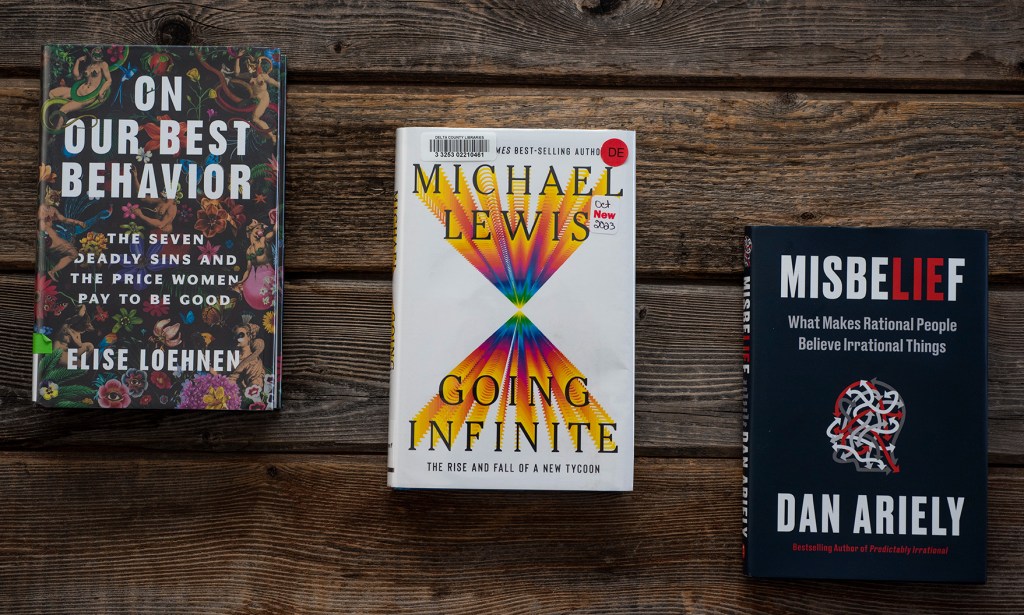
On Our Best Behavior: The Seven Deadly Sins and the Price Women Pay to Be Good, Elise Loehnen
My reading has included a good deal of feminist theory of late, and I loved Elise Loehnen’s On Our Best Behavior. The book is built on the scaffolding of the Seven Deadly Sins and it’s a terrifically compelling framework. A few points of note: many reviews I read criticized On Our Best Behavior for not incorporating more granular historical research and analysis. Secondly, and relatedly, many reviews dismissed Loehnen’s work because she was previously top brass at Goop. And thirdly, the book is criticized for being written from an upper-middle-class white woman’s perspective. My response to these: 1. Loehnen never claims to be a hisotiran; she wanted to write a book that people would actually want to read, rather than a dry history textbook. 2. Why should working at Goop – certainly not the most impressive business model, but I can easily think of far worse SHERYL SANDBERG I AM LOOKING AT YOU – discredit this work? 3. It’s a non-fiction piece written by an upper-middle-class white woman. If she had tried to “see through others’ eyes,” i.e. write a book that appealed to absolutely every single demographic group, she would have been vilified for that, as well. Not all things can be for all people, despite our insistence that we are each wonderfully unique but yet also must be represented in every single possible situation. The upshot? More often than not, women are just as complicit or even more so in destroying other women, and the extensive criticism of On Our Best Behavior definitely smacks of that. This book certainly isn’t perfect – possibly too much self-help spirituality – but I think Loehnen does a great job blending her personal narrative with the broader context of living under the modern patriarchal system. Also worth reading: Women & Other Monsters by Jess Zimmerman.
Going Infinite, Michael Lewis
I firmly believe that crypto is an absurd, pointless and wasteful Ponzi scheme, but like so many, I’ve been strangely fascinated by the rise and fall of Sam Bankman-Fried and this mysterious, shady, nonsensical crypto world. Plus, I’ve loved Michael Lewis’ previous books, specifically The Big Short. Save your time and money, though, and skip Going Infinite. Lewis has been roundly criticized for his disconcertingly soft take on SBF and the distinct lack of ethical journalistic distance required when reporting a major story such as this, and not without cause – Lewis seems to pander to SBF (as everyone else did) throughout the entire book. Going Infinite ends with SBF’s arrest and as such doesn’t delve into the subsequent trial and conviction, nor the likely conviction of SBF’s biggest rival, Changpeng Zhao. These arrests indicated the impending collapse of crypto; instead the SEC has just approved a crypto ETF (which completely flies in the face of crypto’s “decentralized finance” founding principles but never mind) – essentially, the king is dead, long live the king. SBF was hailed as a genius again and again; it turns out he was just a sullen, spoiled, maladjusted, unwashed, zero-personality schlub who managed to trick the entire world into buying his wunderkind persona – he hung out with Gisele and Tom! – for a decent period of time. Going Infinite leaves one with a decidedly unsavory feeling and a sour taste regarding our abject worship of staggeringly arrogant and seemingly wealthy men; Michael Lewis has done far, far better work than this. Read Molly White’s Web3 Is Going Just Great site instead.
Misbelief, Dan Ariely
I think I asked too much of this book. I wanted Misbelief to explain exactly how people come to believe that there is a network of tunnels and a demon-possessed blue horse at the Denver airport or that Sandy Hook was staged or that the earth is flat or that vaccine vials contain microchips, but I didn’t come away with much useful knowledge, besides that people are “chronically stressed” and therefore susceptible. The chronic stress is likely true for most of us, but most of us are also not spending countless hours online attacking others and spewing horrific misinformation. Ariely incorporates much of his personal experience, and the false online posts and doxxing are certainly terrifying, but as other reviewers have pointed out, he is a lot kinder and more empathetic to the conspiracy theorists attacking him (meeting in person?) than I think most of us would be. I’m certain we’ve all learned by now that it’s virtually impossible to extricate a friend or relative once they’re in “The Funnel,” and now we’ve got another round of this demoralizing fight brewing in the coming years. Ultimately, Misbelief left me feeling exhausted and sad for all of us, and particularly despondent at how much damage social media has done under the guise of “connection.”

Gilded Mountain, Kate Manning
Gilded Mountain is historical fiction set primarily in an early 1900s Colorado mining town. I loved the Colorado setting and the painfully accurate detail of the miners’ harsh working and living conditions, but the character development needed work. The book is narrated by Sylvie, who is insufferable at best. She’s only a teenager when we first meet her, so her poor decisions might at first be forgiven; though there are all sorts of indications that she will develop into a labor and/or women’s suffrage activist, instead she spends a decent portion of the book pining after a wealthy man who treats her with callous disregard. These naïve romantic travails quickly grow tiresome. We do meet the real-life rabble rouser Mother Jones, famous for salty quotes such as “I asked a man in prison once how he happened to be there and he said he had stolen a pair of shoes. I told him if he had stolen a railroad he would be a United States Senator.” After the evocative Colorado mining camp setting, Mother Jones is by far the most interesting character in the book, and she’s not in it very much at all.
Horse, Geraldine Brooks
I’ve read most of Geraldine Brooks’ work, and I think she’s an exceptionally talented writer. The Civil War portions of Horse are simply brilliant; the people and stories are so richly textured and carefully researched that it’s shockingly easy to immerse oneself in the characters’ world. I struggled more with the modern section of the book; these characters, relationships and situations often seemed stilted and contrived. Criticism aside, Horse is definitely worth reading if only for the historical perspective on horse racing and breeding in this country during a very fraught period. And that cover! What stunning art design.
Ninth House, Leigh Bardugo
I don’t read a huge amount of fantasy but do like diving in every so often, particularly when I need an escape from my excessive news consumption. I’ve enthusiastically recommended Ninth House a dozen or more times, and I always sell it like this: “A much darker Harry Potter, set at Yale, definitely only for adults.” I loved the darkness and the mystery in this book and especially loved the sharp, difficult female anti-hero, Alex. I’m on the library waiting list for the sequel, Hell Bent, and look forward to reading more of Alex’s (mis)adventures. (Bardugo also wrote the books upon which the Shadow and Bone series is based, if you’ve watched that on Netflix.)
What have you read and loved lately? What have you read and hated? Please share in the comments below!
 Finding Quiet Farm
Pingback: High summer book reviews | Finding Quiet Farm