How things are made, vol. 2

Visiting workshops or homes to watch people make things by hand is one of our favorite traveling activities; in southeast Asia, we learned how to make incense, rice noodles and tofu. And now in India, where traditional handicrafts are still a way of life for millions of people, we’ve had more opportunities to see beautiful things take shape.

NJB_5900

India is justifiably famous for its textile industry.

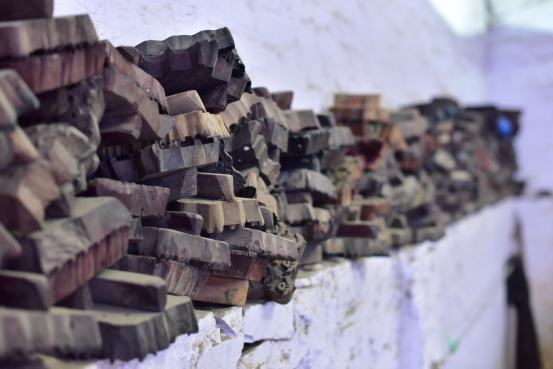
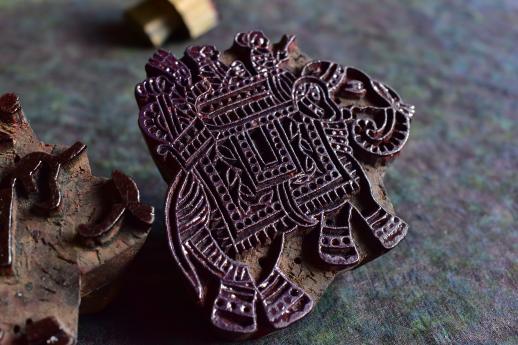
In Jaipur, we visited a traditional block-printing house. Block-printing is pretty much exactly what it sounds like: designs are hand-carved into blocks of teak, then dipped in ink and stamped onto fabric. Different colors can be layered in, and the design is dried then set permanently through a special chemical treatment.
NJB_5901

A hand-carved teak elephant block used for printing on fabric.
NJB_5906

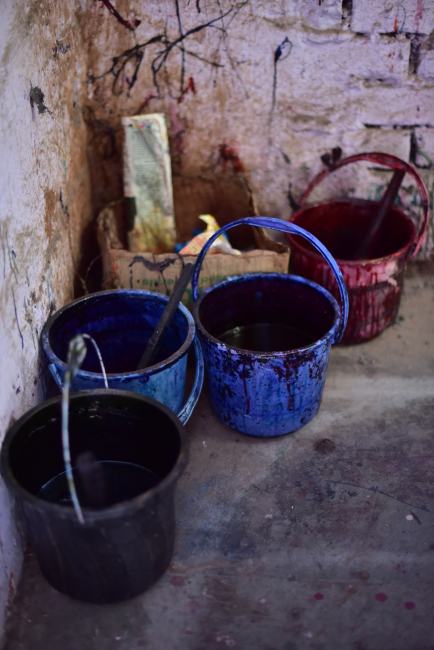
Please do not trip over these.

NJB_5907

Hundreds of teak blocks in various designs.

Each block can only be used about two thousand times before the design becomes fuzzy and indistinct. That seems like a lot, but a single tablecloth might have three hundred or more imprints.

NJB_5899

Skilled artisans can layer in different colors within the same design.
NJB_5893

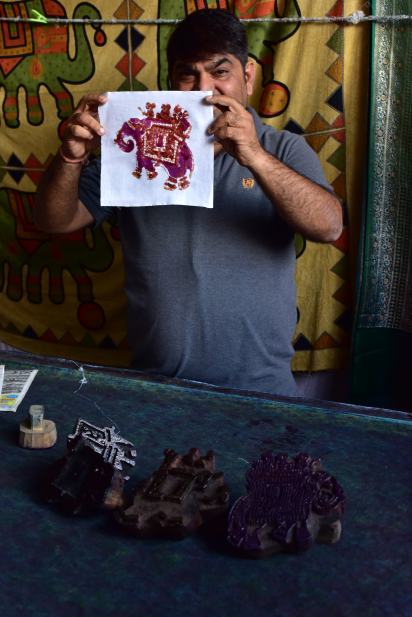
The fabric is placed in a chemical bath that alters some colors and sets the final design.

The city of Agra, in Uttar Pradesh, is known not only for India’s most famous attraction but also for its classical marble inlay work. This work involves carving shapes into marble, then filling those cut-outs with precisely cut semi-precious stones such as agate, turquoise, amethyst and onyx. Many of India’s significant monuments, including the Taj Mahal, showcase this craft; we were lucky enough to see it done up close.

NJB_5640

A marble inlay serving platter in its early stages.

NJB_5641.JPG

These artisans are carefully cutting semi-precious stones. The bamboo pole is attached to the wheel with string and operates the grinding wheel in a simple but ingenious manner. 

NJB_5643

Carving the design into marble; flowers and other natural motifs are traditional.

NJB_5644

Carved semi-precious stone pieces ready to be placed.
NJB_5646.1

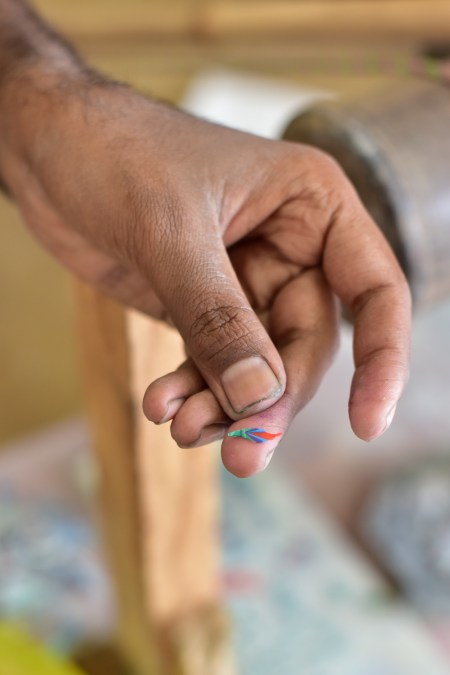
This flower is made up of six individually carved pieces. The craftsmanship and attention to detail in this sort of work is staggering.

Like so many other traditional arts and crafts, marble inlay work, which requires thousands of hours of painstaking hand labor, is slowly being revived as people learn to value quality and authenticity again. The workshop we visited ships their marble pieces – some as large as tabletops! – all over the world.
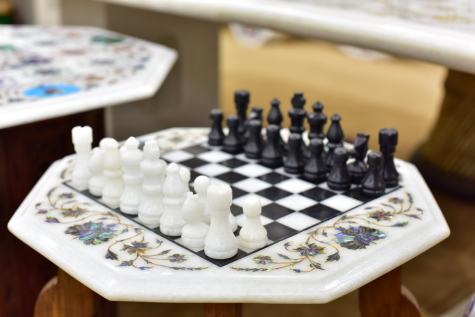
NJB_5654

An array of elaborate pieces for sale in the attached shop.
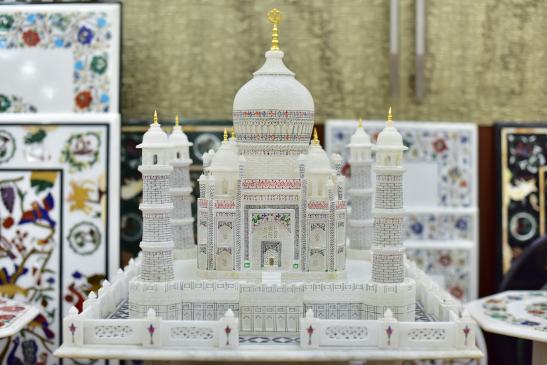
NJB_5649

Can you imagine how many hours this took to make?

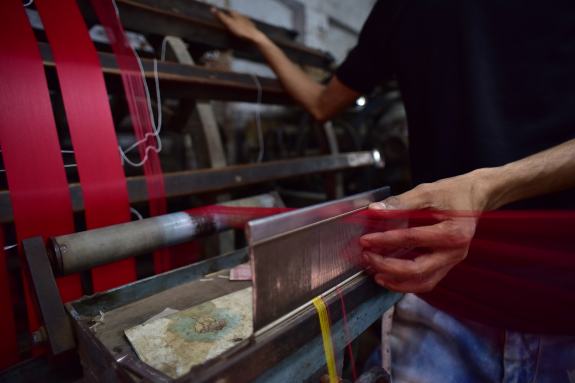
In the heart of Varanasi’s old city, thousands of people make their living spinning thread and weaving fabric into gorgeous, colorful saris, scarves and bedcoverings. The industry is centered in a rabbit warren-like area that houses both people and machinery. The clacking sound of the looms can be heard throughout the neighborhood.

NJB_4901

Thread spools awaiting the loom.

NJB_4909

Threading the loom is a complicated process.
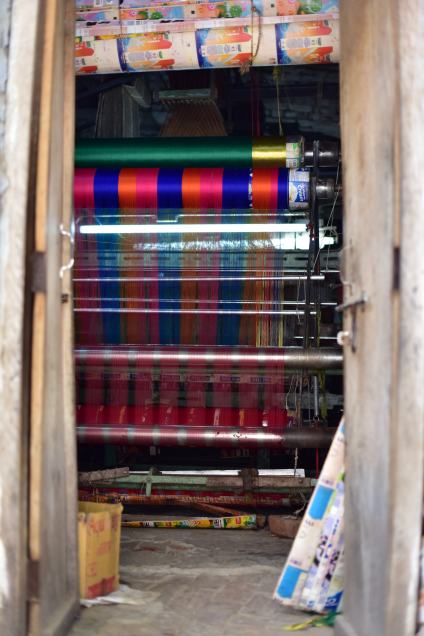
NJB_4885

Almost every doorway in the old city offers a peek into Varanasi’s main industry.
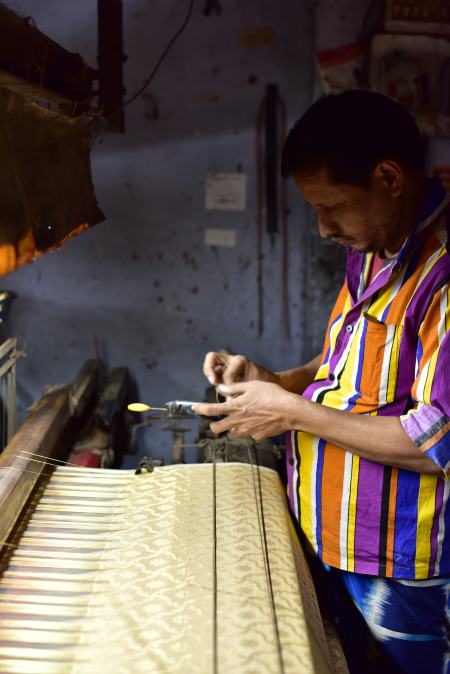
NJB_4893

Even fabrics of a single color have such depth and texture.

NJB_4894

More elaborate designs might require numerous thread colors.

Interestingly, the Jacquard loom, which revolutionized the textile industry, was also an important precursor to modern-day computers. The loom, still in use today, holds specially-punched cards laced together in a specific sequence, allowing the creation of complicated designs in the fabric. Early computers received programming instructions from paper tape punched with coded holes. Now go win at your next bar trivia night.

NJB_4897

The noise of the looms operating was almost unbearable; of course, people still managed to live and sleep there.

NJB_4919

Finished shawls and scarves.

Travel is not always about crumbling monuments and boring history!
 

Dinner at a gurudwara

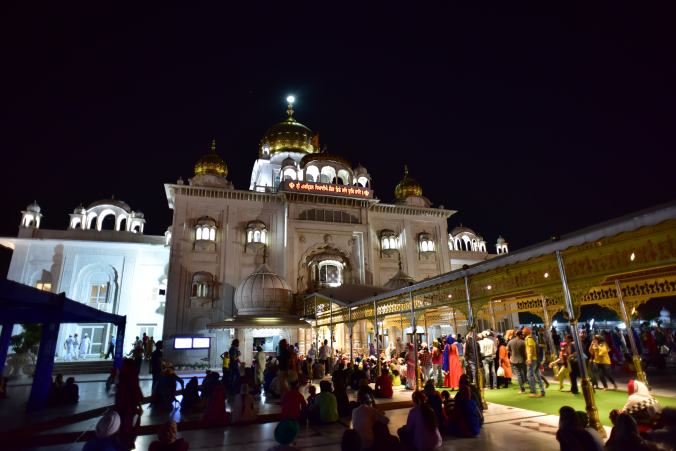
We’ve had a number of remarkable experiences in India, but one of our favorites so far has been the evening we spent at Gurudwara Bangla Sahib, a massive Sikh temple complex in Delhi.

NJB_5596.1

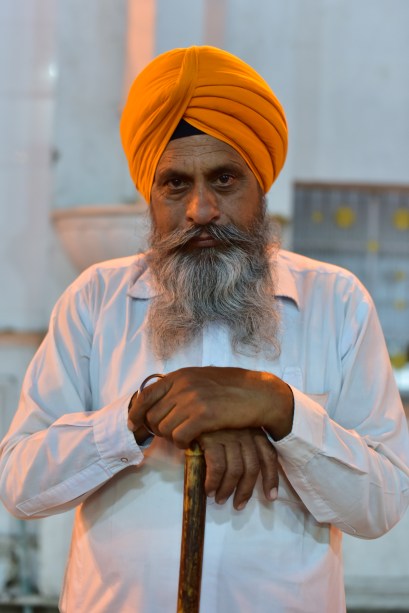
Male Sikhs are most recognizable by their distinctive turbans.

A gurudwara (or sometimes gurdwara) is a place of worship for Sikhs; the word literally translates as “door to the guru.” Sikhism is a fascinating religion; it’s one of the youngest major religions and has about 28 million adherents worldwide. It originated in India in the 15th century and broke from Hinduism primarily due to its rejection of the caste system.

NJB_5570

The gurudwara in Delhi sees a constant stream of visitors.

As we’ve mentioned, India is an intense place, and it’s easy to become overwhelmed rather quickly here. When your tour guide casually mentions that he’s taking you to dinner at a place that serves fifteen to twenty thousand meals a day, it doesn’t really engender a lot of confidence that the meal will be peaceful or calm. Yet that was exactly how the evening turned out.

NJB_5577

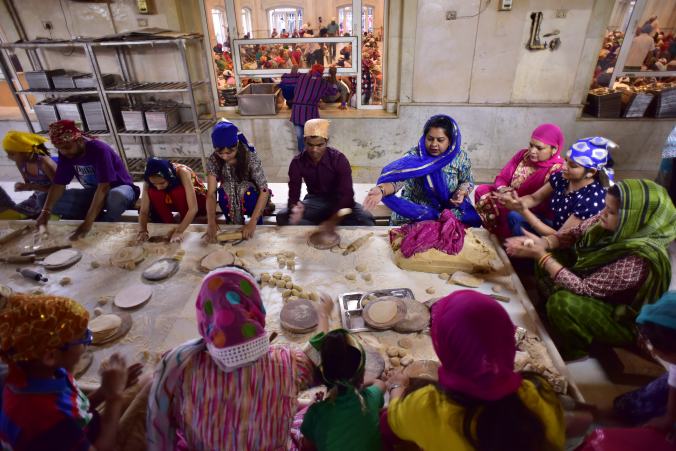
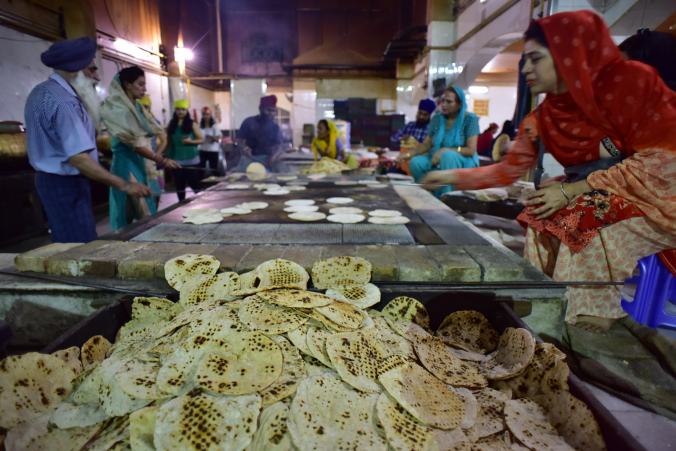
Making chapatis for the communal meal.

Everyone is welcome at a Sikh temple, whether or not you adhere to a specific belief system. All gurudwaras in the world have a langar hall, where vegetarian meals are served free of charge to anyone, sometimes twenty-four hours a day. No money ever changes hands, but it is understood that visitors to a gurudwara will participate in “selfless service” in exchange for their meal, which may mean assisting with cooking, cleaning, serving or any other necessary tasks.

NJB_5574

Chapati dough waiting to be rolled.

NJB_5578

Cooking chapatis on the griddle.

NJB_5576

The Sikh gentleman on the left is supervising the cooking of the chapatis.

For our service, we sat down on the floor to roll out hundreds of chapatis, unleavened wheat flatbreads. It was a lovely experience to join the people already in the kitchen; though we don’t speak Hindi, no explanations were necessary. It was simple enough just to watch what others were doing and follow along.

NJB_5580

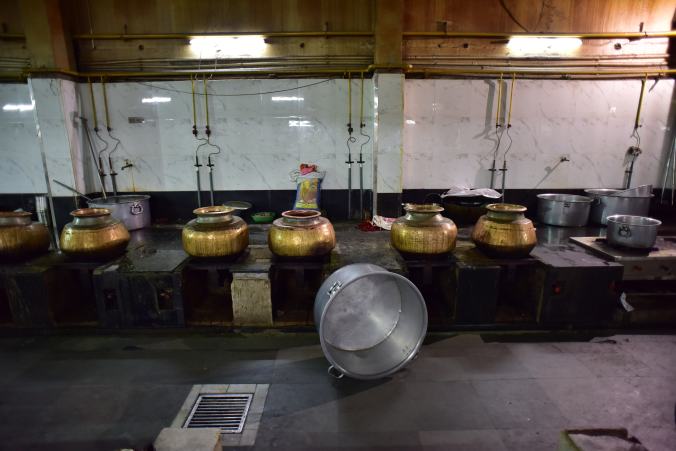
Rather a lot of food is produced in this kitchen.

NJB_5571

Vats of delicious dal bubbling away.

NJB_5582

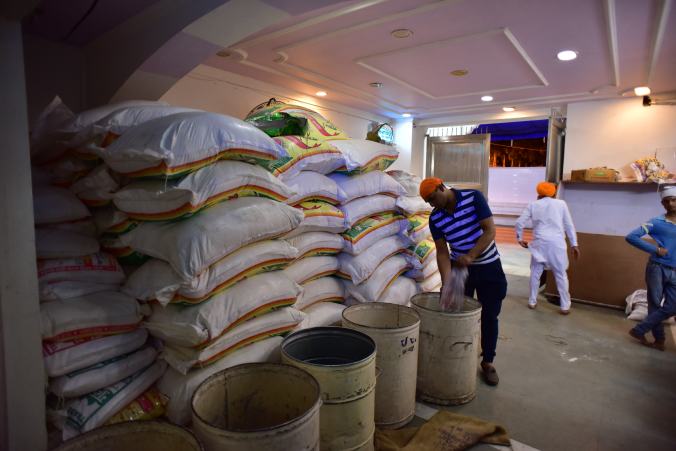
Bags of flour and rice in the temple’s pantry.

In addition to volunteering at the temple, most guests also provide an offering of food to the temple’s pantry. Fifty-pound bags of flour and rice line the walls, along with vegetables, lentils and anything else that can be used in the preparation of thousands of daily meals. All the food is strictly vegetarian, and nothing goes to waste.

NJB_5583

Cleaning the langar between meal shifts.

Around five hundred people eat in shifts in the langar hall; everyone sits on the floor. Guests queue outside in an orderly manner; in a country where patiently waiting in line doesn’t really happen, we were amazed at how smooth and orderly the process was.

NJB_5586

Seating the next round of guests in the hall.

As we filed in, we were given metal trays and shown where to sit. Our guide cautioned us against wasting any food; although you’re welcome to eat as much as you’d like, it is considered hugely disrespectful to take more than you will eat. We enjoyed dal, or spiced lentils, plus a vegetable curry, rice and of course our extremely well-made chapatis.

NJB_5587

Volunteers beginning the meal service.

Because there are always more people waiting to eat, everyone basically starts and finishes around the same time, then the hall is cleaned and readied for the next group. The efficiency and elegance of the entire evening was spectacular. The best part was looking around and knowing that the very rich and the very poor and everyone in between were sitting on the floor together, eating the same food. Truly a highlight of our visit to India.

NJB_5589

Regardless of gender, everyone is required to cover their heads in the temple. Scarves are provided in case you forgot yours.

After the meal, guests leave the hall, wash their hands and feet (as with most temples, shoes are left at the door) and enter the main temple for worship, chanting and fellowship.

NJB_5591

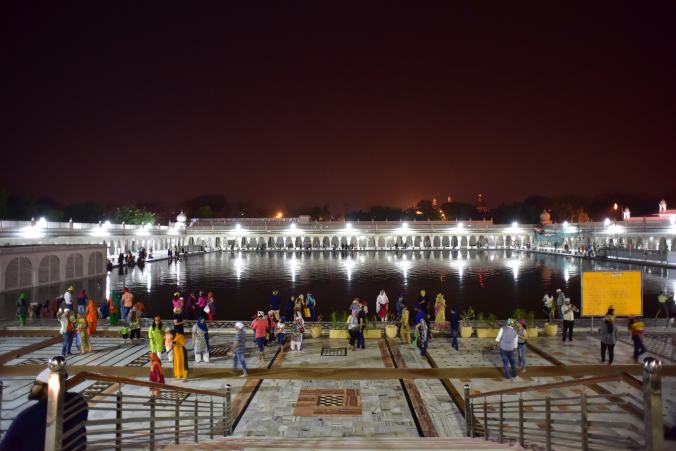
The temple also has a gorgeous reflecting pool.

One of the most interesting parts of our visit happened afterwards, when we were readying to leave. Our group was approached by a young woman with a small child who begged us for money – a very common occurrence in India, particularly for Western tourists. A Sikh immediately saw this and politely but firmly put a stop to it. Our guide explained that since everything is given for free at the temple – food, water, even a safe place to sleep, if necessary – they do not permit any begging on their grounds. This is extremely unusual in India.

NJB_5593

Sikh temples can be found all over the world, and a quick Google search will find one near you. If you have the opportunity, please visit your local gurudwara and spend a bit of time making delicious food in the kitchen, then sit down to enjoy it with friends and strangers alike. It is an experience not to be missed!